On a damp autumn morning in Gozo, something unusual and bluish was pushing its way out of fallen palm seeds. At first glance, it looked like a miniature coral reef or a cluster of tiny ivory clubs, no taller than a fingernail.
Few passers?by would have noticed it, and even fewer would have guessed that this modest growth would eventually place Gozo on the European scientific map.
Yet this is exactly what happened!!
The organism was a little known microfungus, Penicillium coccotrypicola, a species first described in 2014 on the opposite side of the world, in eastern Australia. Just two years later, it was first sighted by Stephen Mifsud – a mycologist and botanist at the EcoGozo Directorate.
Until recently, it was thought to be confined to Australia and New Zealand, living quietly on the seeds of certain palm trees native to those countries. Its discovery in Gozo marks the first recorded appearance of this species in Europe.
The story did not unfold overnight. The fungus was first noticed locally several years ago, but identifying it proved challenging. These appear briefly for a month or so after the first heavy autumn rains, and vanish again as winter sets in.
Thankfully, they can be examined and studied on a yearly basis. This species produces brush-like spore-producing structures known as penicilli, which are typical and hence easily assignable to the genus Penicillium (yes, the same group of microfungi that produce vital antibiotics), but narrowing the identification to the species was another story. Only through patient observation, careful study, and later laboratory and genetic work was the mystery finally solved.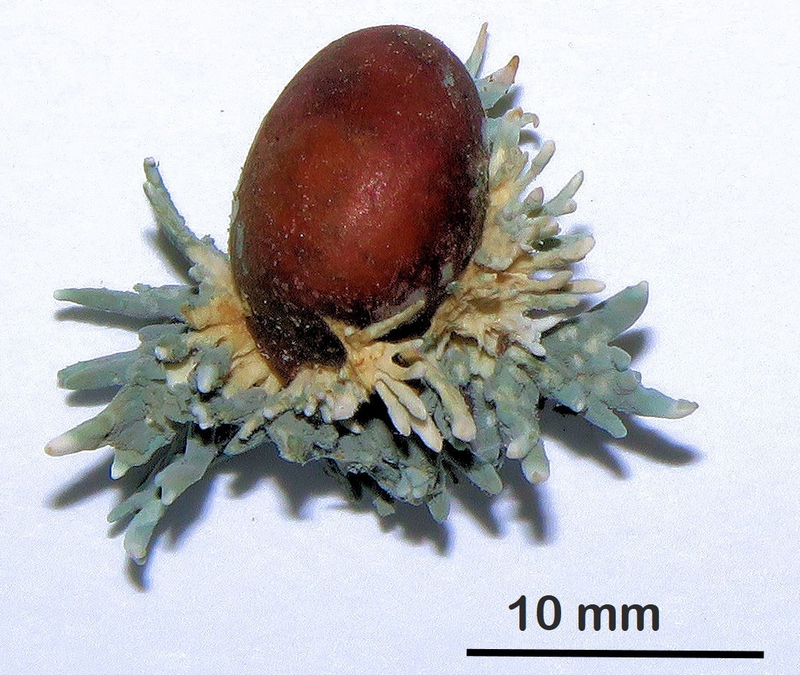 The fungus was initially detected in the internal gardens of the Ministry for Gozo and Planning, Victoria (where Mifsud works); one year later at a garden in Sannat and again a few years later at Hal-Far, Malta
Why does this matter?
At first glance, the discovery of a microscopic fungus might seem like a curiosity of interest only to specialists. But findings like this help scientists understand how life moves around the planet, often undetected and unintentionally. Movement of plants, soil, animals, food or even footwear can carry invisible fungal propagules across continents.
In this case, the fungus was found on the fallen seeds of Washingtonia palms, trees originally from the Americas that are now common features of Mediterranean streets and gardens.
The fungus appears to target the seeds specifically, but it is not known to harm people, animals, or the palm trees themselves. Instead, it forms part of a hidden world of organisms that recycle soil nutrients, interact, and coexist with the plants around us.
Perhaps most importantly, this discovery highlights the value of local observation and communication. Major scientific contributions do not always come from distant rainforests or high?tech laboratories. Sometimes, they begin in a garden, a public square, or beneath an ornamental tree… and that is the beauty of natural sciences.
For Gozo, this finding is a quiet but meaningful reminder that the island is not just a backdrop of natural beauty or a mere touristic spot, but an active participant in the study of Mediterranean biodiversity. Indeed, this tiny fungus offers a reassuring thought: careful eyes, curiosity, and persistence can still reveal something entirely new to Europe.
The research was supported by the EcoGozo Directorate and published in the scientific journal called Ascomycete.org [1]
Stephen Mifsud administers a Facebook group [2] dedicated to the study and appreciation of wild fungi.
Stephen Mifsud
Photos: Stephen Mifsud