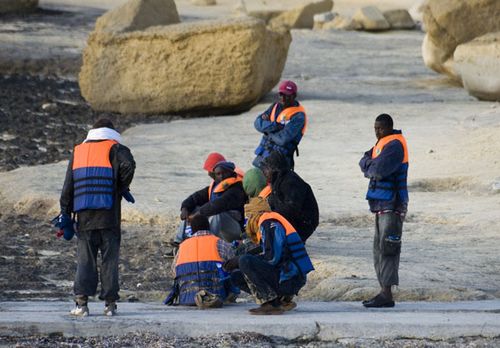
 Fr. Emmanuel Cordina Chairperson of the Diocesan Commission, has given a summary of the report by the Diocesan Commission for the integration of immigrants in Gozo, entitled ‘A church that Welcomes.’
“Integration is a two-way traffic and can happen only when both sides are unison in the need to get to know and respect each other. Compassion, Friendship and Solidarity, which is what integration is all about, can only be attained once people begin to talk, discuss, discover and relate to each other. This proposal is a shared effort of integration in the interest of both the Local Christian Community and the Immigrants seeking refuge on our island Gozo.
“The Christian community on Gozo is called by fate and Christian love to welcome and accept immigrants as part of its daily life experience. Christians must therefore seek to strengthen their spiritual strength and missionary vision in order to be a healthy integration factor as part of a universal caring Church. By respecting and loving each other as brethren in Christ they will also be living witness to the Compassion, Friendship and Solidarity that integration implies. This entails that they are well-informed about the true dynamics behind the phenomenon of immigration and refugees.
“The Commission has noticed the existence of several examples of solidarity actions already being undertaken by the parishes in Gozo. A case of real integration venture was noticed in a particular parish which should be imitated by others. Caritas Gozo too has given its open- handed charitable input in matters of food and other material needs. Integration efforts within the diocese are in general weak, sporadic and lack coordination. More can be done if things are planned and executed in a concerted and orderly manner.
“Through their day-to-day work experience within their community, lay Christians and religious organisations have a wealth of humanitarian know-how to share. They can all be invited to contribute in the process of continuous integration of immigrants and locals by carrying out initiatives.
“These members – not exclusively the superannuated – should be encouraged to offer their expertise and experience to provide education and training. These include courses in languages, European and international history as part of the immigrants’ integration into the western culture. This could be complemented by a certification. Other activities could cover counselling, legal aid, food distribution, sports and other social encounters.
“In order to perform such a delicate humanitarian mission, a well thought-out and coordinated plan based on transparency and accountability is essential for effectiveness and efficiency so that time, energy and resources are not wasted. Therefore the Diocese may have to source out person/s proficient with the basic skills including proper customer care:
Establishing a “One-Stop-Shop”/Drop-in Centre for migrants, providing information about: life in Gozo, services available and how to access them, and initial support to find employment or accommodation and ongoing social work services.
Organising educational courses focusing on language and the acquisition of skills that would enhance employability.
Establishing a migrants’ consultation group, which would meet regularly to discuss issues of concern, highlight new and emerging needs, provide feedback on existing initiatives, evaluate ongoing services and assist with the planning of all services.
Training and recruitment of translators to support the various initiatives of the diocese
Activities promoting social inclusion in collaboration with other stakeholders, such as parishes and local councils. These activities could be occasional initiatives, such as the organisation of an intercultural event, or ongoing, such as the Xewkija parish initiative to ‘adopt’ a family or individual with particular needs or the UNHCR befriending project.
“Any application of the above mentioned suggestions to be feasible has to be a workable scheme within the limited resources of a small and modest diocese which Gozo is. Furthermore, it will thrive only if it is developed on a simple structure, an educational content and above all on an empathetic approach,” Fr. Emmanuel Cordina concluded.
The full copy of the report in English is available for download here [1].
File photograph