Be the first to comment!
Book Review – Analizi tal-Gimgha Mqaddsa: Lenti fuq Pajjizna u lil hinn minnu
 Email item Email item
|  Print item Print item
|
|
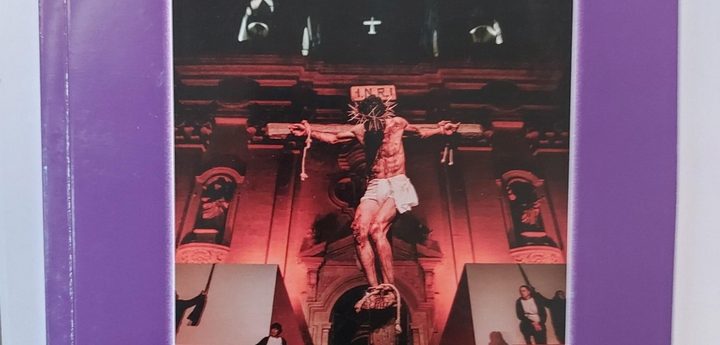
The Cottonera Resource Centre, set up to act as a bridge between communities in the inner harbour area and the University of Malta, has published Analizi tal-Gimgha Mqaddsa: Lenti fuq Pajjizna u lil hinn minnu (Analysis of Holy Week: A Lens on our Country and beyond): an eighty-seven page slim book in Maltese analysing different aspects of Holy Week in the Maltese Islands and beyond.
The well-referenced collection, edited by Malcolm Schembri, presents eleven short and easy to read articles discussing various aspects connected to the commemoration which besides being a religious event, enhances creativity in the artistic and cultural sector of communities.
The publication presents an interesting read for those who are curious and wish to gain an understanding of the history, traditions, culture, creativity and more behind the present day events, practices and celebrations of Holy Week, which starting from the approach to Lent culminate in the Easter celebrations.
The information, examples and comparisons from various areas and places offer an enjoyable read to anyone wishing to comprehend modern day traditions, without delving deep into academic discourse. The publication qualifies as a worthy source of reference to add to one’s own home, office or school library.
The collection of articles presented are based on studies made by academics and personalities who have gained knowledge and expertise in specific areas. As an introductory article, Anthony Bonanno, a Professor of Archaeology, provides a historical narrative on the ways past Maltese communities expressed their belief in deities, built places of worship, and later came in contact with Christianity.
Dr. Sandro Debono, a museum thinker and art historian, discusses the development of statuary symbolism and presentation intended to evoke emotion and understanding of depicted episodes.
Dr. Marco Galea, who lectures in Theatre Studies discusses the development of the Passion play in Malta during the last century as a contributor to Maltese productions on stage and as an expression of art in various forms.
Michael Grech, a graduate in Philosophy, analyses and opinionates about the theatrical representations of the Hal Gharg?ur Good Friday activities held on Palm Sunday.
Dr. Joseph F. Grima, who lectures in History, discusses the development and changes of iconography of the passion statuary in the Maltese Islands.
Natalie Grima, a postgraduate in Gender Studies, provides a critical feminist view of how masculine and feminine images and roles are presented in the Holy Week texts and imagery, and how they tend to be inclusive more than exclusive.
Peter Mayo, a Professor in the Sociology of Education and Adult Education, contributes two articles. The first tells about the political intent combines with the religious in the Spanish Semana Santa and compares it with similar occurrences in Malta.
The second article compares practices of Roman imperialism and colonialism in the days of Christ’s crucifixion with those of modern times. Eric Montfort, a popular media presenter on local radio and television stations, chews over the impacts left on sacred music by the Reformists and later events in history, inclusive of developments experienced in the Maltese scenario.
Suzanne Piscopo, a Professor in Home Economics and Education, draws the reader into the realm of food associated with Lent, Holy Week and Easter, and analyses their symbolic, historical and culinary aspects.
Anna Spiteri, a doctoral candidate in Ecology and Spirituality and a keen activist on the environment could not miss presenting an article which discusses how different religious sources emphasise the importance of safeguarding the natural environment and the risks being faced by the escalating depletion of the natural environment in the Maltese Islands.
The publication includes a welcoming message by the Hon. Dr. Katya De Giovanni, the present Director of the CRC and a Member of Parliament. Professor Peter Mayo tells how the idea of the publication started back in 2016 when discussions with the former Director of the Centre, Prof. JosAnn Cutajar agreed that such a project fitted within the objectives of the Centre: the promotion of creativity and culture of the communities it serves. Editor, Malcolm Schembri, adds how the material was compiled from lectures which the same Centre organised between 2016 and 2019.
Dr. Josette Barbara Cardona, Project Coordinator of the Centre, tells how she, as a person who loves history and Maltese traditions, got involved in the the project when the team called her on board.
It could have been a wise idea if the publication was intended to have a sequel or a number of issues which could cover other areas connected with this time of the year and the events connected to it. Whilst praising the decision to publish in the Maltese language, it would also be wise to make such knowledge available to a larger audience.
Judging the book by its cover may not be the right approach as the content is much more interesting than what its cover can tell.
Book review by Dr. John Vella
Photo supplied by the author