Be the first to comment!
Assessing impact on coastal communities – Rethinking the Blue Economy
 Email item Email item
|  Print item Print item
|
|
 COST is Rethinking the Blue Economy: a network to assess impact on coastal communities. It highlighted that oceans cover 70% of earth’s surface and the earth has around 620.000 kilometres of coastline.
This is where the land meets the sea, holding a significant place in the world’s geography. They are important for the ecosystems and are home to diverse ecosystems, and human settlements.
According to the United Nations Environment Programme (UNEP), about 60 percent of the world’s population lives within 60 kilometres of the coast, this proportion will rise to 75 percent within two decades.
For centuries, oceans have generated activities. They are a major source of food and employment and provide natural communication, transportation, and energy.
This Ocean economy is also called the Blue Economy. The term was introduced at the Rio+20 conference in 2012.
COST explained that the concept of Blue Economy relates to the exploitation, preservation, and regeneration of the marine environment. This can include a wide range of economic sectors, from the more conventional fisheries, aquaculture, maritime transport, coastal tourism, and marine-related industries, to the emergent sectors such as deep-sea mining.
Despite numerous initiatives addressing maritime issues and the Blue Economy, the field remains fragmented by national and disciplinary boundaries, including division among researchers focusing on different sectors of the Blue Economy.
Therefore, it is essential to create and strengthen research networks to promote and facilitate comparative and collaborative research.
Rethinking the Blue Economy: Socio-Ecological Impacts and Opportunities (RethinkBlue) COST Action kicked off last autumn to create a pan-European, interdisciplinary network of researchers, from 33 countries and to encourage connections between researchers and stakeholders in Europe and beyond.
Environment and technological developments present new challenges and opportunities for coastal populations and marine activities.
To rethink the Blue Economy, the network said that it will be assessing its impact on coastal societies. In addition, RethinkBlue will explore opportunities deriving from innovations and potential synergies between established and emergent marine activities.
Coastal populations and maritime activities are increasingly exposed to the consequences of climate change such as rising sea levels and a higher risk of natural hazards. In many coastal areas in Europe, populations will be confronted with the need to adapt or risk displacement, with enormous socio-economic consequences.
“Thanks to its composition and structure, RethinkBlue is very well-positioned to explore the impacts of Blue Economy policies on coastal populations. Our ambition is to go beyond idealised models and to stimulate empirical studies that investigate challenges, conflicts, and unintended consequences of the policies at hand,” said Dr Dražen Cepi, Chair of RethinkBlue.
In April, the first RethinkBlue international conference took place in Croatia. Scholars and experts discussed and presented research on issues related to social, environmental and economic aspects of the Blue Economy.
This included maritime occupations; food security; sustainable blue consumption; port cities; coastal communities; fisheries governance; marine tourism; emergent activities; climate change; and natural hazards. The book of abstracts from the conference can be accessed online.
“The methods of communication of RethinkBlue are very important as we as are trying to bridge gaps between scientific language and people’s everyday lives. In a way, we are trying to democratise knowledge related to the Blue Economy,” said Prof. Michael Briguglio, RethinkBlue Science Communication Coordinator.
EU COST – European Cooperation in Science and Technology.
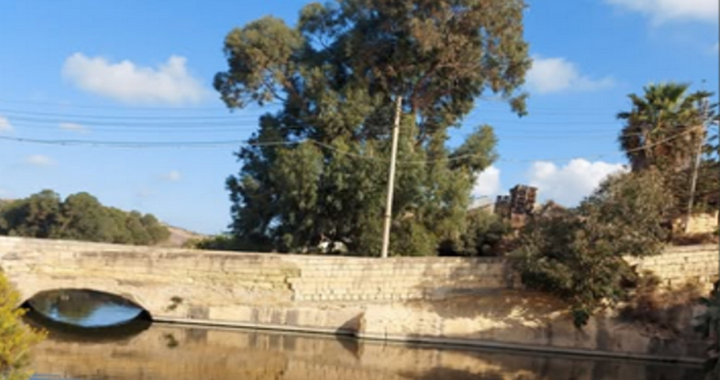
File photo Gozo News/Alain Salvary – Coastal scene in Gozo