Be the first to comment!
14,780 Wagtails counted at Valletta’s iconic roost during annual count
 Email item Email item
|  Print item Print item
|
|
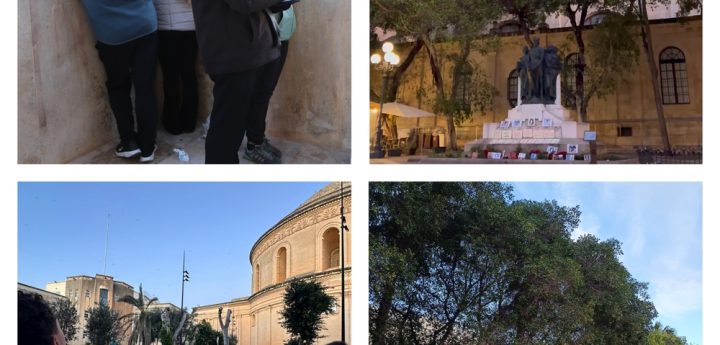
On Saturday, a remarkable gathering of volunteers participated in the annual White Wagtail roost counts at three key locations across Malta. The main one being Valletta, where this year the count numbered 14,780.
This event has been a tradition in Valletta since 1985. In recent years, volunteers have expanded their efforts to monitor additional roosting sites.
BirdLife Malta said that twenty-five dedicated volunteers counted the roost in Valletta, while two monitored the Qawra site and another two were stationed in Mosta.
White Wagtails have historically roosted in large numbers in the mature Ficus trees near Valletta’s St John’s Co-Cathedral and the Law Courts. The roost has remained stable over the years, hosting between 10,000 and 14,000 wagtails daily.
BirdLife said that in 2024, however, a record-breaking 16,182 wagtails were counted – the highest ever recorded at the site. In 2025, the count dipped slightly to 14,780, representing an 8.6% decrease from the previous year.
The surge in 2024 numbers is thought to be linked to heavy pruning of Ficus trees in Mosta in November 2023. This pruning disrupted a site where approximately 1,000 wagtails had previously roosted, forcing many to relocate to Valletta, the NGO said.
It noted that Mosta’s roost showed signs of recovery in 2025, with 803 wagtails counted – an eight times increase from the fewer than 100 birds estimated in 2024.
While the Ficus trees in Mosta are still recovering, birds were observed roosting in Olive trees and Ficus trees where leaves have begun to regrow. In Qawra, 1,526 wagtails were counted, marking an increase of 69% from the 962 recorded in 2024.
BirdLife said that the Qawra roost’s future was previously at risk due to proposed health centre development plans. Fortunately, these plans were shelved, preserving this important habitat for the birds.
Volunteers followed well-established methodologies to ensure data accuracy, with at least one experienced birdwatcher assigned to each team. In Valletta, the approach has remained unchanged for years, which is crucial to ensuring consistent and reliable results to compare between years and understand trends.
Every morning, wagtails leave their roosts and disperse across Malta’s countryside to forage, only to return at sunset. The evening skies fill with thousands of birds flying in unison towards their chosen roosts, creating a breathtaking spectacle.
During the day wagtails eat hundreds if not thousands of insects a day keeping a natural control. Should for any reason, including destruction of their roosting sites, these birds reduce in numbers, the result could be that the excessive number of insects could destroy agriculture produce.
White Wagtails migrate to Malta each October from northern Europe, including Sweden, Denmark, Hungary, and Poland. They seek the Mediterranean’s warmth during the cold winter months, favouring Ficus trees for their thick foliage, which offers safety and comfort during chilly nights. The birds remain until late March, when they head north again for the breeding season.
Photos: From Left Valletta by Alice Tribe and right by Antonia Micallef; Mosta by Nick Galea and Qawra by Francesco DalColle