Be the first to comment!
Comino’s carrying capacity: Call for transparency and sustainable management
 Email item Email item
|  Print item Print item
|
|
 Gozitan Nationalist candidate for the next General Election, Luke Said, has responded to yesterday’s news put forward by the MTA on the new capping system for Comino, calling for “transparency and sustainable management,” as well as questioning whether the booking system is “real management, or just theatre?”
Luke Said highlighted that the Management Plan for Comino, aimed at preserving and restoring the island’s biodiversity, mandated a carrying capacity assessment to guide sustainable tourism practices.
He went on to say that this study was commissioned by the Environment and Resources Authority (ERA). However, despite its significance, ERA has not made the study publicly available. In December 2023, ERA cited “Cabinet confidentiality” as the reason for withholding the document. This decision has been challenged by seven environmental NGOs, who argue that the study is essential for informed policy-making and should not be withheld under the guise of Cabinet privilege.
Conflicting Visitor Data: The Need for Reliable Numbers
Said pointed out that the lack of transparency surrounding this assessment has led to “inconsistent and conflicting data regarding visitor numbers to Comino.” For instance, in a TimesTalk interview, Minister Ian Borg stated, “We must clean up Comino. During July and August, 10,000 people descend on Comino’s Blue Lagoon every day, and that’s too many.”
“Yet, according to the Malta Tourism Authority (MTA), up to 12,000 visitors were recorded at the Blue Lagoon at any one time last summer. Furthermore, during a meeting on November 20, 2023, with the then Tourism Minister and MTA CEO, it was mentioned that 6,000 people descend on Comino during peak hours. This discrepancy in figures suggests a lack of reliable data, making it challenging to implement effective visitor management strategies,” stated Said.
The Booking System: Unanswered Questions and Operational Gaps
Luke Said noted that the newly launched website’s FAQs raise additional concerns:
1. What happens when I arrive? Before disembarkation, your QR code will be scanned, you’ll receive a wristband, and you’re good to go.
2. Is the area physically fenced off or restricted? No, but gatekeepers patrol and control access.
3. Do I need a QR code if I come on a private or tour boat? Yes. Anyone who steps on land at Blue Lagoon needs a QR code, including locals.
4. What are the available time slots? You can choose from one of these three slots – Morning (08:00-13:00), Afternoon (13:30-17:30), Sunset (18:00-22:00).
5. Can I book on the same day? Yes, depending on availability. We advise that you book well in advance.
6. Can I use any ferry? Yes, but make sure it takes you there and back according to your time slot.
Given that the Blue Lagoon is the primary point of entry, Said stressed that questions arise about how volunteers at the Knights Tower, campers, or those planning extended hikes can comply with this regulation. “Can individuals still disembark at other areas like Santa Marija Bay to bypass this system? Are the hotel and bungalows considered part of the total visitor count?”
Disproportionate Impact on Small Operators
According to Said, “Gozitan small ferry operators have expressed concern, as they rely on same-day ticket purchases. If all slots are pre-booked, these small operators, who typically carry fewer passengers and have a minimal environmental impact, may be forced to cease operations, jeopardising their livelihoods.”
He noted that Minister Borg stated, “we can’t keep permitting operators to unload boatloads of 700 or 800 passengers at one time in such a small space. The plan is to reduce the number of passengers by half.” Said argued that “large ferries can carry up to 300 passengers per trip, meaning a single vessel doing just four round trips could offload over 1,000 people in a day. Yet, it appears that smaller companies are bearing the brunt of these changes, raising concerns about the fairness and effectiveness of the current approach.”
Operational Gaps in the Visitor Management System
The newly implemented visitor management system for Comino introduces three time slots for arrivals: Morning (08:00-13:00), Afternoon (13:30-17:30), and Sunset (18:00-22:00). However, Said added that “a critical oversight exists regarding the Sunset slot. Currently, there are no scheduled ferry services departing from Comino after 18:00, with the last ferry to Malta leaving at that time.”
He insisted that “this absence of late-night transportation options effectively leaves visitors stranded if they choose the Sunset slot, potentially leading to unauthorised overnight stays or environmental degradation due to prolonged human presence. This gap undermines the effectiveness of the visitor cap and raises concerns about the feasibility and enforcement of the new system.”
Is This Really a Cap or Just Repackaging?
Luke Said referred back to Minister Ian Borg’s quote: “During July and August, 10,000 people descend on Comino’s Blue Lagoon every day, and that’s too many.” Said pointed out that the new booking system allows a maximum of 4,000 visitors at any one time. “Assuming this refers to each time slot, the total allowed daily visitors could still reach 12,000.”
Additionally, Said noted that question 6 of the FAQs raises further questions, as most visitors will try to stay as long as possible, potentially creating congestion and mayhem as everyone attempts to leave just before the end of their slot.
He questioned the fact that there is no mention of how private or chartered vessels will be monitored. “So how exactly will this be enforced?”
Lack of Enforcement and Legal Contradictions
“That question becomes even more alarming when we consider that existing laws aren’t even being enforced,” stated Said. “According to a Parliamentary reply from 4 April 2025, no kiosk at Santa Marija Bay was registered with the Malta Tourism Authority (MTA) for either 2023 or 2024. This flatly contradicts imagery from summer 2024 that clearly shows at least one fully operational kiosk.”
As Luke Said pointed out, “under Maltese law, all kiosks must be licensed by the MTA and registered with the Food Safety Commission. Yet these vendors operate in full view, even after Minister Ian Borg publicly vowed in February to overhaul the kiosk system. Either inspections are so infrequent they’re meaningless, or certain operators are being quietly tolerated. The result is an unfair playing field – where legitimate businesses are undercut by those operating illegally, and Comino’s regulatory framework is exposed as both brittle and selective.”
Logical Fallacies and Bureaucratic Theatre
Said insisted that “this entire framework is riddled with logical fallacies. Announcing exact caps (e.g., 4,000) gives the illusion of scientific authority – but without transparent studies, these numbers are meaningless. Public focus is being directed to the new booking system while core issues – illegal kiosk operators,lawless vending, and sunbeds on the foreshore – are quietly ignored.”
He went on to say that “there is also an element of appeal to authority; by invoking “Team Blue Lagoon” and listing a dozen agencies, the MTA implies a robust structure. In reality, this is bureaucratic theatre – more names, not more action. Tokenism is rife. Adding bins, wristbands, or QR codes does not address the ecological load, lack of shade, or overdevelopment threatening Comino.”
Enforcement Ambiguities
Moreover, stated Said, “there are glaring gaps in the enforcement plan. What constitutes an “unauthorised visitor”? Is it someone who overstays their slot? A person arriving by kayak without a booking? Who is doing the fining – LESA? The police? Transport Malta? Who is actually present on-site to verify QR codes and wristbands?”
Said argued that, “even worse, the geographical boundaries of the so-called “Blue Lagoon visitor zone” remain undefined. Does it extend to the campsite? To the sunbeds? To the hotel? This ambiguity creates legal grey zones and makes effective enforcement a logistical fantasy.”
Core Issues: Data, Oversight, Messaging
Luke Said noted that three key concerns emerge:
1. Policy is being built on faulty data. If the MTA cannot track who is operating under its licences, how can it credibly enforce boat capacities or visitor thresholds?
2. Oversight is severely lacking. The presence of unlicensed kiosks captured on satellite imagery proves that inspections are either too rare or toothless.
3. Public messaging is inconsistent. Last year, authorities said they would reduce footfall to 6,000. Now it’s 4,000 per slot, with no explanation of methodology. Are these decisions backed by environmental impact assessments – or optics? What Needs to Happen
To restore trust, Luke Said insisted that “the MTA must go beyond slogans and PR campaigns.” It must:
Enforce existing laws
Publish a real-time register of licensed operators
Clearly define enforcement zones
Make its visitor cap methodology public
Transparency is not optional-it’s the foundation of effective policy.
Lessons from Abroad: Real Caps, Real Transparency
Globally, fragile destinations have implemented genuine carrying capacity systems that Malta could learn from, Said added.
He explained that in Santorini, Greece, where overtourism once threatened to overwhelm the island’s infrastructure and ecosystem, authorities have announced that starting in 2025, cruise ship arrivals will be capped at 8,000 passengers per day. This decision follows instances where over 11,000 cruise passengers arrived in a single day, causing significant strain on local resources. The cap will be enforced through berth scheduling and a €20 per-passenger fee, aimed at funding infrastructure improvements and managing tourist inflows.
Meanwhile, he said that the Cinque Terre National Park, Italy has taken a more targeted approach. While there is no comprehensive visitor quota for the five villages, specific measures have been implemented to manage tourist impact. Notably, the Via dell’Amore trail, a popular path linking Riomaggiore and Manarola, has reopened with a daily cap of 4,000 visitors, requiring timed tickets and staff supervision to control access. Additionally, certain trails operate on a one-way system during peak times to alleviate congestion.
Said added that, further afield, Maya Bay in Thailand, once closed entirely due to coral reef degradation, was reopened with strict measures in place. The bay now limits visitors to 375 people per hour, totalling 4,125 per day, enforced through an app-based booking system and park-ranger checkpoints. Swimming is prohibited to protect the regrown coral and returning marine life.
He stressed that “these case studies reveal what’s missing in Comino’s current system: independent studies, clearly communicated limits, legal enforcement mechanisms, and a commitment to ecosystem resilience, not seasonal appeasement.”
Conclusion: Comino Deserves Better
“Comino deserves better. Maltese citizens deserve clarity. And the law deserves respect. Anything less is not a plan – it’s theatre,” stated Said.
He said, “in short, I always agreed with the idea, imma dan genn ikrah!”
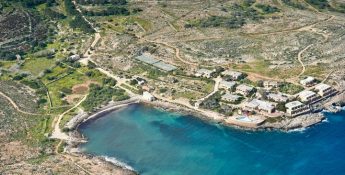
File photo: Gozo News/Alain Salvary