Be the first to comment!
Planning application submitted for rehabilitation of Comino’s Blue Lagoon

 Email item Email item
|  Print item Print item
|
|
This week a Planning Application was submitted for the Blue Lagoon Rehabilitation by the Malta Tourism Authority (MTA) and Team Blue Lagoon, in collaboration with Mizzi Studio.
The MTA said that this is a “national initiative dedicated to restoring ecological balance, while enhancing visitor experience at this iconic Natura 2000 coastal site in Comino.”
It explained that “the submission marks an important milestone in safeguarding one of Malta’s most treasured natural landmarks. The rehabilitation seeks to harmonise environmental restoration with thoughtful design interventions that promote sustainable tourism, accessibility, and conservation.”
The proposal will now move forward through the full planning process, which includes continued consultations with the Environment and Resources Authority, the Planning Authority, and all other relevant stakeholders, the MTA said.
The MTA, Mizzi Studio and Team Blue Lagoon said that they are “working closely with experts specialised in different environmental fields, to ensure ecological integrity at all steps of the rehabilitation’s design, permitting and implementation.”
Team Blue Lagoon and Mizzi Studio stated that they will maintain “open communication channels, providing updates on the proposals, design rationale, and ongoing collaborations with NGOs, local stakeholders, and community representatives.”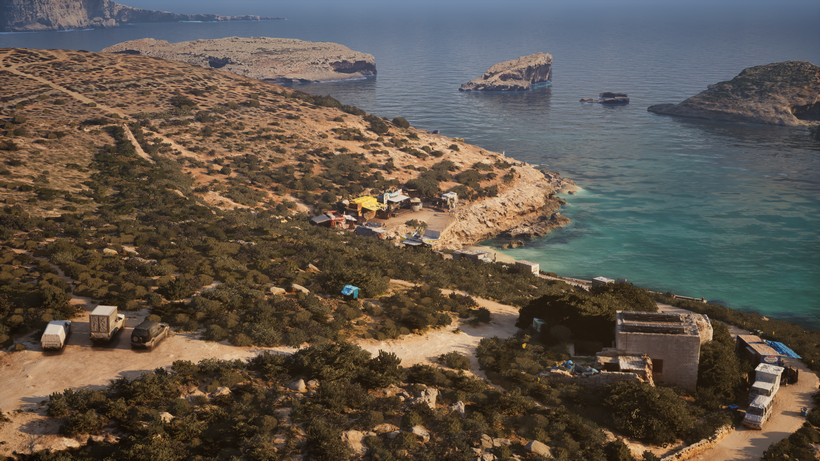 Team Blue Lagoon and Mizzi Studio reaffirmed their “shared commitment to implementing a rehabilitation that is sensitive, holistic, and collaborative, setting a new benchmark for sustainable tourism and nature-led design in Malta.”
Tourism Minister Ian Borg, welcomed the submission of the application, saying, “this rehabilitation is not simply a government initiative. The proposals that we are submitting before the authorities are the result of an extensive outreach, launched earlier this year, to truly incorporate the aspirations of all stakeholders. The proposals comprise input from national entities, e-NGOs, business associations and other players, as well as many individuals who treasure the Blue Lagoon and have stepped forward to join this collective effort. We now look forward to actively supporting the planning and environmental authorities – let’s make sure that we maintain this momentum to implement this visionary rehabilitation as soon as possible.”
Carlo Micallef, CEO of the Malta Tourism Authority, stated, “the Blue Lagoon Rehabilitation is not only about safeguarding the ecological integrity of the area but also about setting a higher standard for sustainable tourism across the Maltese Islands. Through this initiative, we are reaffirming our dedication to creating a tourism model that celebrates Malta’s natural and cultural heritage while ensuring long-term environmental stewardship. This milestone reflects the strong collaboration between public authorities, design experts, and local stakeholders, a collective effort that embodies our vision of a tourism industry that is both responsible and resilient.”
It was explained that the Blue Lagoon Rehabilitation – means “balancing nature and experience is a holistic proposal for the long-term sustainability of Comino’s Blue Lagoon – combining ecological restoration with the repurposing of degraded areas to form site-sensitive facilities aimed at improving safety, accessibility and overall visitor experience.” It will include:
Removal of existing kiosks from the most prominent part of the Blue Lagoon shoreline, opening up space for a 200-metre scenic walkway with breathtaking views and enhanced accessibility,
Ecological restoration and protection of up to 35,000 square metres of garigue landscapes, protecting them with traditional rubble walls and other conservation measures
Relocation of vessel operations away from the heart of the Blue Lagoon, with safer, more accessible docking areas away from the swimming zone.
Enlarging of the swimming zone by 5,600 square metres (20%), including some areas that have already been added this summer.
Repurposing the sites of existing buildings and other degraded areas to create low-lying structures for visitor information points, seating and relaxation areas, food and beverage and sanitation services, and an appropriate waste management site.
Planting of 840 square metres of green roofs to cover the new facilities.
Introduction of sustainable elements throughout the site, blending innovation and heritage, such as reconstituted and natural limestone, reed (qasab) and locally-engineered composite components.
Removal of 880 square metres of concrete surfaces and structures, including unsafe, irregularly built, landing platforms.
Reorganisation of the food and beverage offering to introduce locally-sourced produce, reusable cups and biodegradable packaging.
Photos MTA: After and before rehabilitation