Be the first to comment!
Progress is evident in waste management, but slow to catch on – ADPD

 Email item Email item
|  Print item Print item
|
|
ADPD-The Green Party has acknowledged the recently published Wasteserv report on waste management. The Party pointed out that “for a variety of reasons, among them decades of delays in waste management, as a country we are slow to take on the necessary measures, despite the fact that there have been major improvements in this sector.”
It said that the amount of landfill waste has gone down by nearly a third, and there have been significant increases in the amount of organic and recyclable waste, including from commercial entities. “Indeed, the focus should have been on businesses generating large amounts of waste from the start.”
ADPD-The Green Party Deputy Chairperson and candidate for Birzebbuga Dr Melissa Bagley said, “we believe that the effective management of waste should start at production and importation. Every company involved in providing products, including retailers, should bear the responsibility for empty containers after use.”
She said that “this includes distributors and shops, without any excuses and arbitrary exemptions. As members of the EU, and for our own good, we need to see that the EU regulations and directives concerning the collection of plastic containers or their recycling are enforced. This should be included in our national politics as an effective instrument against plastic pollution.”
Ms Bagley said “we need to see the introduction of dispensers in shops and other commercial spots so that customers can bring their own containers for liquid products or quantities in bulk. This would greatly reduce the need for single-use packaging and promote a culture of reuse of containers.
“We must point out that according to the EU regulations on packaging and waste, every eatery offering a take-away service should allow customers the choice to bring their own containers at no extra charge. At the same time, there should be restrictions on single-use containers.”
Ms Bagley went on to say that “in this context, we are in favour of reducing reliance on products that are considered non-essential, such as bottled water, whether this is sold in plastic or glass bottles. Even if the material is recyclable, excessive use is not sustainable as it will lead to an increase in waste generated. There is yet much to be done in waste management; the reduction of waste, whether plastic or glass, should be a top priority.”
“We recognise that, unfortunately, in a consumerist society that generates significant waste, a waste incinerator is essential for some forms of waste. In spite of this, this should not be used as an excuse to generate more waste or to abandon any effort to reduce waste or undermine the circular economy which is still in its infancy,” said Ms Bagley.
She concluded by saying that “the primary focus should always be prevention, and initiatives to radically reduce consumption and waste generation. The priority should always be waste reduction.”
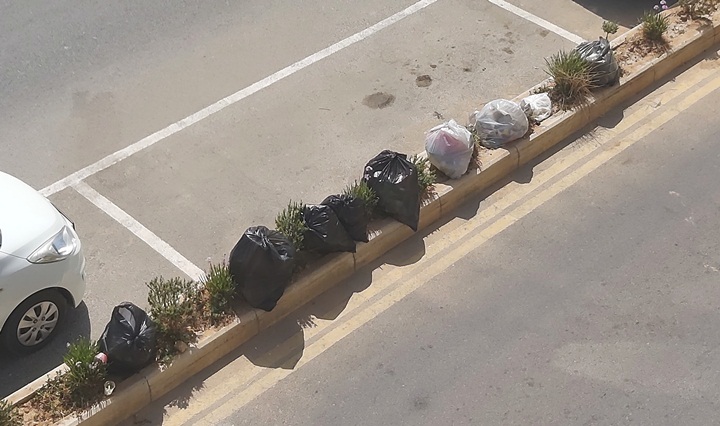
File photo: ADPD