Be the first to comment!
Ageing is a global issue which needs a global response
 Email item Email item
|  Print item Print item
|
|
 Many countries are gradually moving into an era in which fertility and mortality rates are getting lower and lower and consequently populations are ageing rapidly. Thus, at this time, it is only through insight and planning that we can make good use of the resources available. This is imperative to be able to create an environment which facilitates further development in health sectors, education, social security and employment.
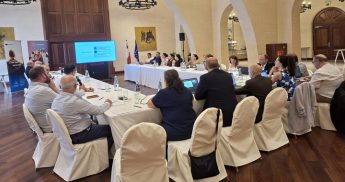
This was stated by Mario Galea, Parliamentary Secretary for the Elderly and Community Care, during the closing ceremony of the International Programme in Policy Formulation, Planning, Implementation and Monitoring of the Madrid International Plan of Action on Ageing organised by the International Institute on Ageing (INIA).
Mario Galea argued that the phenomenon of an ageing world should not be perceived as a problem but as a challenge which needs to be exploited. Essentially this means that the world has to be prepared for this challenge. We have no time to lose. We need to start preparing for this unprecedented challenge today.
Mario Galea remarked that the first quarter of the twenty-first century has often been called the Age of Ageing.. In fact, the older population is expected to increase four-fold by 2050.
This dramatic and unprecedented increase in the number and proportion of older persons in the World is leading to various political, economic and social challenges. This demographic phenomenon will pose particular challenges.
Parliamentary Secretary Mario Galea commented that as old age increase so does the incidence of dementia. Dementia may well be the future pandemic. The cost of dementia is enormous. A recent study by Karolinska Institute in Sweden, estimated that the global cost of dementia in 2009 was 608 million USA dollars. And dementia is only one of the many challenges posed by an ageing population. Worldwide shortage of trained personnel in the field of Gerontology is another one.
A number of countries have initiated various innovative and concrete measures aimed at meeting the needs of older persons. In February 2007, the United Nations began its five-year review of progress towards the implementation of the Madrid International Plan of Action on Ageing.
Mario Galea encouraged the participants to be agents of change and not victims of complacency. “Ageing is a global issue which needs a global response but while you think globally you also need to think locally.”