Be the first to comment!
Seminar on assessment as a tool for learning in early childhood education
 Email item Email item
|  Print item Print item
|
|
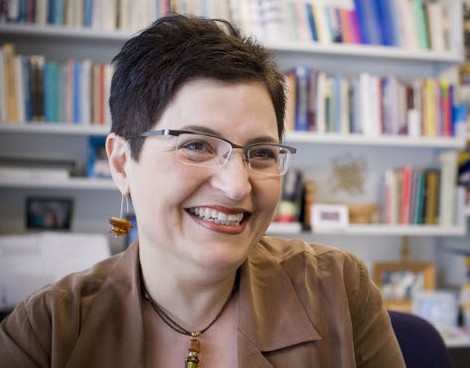 The Directorate for Quality and Standards in Education in collaboration with St Clare College organized a seminar on Assessment as a tool for Learning in Early Childhood Education. The seminar was very well attended by policy markers, principals, administrators and practitioners. In all, there were over 130 educators from the three education sectors in Malta and Gozo.
The seminar was presented by Professor Carmen Dalli, director of the Institute for Early Childhood Studies at Victoria University of Wellington in New Zealand. She was briefly in Malta on her way to a conference in Europe.
Professor Dalli introduced participants to the Learning Story approach to assessment, and provided opportunities for those present to practice creating narratives based on their observations of children’s learning.
Professor Dalli said that Learning Stories are a credit-based method of recording children’s learning. “The method recognises that learning is multi-dimensional and that the goal of assessment practices should be to inform teaching” she said.
The method was developed in New Zealand to be used alongside the early childhood curriculum. “Once we had developed the curriculum, it was important that we had assessment practices that reflected the goals of that curriculum. We wanted a method that would capture children’s holistic development, their competence, their well-being, their empowerment and their ability to form and maintain relationships” said Prof. Dalli.
Learning Stories seek to make learning visible and assessment meaningful. As an assessment method, Learning Stories grew out of case studies in early childhood settings, including kindergartens, where researchers worked with practitioners to find exemplars of good assessment practices.
‘Learning stories are written in language that everyone understands. Each child has a portfolio or journal where their learning stories are collected. Teachers and parents can contribute to the learning stories. Children learn to “read” the photos even when they can’t read the words and they start to see themselves as learners” sustained Prof. Dalli.
She reiterated that curriculum documents should be statements of what is considered important learning in a given society. She asked participants to consider what is important learning for young children in the Maltese context. That should give the right direction. It is pertinent to note that Early Years Education in New Zealand is taken very seriously and has earned the respected of countries that are also at the forefront of Education innovations.
Both organizers, Mr Raymond J. Camilleri, Director of Curriculum Management and eLearning within the Directorate for Quality and Standards in Education and Bernardette Azzopardi, Principal of St Clare said that the large participation at the seminar showed the keen interest that people who work in the early childhood field have in issues concerning early childhood education and assessment that enhance children’s learning.
Dr Grace Grima, Director General of Education, was present at the seminar and commented that “At a time of growing professionalism in the international early childhood field it is important that we take every opportunity to inform ourselves of initiatives around the world so that our own decisions, when we make them, are based on the best possible practices.”