Be the first to comment!
The 2014-2020 EU budget – Finding a delicate balance
 Email item Email item
|  Print item Print item
|
|
A “delicate balance” needs to be found in the negotiations on the EU budget for 2014-2020 between the Council and the European Parliament according to Ambassador Marlene Bonnici, Malta’s Permanent Representative to the European Union.
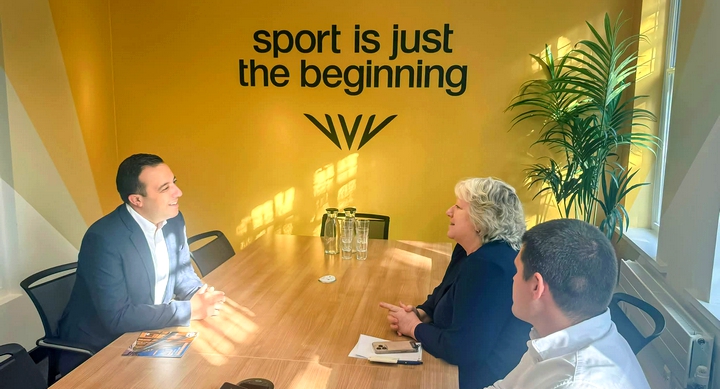
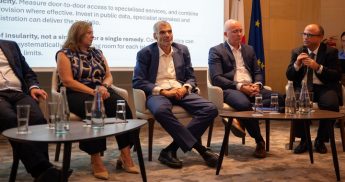
She was one of the keynote speakers at a business breakfast entitled ‘The EU Budget: Deal or No Deal?’ which was organised by the European Parliament Office in Malta and the Malta-EU Steering and Action Committee (MEUSAC) this morning.
During the business breakfast, the state of play of the negotiations between the European Parliament and the Council of the EU on the 2014-2020 Multi-annual Financial Framework (MFF) was discussed. The long-term EU budget includes the €1.128 billion allocation secured by Malta in February.
Marlene Mizzi, newly-elected member of the European Parliament (Group of the Progressive Alliance of Socialists and Democrats), spoke about the demands by the European Parliament for more flexibility and efficiency regarding the budget. A resolution prepared by the group leaders of five of the Parliament’s political groups highlights the growing problem of payment shortfalls, which prevents bills being paid and jeopardises EU programmes.
Last year’s shortfalls meant that several important EU programmes, such as Erasmus, the Research Framework Programme and the Social Fund ran out of funds early in the year.
Ms Mizzi said that both the Council and the European Parliament want negotiations to be brought to a satisfactory end as soon as possible. “We haven’t got a deal yet, but it is certainly a big deal,” Ms Mizzi declared, going on to say that “the principle of flexibility is important because you cannot adopt a ‘one-size fits all’ mentality and the Parliament also feels the need for more transparency.”
Permanent Representative Bonnici explained how the 2014-2020 MFF is the first that is being negotiated under the Lisbon Treaty. It requires the unanimous agreement of the Member States and the assent of the European Parliament. Moreover, the MFF requires around 70 items of sectoral legislation to be implemented according to the ordinary legislative procedure (co-decision).
According to Ambassador Bonnici, “At the moment we have a political agreement with the Council and we are at a stage where this is being turned into various pieces of legislation. There is obviously the dictum that ‘nothing is agreed until everything is agreed’.”
She also stressed the importance of strategy when it comes to spending EU funds. “Globally, the EU budget went down in real terms and, therefore, there is more pressure to see how the money is being spent.” Hence, it is important to make the best possible use of the funds available.
In his introductory remarks, Dr Peter Agius, Head of the European Parliament Information Office in Malta, explained that the European Parliament is insisting that the issue of unpaid bills from 2012 must be settled before concluding the MFF negotiations, as agreed in last year’s budget talks.
“Parliament also wants a political undertaking from the Council that all bills falling due in 2013 will be paid in 2013, so as to avoid ‘rolling over’ a deficit into the new MFF. The EU cannot legally run a deficit.”
The resolution approved by the European Parliament on March 13 gives its negotiators a strong mandate to ensure that the MFF is flexible enough to allow available funds to be used optimally. Parliament is also calling for a review of MFF spending so as to give the Parliament elected in May 2014 and the Commission an opportunity to influence the budgets that they will inherit from today’s legislators. Furthermore, Parliament is making the case for a system of genuine own resources to fund the EU budget and stresses that all EU expenditure should go through the budget.
The informal negotiations should result in a regulation laying down the MFF for which Parliament’s consent is required as well as an inter-institutional agreement between Parliament, the Council and the Commission.
Parliament is negotiating the legal bases for the various EU programmes in parallel, but for these, Parliament and the Council decide on the basis of co-decision. If there is no agreement by the start of 2014, the MFF ceilings from 2013, adjusted for inflation, will apply.
In his concluding address, MEUSAC Head Dr Vanni Xuereb referred to the issue that was mentioned about NGOs and the problems they face when it comes to tapping into EU funds. He explained how MEUSAC assists NGOs and local councils in this regard. Dr Xuereb also spoke of the importance for civil society to be informed about issues such as the MFF as well as its participation in the national and EU level consultation processes.