Be the first to comment!
Debate highlights need for more awareness on online privacy
 Email item Email item
|  Print item Print item
|
|
A debate on online privacy and data protection highlighted the need for awareness and education campaigns on people’s online safety and their rights as users of a relatively new tool that is the internet.
The event, entitled ‘What about your privacy,’ generated a discussion about our online presence as an extension of our offline presence, the way large companies such as Facebook and Google handle our data, people’s perceptions on the subject and whether they do anything to protect their privacy, and the reform of EU data protection legislation.
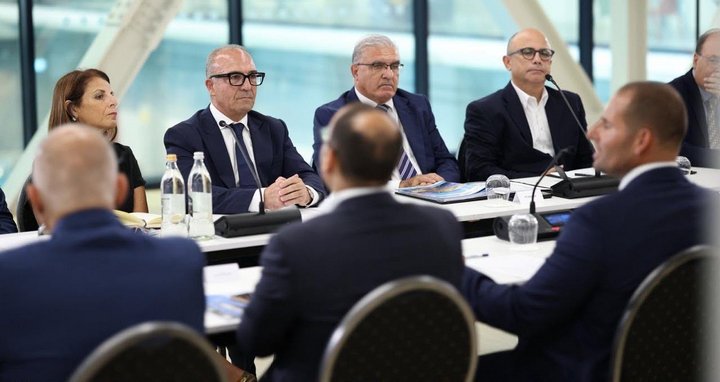
The debate was held at the University of Malta and was organised by the European Parliament Information Office in Malta.
MEPs Roberta Metsola and Marlene Mizzi participated in the debate and both spoke about the European Parliament’s current work on the overhaul of EU data protection rules. Current EU legislation was drafted back in 1995 and needs updating to keep pace with technological change.
In 2012 the European Commission proposed a new regulation on a single set of rules for all data collected online to ensure they are kept safe and also to provide businesses with a clear framework for processing them, and the European Parliament’s Civil Liberties Committee adopted its position on the reform of EU data protection legislation on 21 October and voted to enter into negotiations with the Council of the EU.
MEP Roberta Metsola explained that as a member of the European Parliament’s Civil Liberties Committee she has been dealing with the new data protection package since she was elected. “I proudly voted in favour of a text that strikes the right, delicate balance between strengthening the rights of citizens and the need to avoid additional bureaucracy for businesses.”
She said the rate with which we use the internet means that we desperately need to update our data protection and privacy legislation. “The new data protection package voted by the Civil Liberties Committee gives people more control of their personal data, improves online privacy and sends a strong signal that the EU takes these issues seriously,” said Dr Metsola.
MEP Marlene Mizzi, on her part, spoke about the way that many people seem to be using the internet to launch personal attacks on politicians. “Some attacks on the internet go beyond decency. There has to be some sort of regulation. Freedom of expression is important but it is not the freedom to humiliate and insult people at will.” She said that Facebook page administrators should be held responsible for such posts.
Ms Mizzi also mentioned the so-called right to ‘erasure,’ which Civil Liberties MEPs have inserted in the new text they approved last month. According to the Civil Liberties Committee, any person would have the right to have their personal data erased if he/she requests it.
“To strengthen this right, if a person asks a ‘data controller’ (e.g. an internet company) to erase his/her data, the firm should also forward the request to others where the data are replicated. The “right to erasure” would cover the “right to be forgotten” as proposed by the Commission,” Ms Mizzi said.
Professor Joseph Cannataci and Dr Noellie Brockdorff spoke about three ongoing research projects, ‘CONSENT,’ ‘SMART’ and ‘RESPECT,’ all of which deal with our online presence and the privacy and data protection issues that come with it. Prof. Cannataci discussed the way we move from our real life to cyber space and sometimes we’re even present in both ‘lives’ at the same time. “We’re constantly leaving our electronic fingerprints and footprints on the internet,” he said, recalling the lyrics of song ‘Every Breath You Take’ of English rock band The Police.
Dr Brockdorff said that research that was carried out as part of the CONSENT project showed that those who have been ‘bitten’ online in the past are, unsurprisingly, more aware and concerned by how their data is used.
“The findings indicate that only about one in four people read privacy policies online and of these, only about 12% actually understand them.” Dr Brockdorff said that most respondents said they find privacy policies too long, the text is often too small and the language too difficult. “However, many did not feel the need to read them, saying that they’re all the same anyway and that someone else is worrying about such matters.”
Prof. Cannataci mentioned the use of smart surveillance systems in counter-terrorism and law and order applications, saying that in the Netherlands, for instance, microphones and special software are being used to reposition cameras placed in certain public areas on people who happen to be particularly rowdy or verbally aggressive.
Ernest Cachia, dean of the university’s Department of ICT, Melanie Borg from Vodafone Malta, Ian Deguara from the Office of the Data Protection Commissioner and police inspector Sandro Camilleri also participated in the debate, which was moderated by Peter Agius, head of the European Parliament Information Office in Malta.