Be the first to comment!
Introduction of tablets is an educational project – Minister Bartolo
 Email item Email item
|  Print item Print item
|
|
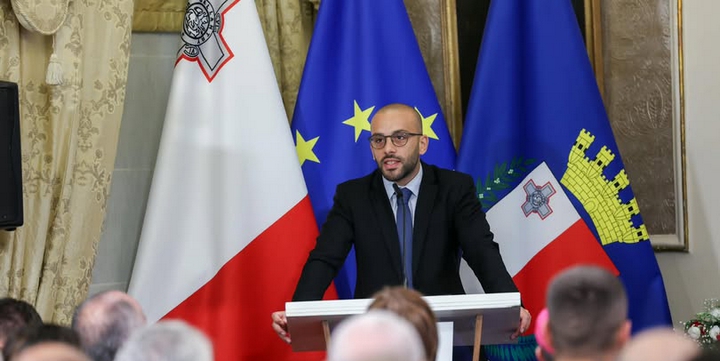
 The tablet pilot project is an educational project and not a technological one, Minister Evarist Bartolo said in a press conference this morning.
The Minister said the scope of the pilot projects is to evaluate the best way to introduce tablets in the Primary Classroom and maximise the benefits that this technology brings to teaching and learning.
The educational focus during the Pilots will be literacy, numeracy and digital literacy, in line with the National Literacy Strategy and the National Curriculum Framework.
The Pilot Project:
13 proposals were submitted in response to the Call for Proposals published by MEDE on the 8th January 2014. Out of these 13, 11 are tablet hardware solutions or hybrid hardware/software solutions and 2 are software solutions for tablets. All submissions met the minimum requirements and were therefore accepted.
The Ministry said that the industry partners are (in alphabetical order): AID Ltd, Computer Domain, Energy Investment Ltd, FGL IT Ltd, Google for Education, Infantium-Telefonica, Klikk Computers Ltd, Micro Technology Ltd, Mosta Electronics Centre, Samsung Consortium, SG Solutions Ltd, Smart Technologies, and Vodafone Malta Ltd.
“Some of the companies have entered into a consortium with other enterprises to provide a complete solution in terms of hardware, software and content. Indeed most suppliers have included educational software and educational content in their proposals over and above the requirements of the Call.”
The brands that will be used include some of the best at the moment in the market like the iPad, Google Nexus, Samsung, LearnPad, Acer, Intel, Lenovo, Telefonica, and Haier amongst others. 9 proposals are based on the Android operating system, one on iOS (iPad) and one on Microsoft Windows, said the Ministry.
Google and Apple will be officially present in Maltese State Schools with their educational solutions for the first time.
Number of classes: 13 Primary classes in 10 Colleges in State Schools, 3 complementary groups and 1 Resource Centre for Students with Special Needs.
The participating State Schools are: Siggiewi, Msida, Gzira, Marsascala, Cospicua, Ghajnsielem-Sannat-Victoria in Gozo, Pieta’, Paola, Mellieha, Zurrieq, Bahrija and the Dun Manwel Attard Young Adult Education Resource Centre. Other schools will be on standby with other volunteer teachers ready to relieve the selected teachers if there are not able to proceed with the Pilot for one reason or another.
The Ministry said that 44 teachers from State Primary Schools volunteered and applied to take part. “The chosen teachers are all committed professional educators but at the same time provide a spectrum in terms of teaching experience, academic qualifications and confidence in the use of technology in the classroom. Indeed most of them don’t own a tablet yet and almost none of them have ever tried to use one in class.”
Most of the participating classes will be in Year 4, though a few Year 3 and Year 5 classes will also take part to widen the scope for evaluation.
There will be 3 Church and 2 Independent Schools in the Pilots (this depended on the number of suppliers and the number of tablets they were ready to provide). The participating schools are being chosen by the Secretariat for Catholic Education and the Independent Schools Association and will participate within the same framework of the State Schools.
Resume of schools:
13 classes in State Schools 3 complementary groups in State Schools 1 Young Adult Resource Centre (Special Needs) in State Schools 3 classes in Church Schools 2 Classes in Independent Schools Total: 22 classes/groups
The Minister said that “the number of suppliers and classes to take part in the Pilot is much larger than what had been anticipated, and goes to show the keen interest in this initiative.
“The total value of investment by suppliers in the Pilots, including hardware, software and support is estimate at over €200,000. This is being totally borne by the suppliers, who also have to provide training and cover warranty and insurance costs.”
He added that the tablets, provided for free by the suppliers, will be returned to the respective suppliers at the end of the Pilots in March 2015.
“Children with special needs in classes included in the Pilot and their LSAs will also be given a tablet and a Pilot will also take place at the Dun Manwel Attard Young Adult Education Resource Centre. However individual needs of students will be taken into account. Special Educational Needs are an important aspect of the One Tablet per Child initiative.”
Participating school children will be allowed to take the tablet home and the outcome of this will be closely monitored and evaluated, the Minister said.
“The Department of eLearning will also support teachers using tablets outside the Pilots Projects in both Primary and Secondary Schools. Experimentation is already going on.
“Training of teachers taking part in the Pilot will be delivered between April and September 2014, then in October the class children of these teachers will also get the tablet. Pilots end in March 2015 and the outcomes are evaluated to move to the procurement phase in 2015.”
The national implementation of the One Tablet Per Child as from Year 4 should start in the scholastic year 2015/2016 and presumably start with teacher training and upgrading of technical infrastructure BUT only the outcome of the Pilot Projects will determine exactly when best and how best to do the national implementation, said the Minister.
Both MITA and MUT are members of the Steering Committee of the One Tablet Per Child initiative, the Ministry said, “a Memorandum of Understanding is being drafted and will be signed by the Education Directorates and MUT to provide a framework for teachers to use tablets safely and effectively in the classroom.”
“MITA is an important technical partner and is giving consultancy on technical matters and providing for the upgrade of the infrastructure needed to give tablets Internet access and other related facilities.”
The Minister concluded that research and evaluation of tablets will be done with the support of the Faculty of Education and Faculty of ICT at University of Malta and other experts and academics both local and from abroad.