Be the first to comment!
Gender-balanced representation for better decision-making: MEP candidates
 Email item |  Print item |
|
Since 2013, Maltese representation in the European Parliament was balanced in terms of gender, with 3 female and 3 male MEPs. Beyond the actual numbers, it is important that political parties give a truly gender-balanced choice to the electorate through their selection of candidates. Such balance between men and women in politics, as in other spheres, leads to better decision-making.
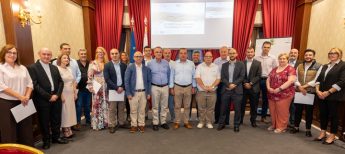
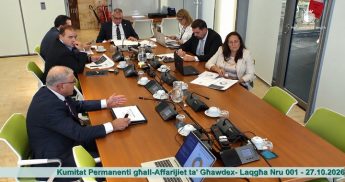
In view of the European elections on the 24th May, a number of MEP candidates were brought together to discuss gender-related issues and ways in which our future MEPs could best pursue policies to address gender imbalance in all spheres of life.
The debate, ‘Gender Parity in Democracy: Let’s Keep the Balance!’ was organised by the Malta Confederation of Women Organisations together with the European Parliament Information Office.
Work and family life are not always easy to reconcile, especially for women. Yet, as Anna Borg from the Institute of Labour Studies at the University of Malta points out, there seems to be a relation between the female employment and birth rates.
In countries where more females are well-represented in the job market (female employment rates reach 70% in some Scandinavian countries, compared to 47% in Malta), women also have higher birth rates. Borg, a member of the MCWO said that this could mean that where women are provided with the right conditions, they can contribute better to the economy and their input would not be lost. Investment by these countries in family benefits and family-friendly measures, however, is significantly higher than the European average.
In recent years, the European Parliament pushed for family-friendly initiatives at European level, such as the directive on parental and maternity leave. Other proposals include gender quotas on boards and initiatives to reduce the gender pay-gap.
In Malta, as numbers of women graduates keep increasing, women are entering the labour market earlier. However, when they intend to build a family, they start facing difficult choices and many struggle to find the right balance between life at home and pursuing their careers. As a result the majority of female workers tend to drift in and out of the market. It is significant to note that there is a higher number of working mothers in the public sector, where family-friendly measures are more generous.
Partly, the necessary shift is mostly cultural, said Jonathan Shaw, a PN candidate. Miriam Dalli, PL, referred to the recent introduction of free child-care centres. “Incentives for men are as important as those for women” she said.
“There is no level playing field between men and women as the latter start at a disadvantage,” said PL candidate Alfred Sant. He maintained that gender quotas, coupled with the necessary incentives, provide a solution towards a mind-shift in favour of a better balance in decision-making.
PL candidate Lino Bianco pointed out the importance of fighting abuse and violence on women as a first step that is also essential to achieve true balance.
“Let’s speak of parents and their responsibilities rather then men or women,” insisted Helga Ellul, PN, who also emphasised the importance of keeping in mind the cost of measures for employers. Alternattiva Demokratika candidate Arnold Cassola stressed on the cost of solutions proposed and he referred to the financial transaction tax as a possible additional financial source for the EU which could be directed as necessary.
PN candidate Kevin Cutajar remarked that women should not feel forced to enter the job market because of social pressures driven by materialism.
Deborah Schembri (PL) and Therese Comodini Cachia (PN) both stressed the need to challenge stereoptypes that accompany women in a variety of settings, whether professional or otherwise.
Opening the discussion, MCWO Chairperson Lorraine Spiteri said she hoped to see the existing gender balance amongst Maltese MEPs extended to the next legislature.
On female representation, Dr Peter Agius, Head of the European Parliament Information Office, quoted an EU-wide study which shows that Malta is at the bottom of the list when it comes to gender balance in the national Parliament. Only 14.7% of national MPs are female (in 2008 the figure was even lower at 9%).
In her closing remarks, Helena Dalli, Minister for Social Dialogue, Consumer Affairs and Civil Liberties, said that the Government is committed towards strengthening the participation of women in economic life. She also emphasised the need for a greater presence of women candidates in all levels of political participation, which in turn would increase the possibility of getting more women elected.
Intervening earlier, Opposition MP Claudette Buttigieg said that we need to create new quality jobs that enable women to adapt to the job market to strike a better work-life balance, possibly by working from home.
The debate took place in two different panels moderated by Assistant Lecturer Anna Borg and Mediatoday journalist Miriam Dalli.