Be the first to comment!
How ten years of EU membership have changed the country
 Email item Email item
|  Print item Print item
|
|
Ten years after Malta’s accession to the EU, what is the assessment of our experience? How much have the process leading to that milestone, and the subsequent first decade as an EU member, influenced the country politically, economically, and socially?
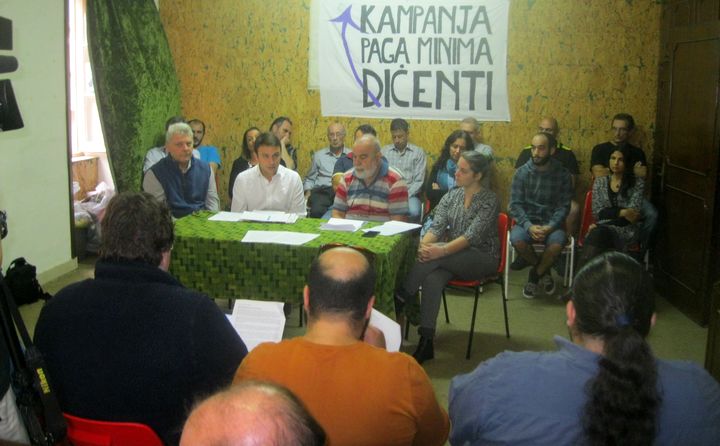
These were the central questions debated in a conference organised by the European Parliament Information Office in Malta and The Today Public Policy Institute.
The conference followed up on the launch of The Today Public Policy Institute report Malta’s EU story: How ten years of membership have changed the country. The Director General of the TPPI, Martin Scicluna, and the Lead Author of the report, Patrick Tabone, opened the proceedings by giving a short overview of the report.
Endorsing the report, the Leader of the Opposition, Dr Simon Busuttil, recalled the difficulty of pre-accession talks and thanked the main actors who led that process, which at times required difficult policy decisions. Dr Busuttil mentioned joining the euro area just 4 years later as another big step.
“In reality, our sovereignty became stronger. From marginalised and isolated, we went straight to the heart of decision-making in the EU.” He said that, in the end, implementation of EU rules remains a constant challenge.
Guest speakers debated different aspects of the report. Former European Commissioner Dr Joe Borg, spoke about the political impact of EU membership. His contribution was followed by a discussion on aspects related to the economy, led by economists Dr Lino Briguglio and Dr Gordon Cordina.
The following session then focused on the effects of EU membership on the environment. The panel was this time composed of Prof. Simone Borg, Dr Michael Briguglio, and Mr Carmel Cacopardo.There were numerous interventions from the audience, which included MEPs Marlene Mizzi and Therese Comodini Cachia. They both highlighted the importance of maintaining high standards of governance that caters for the specificities of Malta.
Summing up the debate, the Deputy Prime Minister, Louis Grech, said that EU membership brought about indisputable strategic changes, which had a fundamental impact on all aspects of Maltese society.
“The context we need to keep in mind when assessing EU accession and our first years of membership is one in which Europe experienced three waves of enlargement, faced the growth of new powers such as China, India and Brazil, and above all, a recession that threatened the very existence of the Union.”
Grech said that faith ought to be restored in the European project. On the other hand, the EU must focus in the really big issues, such as tackling unemployment, poverty, and migration.
“The EU has always managed to transform setbacks into positive outcomes. This is a mass of diversity which has been able to function together for almost 60 years. Here in Malta we have our own opportunities, and the EU Presidency in 2017 is certainly one.”
“I agree with the author of the report that Malta can look to the future with confidence, without underestimating the challenges that lie ahead . We ought to leave a legacy to future generations, that is a stronger, more evolved society that is able to determine its own destiny,” Grech concluded.