 2 comments so far.
AD calls for small sewage treatment plant to serve San Lawrenz, Gharb, Santa Lucia and Ghammar
 Email item Email item
|  Print item Print item
|
|
 During a visit to Ing. Cremona’s water waste treatment pilot-plant in Ghajn Tuffieha, Alternattiva Demokratika has congratulated Ing. Marco Cremona for taking the lead and showing us that it is indeed possible to recover useable water from sewage, reliably and cost-effectively.
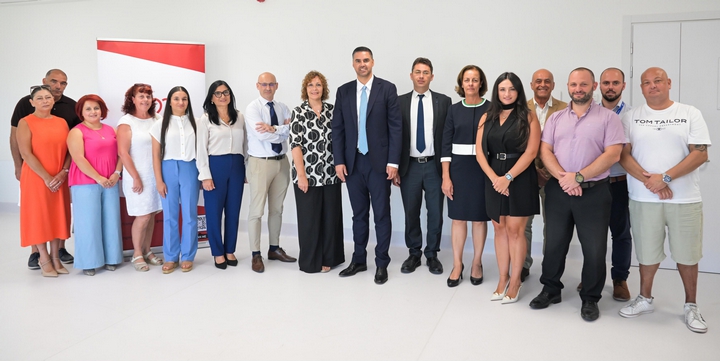
Ralph Cassar, Alternattiva Demokratika Spokesperson on Energy, Industry and Transport, said: “As a first step, government should immediately revoke the tender for the construction of a pumping station and rising mains at Wied il-Mielah in Gozo and instead construct a small sewage treatment plant for the benefit of the communities of San Lawrenz, Gharb, Sta. Lucia and Ghammar.”
Arnold Cassola, Alternattiva Demokratika Chairperson, said: “Hotels are big consumers of water, with a guest in a 5 star hotel consuming as much as 350 litres of water a day, or 4 times more than a Maltese citizen. Consequently the sewage discharges from hotels is significant.
The production of potable water through desalination, the transportation of potable water from the desalination plants to consumers, the pumping of sewage from houses/hotels to a centralized municipal sewage treatment plant and the treatment of the sewage for disposal into the sea results in a huge energy cost and a substantial carbon footprint – and this without alleviating any of the problems related to water scarcity and depleting freshwater reserves.”
“Through his project, Marco Cremona has shown that all these expenses can be curtailed through wastewater recycling. If it is possible to recycle wastewater on this small scale, it surely can be done by government on a larger scale”, concluded Prof. Cassola.
Carmel Cacopardo, Alternattiva Demokratika Spokesperson on Sustainable Development and Local Government added: “The current policy of pumping sewage across the Maltese Islands for treatment for disposal into the sea is not sustainable, especially for the 9th thirstiest country in the world as is Malta. This country is facing a severe water crisis, possibly at a scale that is greater than the energy crisis . If government intends to throw away 60,000,000 litres of treated water a day, how is it going to make good for the cutback in groundwater extraction and seawater desalination – as required by EU Directives for the sustainability of our water reserves?”
Carmel Cacopardo continued: “In view of these new challenges, AD requests that government immediately re-assesses the current plans of a centralized treatment of 90% of Malta’s sewage at the Malta South treatment plant in favour of the construction of a small number of decentralized treatment plants that would be able to produce a constant supply of 2nd class water for agriculture and industry across the country.”













I simply cannot understand why and how someBODY decided to build a pumping station and dig up half of Gozo in order to raise a mains from the West of Gozo (Wied il-Mielah) to the South (Xewkija), rather than constructing a small sewage treatment plant for the benefit of the communities of San Lawrenz, Gharb, Sta. Lucia and Ghammar.
Honestly can’t see the logic and the justification. Or perhaps I am missing something?
Another reason why smaller decentralised plants would make more sense is that a number of companies are now working alongside sewage plants in America to produce electricity. Building a fuel cell plant alongside the sewage treatment plant and using the raw sewage to produce the gas in order for the fuel cells to function can do this.
Although this research is still in the early stages it is producing power which is being used to supplement the energy needs for the sewage treatment plant. As the technology gets better it is hoped that it will eventually produce enough energy to power the sewage treatment plant with the excess being fed to the grid. More information at this link; http://www.msnbc.msn.com/id/5335635/