 1 comment.
Tourism industry needs be re-structured – ADPD
 Email item Email item
|  Print item Print item
|
|
 ADPD – The Green Party Deputy General Secretary Dr Melissa Bagley, in a statement, has emphasised that the tourism industry needs be re-structured.
”This industry is eating up more and more open spaces with government’s support and impacting negatively our quality of life. Some recent examples include the Gzira seafront lido building disfigurement and the attempt to turn a stretch of the Marsaskala coastline into a marina.”
She went on to say that “planning policies have been changed by government many times to permit the expansion and building of more and more hotels. Subsequent governments have also changed the conditions tied up to land granted for hotels to allow for speculation and the building of residential apartments and offices instead.”
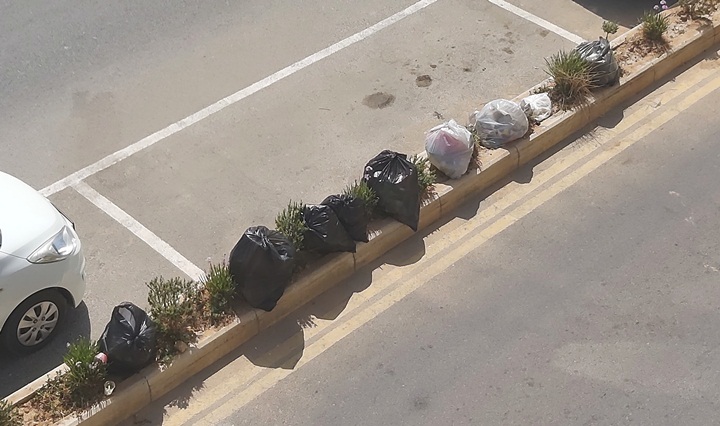
Dr Bagley highlighted the fact that “business operators taking over popular bays such as at Comino, are being allowed free reign to do as they please all in the name of ‘the economy’. The impact of uncontrolled tourism on infrastructure, transport, water and electricity, and waste is evidenced especially by the state of our tourist location.”
“In spite of parliament’s approval of a motion on ‘climate change emergency,’ this is still a paper declaration as the necessary policies required to take the necessary measures to face this emergency have never been approved and acted upon. “When will we go from words to action?” asked Bagley
ADPD General Secretary Dr Ralph Cassar said that the tourism industry has been receiving various forms of state aid and public resources for many years. This is money paid out of the taxes that we all contribute.
“We are not just referring here to subsidies but also to administrative decisions, including planning regulations aimed at benefitting the tourism industry at the expense of the residential community. They always want more! In 2019, almost 3 million tourist visited Malta – a large number of visitors that was of a considerable burden on the country’s infrastructure,” he said.
Cassar stated that, “one simple measure is for tourists to contribute towards the impact of their use of the country’s resources through the tourism tax (or better that on hotel beds) – currently at 50 cents daily up to a maximum of 5 euros: this should be revised upwards without a maximum limit in order to better reflect the impact of tourism on the infrastructure.”
He pointed out that “the income from such tax should support public transport, clean modes of travel and security on our roads, together with better waste management. It is not fair that Maltese residents subsidise tourists – this does not make sense! One must also mention that certain operators behave in such an arrogant manner that makes them believe that they should be allowed to do as they please.”
“One specific case is that of Zammit Tabona, cruises operator to Blue Lagoon in Comino who is insisting against any form of the necessary controls that are required in such a protected zone. Indeed, such an operator should lead by example and should be made to contribute financially to make up for the fact that he is exploiting this natural zone for profit!” said Cassar.
ADPD – The Green Party Chairperson Carmel Cacopardo referred to the impact of tourism and air travel on climate. Currently there is an ongoing debate regarding a tax on aviation fuel. This is one of the essential measures needed to enable the reduction of 55 per cent of greenhouse emissions by 2030.
He explained that this initiative is aimed to ensure that the price of an air flight includes all costs, include those caused by emissions. This can be carried out either by a tax on air travel or else through the use of alternative means of transport, as a result of which the tax can be avoided legally, with the resultant decrease of the environmental impacts.
Cacopardo said that in mainland Europe the use of trains is many a time a good alternative for air travel not just due to its efficiency but also in generating less environmental impacts. In Malta’s case this can also be used in a limited way. This leads to an increase in the cost of air travel and the number of tourists – both incoming as well as Maltese that travel abroad.
He added that, “although there must be concessions for those who live on isolated islands, tourism must carry the weight of its own impacts: this is what social and environmental justice demands! It is in Malta’s interest that the impact of mass tourism is contained before it is too late. The aviation industry must be encouraged through economic means such as taxation to restructure itself. More sustainable means of transport should be supported if we really mean to address climate change.”
“Let us all remember that like all island states, Malta included, as well as coastal communities, will be the first to suffer some of the worsts repercussions of climate change: the increase in sea level. Climate will not consider our special situation or our economic considerations – nature does not discriminate: it will roll over us as it did elsewhere,” Cacopardo said.
“Tourism is at a cross road. It needs to adapt to the impact of climate change. This is tourism’s future… and not tax exemptions, concluded Cacopardo.
Photo by Alain Salvary










Sustainable Tourism is the Magic Word.
A complete RETHINKING is important!
Not all Tourist action in Summer.
What is about the Shoulder month?
More in sharing the whole year ( All Year round ).
Same money ( or more ) with new concepts , and more quality of life for the residential community.
More info?
Ask me.