Be the first to comment!
New study looks at intersectionality in Malta and Gozo

 Email item Email item
|  Print item Print item
|
|
“Sometimes I remind people that I also exist,” says Alex Haber, a 26-year-old person who is also a wheelchair user and identifies as a transman. “I belong to two small minorities, which are often forgotten.”
“Identity is you and you shouldn’t be ashamed or confused as to who you are,” says 21-year-old Naomi Schranz. “Pronouns are important – personally I do not want to be referred to as a ‘she’ or a ‘he.” I am either in between or outside that spectrum,” says Matthew Chircop. “Coming out is a continuous process,” says Eman Borg Mercieca from LGBTI+ Gozo.
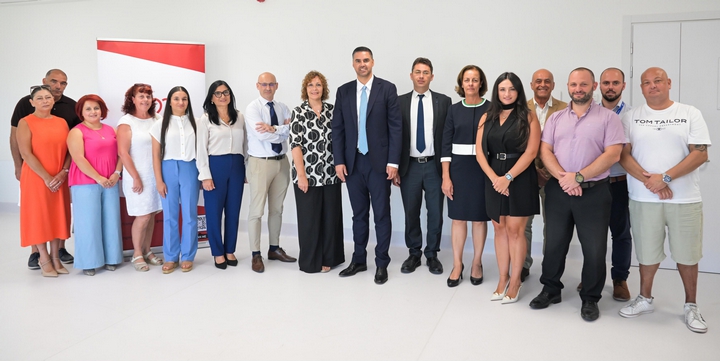
All have taken part in a series of visual podcasts by the Commission for the Rights of Persons with Disability (CRPD) in collaboration with MGRM. The interviews shine a light on an overlooked minority, persons with disability who also identify as part of the LGBTIQ+ community.
All were in agreement that there needs to be a change in beliefs and attitudes towards both persons with a disability and individuals who identify as LGBTIQ+, a view that is also reflected in a new study commissioned by CRPD and carried out by the Faculty for Social Wellbeing at the University of Malta.
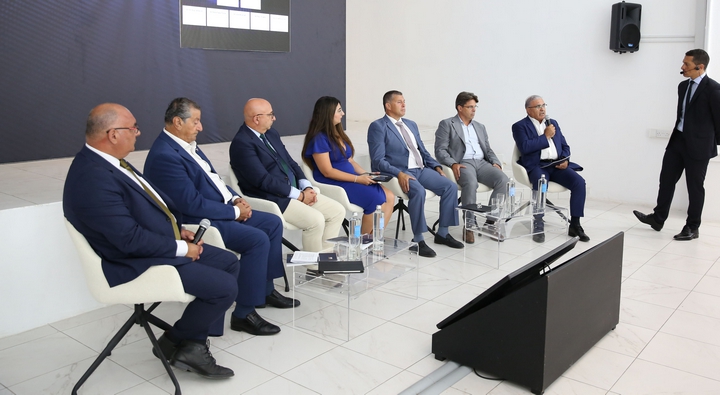
The most crucial step in achieving this change is by increasing awareness about these issues and through the education of the general public, says the study, which was launched at the Intersecting Identities stakeholders’ conference this week.
It was explained that intersectionality is a framework that provides the insight to understand how the various aspects of a person’s identity intertwine, resulting in discrimination or privilege.
The study shows how, in recent years, attitudes towards persons with a disability and individuals forming part of sexual orientation and gender identity minorities have improved.
Nevertheless, persons with a disability who identify as LGBTIQ+ continue to experience double discrimination and social exclusion due to forming part of both these minorities.
This intersectionality negatively impacts various areas of their lives, including socialising, education, employment, health and general wellbeing.
Recommendations include the development and implementation of sexual expression and gender diversity policy within all disability services as well as individualised and ongoing sex education offered to all service-users.
Other recommendations include mandatory courses for all employees working with persons with a disability about sexuality including, sexual expression, sexual orientation and gender identity as well as courses for parents of persons with disability.
The study also mentions other recommendations, including an accessible shelter for LGBTIQ+ youths; increasing accessible promotion of events and spaces and the involvement of persons with disability who identify as LGBTIQ+ in public awareness-raising efforts.
Professor Andrew Azzopardi, Dean for the Faculty for Social Wellbeing at the University of Malta, stated that, “this conference is another initiative that shows that collaboration between stakeholders and grassroots is of the essence. What we tried to do in the study is to surface the very complex issues that people face, people who have a number of socially imposed constraints that they have to juggle with.”
He continued by saying, “this study is another loop, it is the beginning, but a very important loop to help us localise the challenges and find ways how together we can create opportunities for people to be active citizens in our community.”
In her concluding remarks, Commissioner for the Rights of Persons with Disability, Samantha Pace Gasan claimed that intersectionality is one of CRPD’s main priorities, as we have to continuously realise the various struggles that different identities bring about, and advocate for more accessible and inclusive service provision and communities.
CRPD said that it will take the recommendations from this study on board to work towards improving the quality of life of this community.
The report, can be read in full by clicking here.