Be the first to comment!
New species of fungus discovered from Gozo and Portugal
 Email item |  Print item |
|
For many of us, fungi are ‘edible vegs’ bought from the greengrocer and used as a condiment such as in sauces, topping pizza, compliment main dishes, and other cuisine uses.
Despite eaten and perceived as crops, molecular investigations revealed that fungi are genetically closer to animals than to plants.
However, these edible mushrooms account for only a minute fraction from about 150,000 species of fungi described, where according to mycologists (scientists studying fungi), there are some 2 million species more that have not been described.
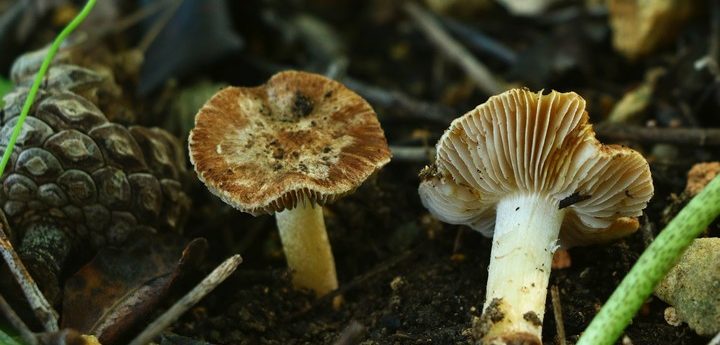
During research carried out by the EcoGozo Directorate within the Ministry for Gozo, a population of a group of fungi known as Fibre Caps (genus Inocybe) was found at the Chambray Pinetum, Gozo. Fibrecaps are short, robust, brown mushrooms which have their caps striated with a distinct fibrous texture.
Some 850 species of Fibrecaps are known worldwide, especially from temperate regions such as from US and Europe, of which over 200 were described in the last six years.
Initial identification of this species by resident mycologist Stephen Mifsud were futile based on current literature on Fibrecaps. Hence the material found was discussed and sent to foreign experts, namely the Dutch Prof. Ditte Bandini who is an authority of Fibrecaps.
This led to more detailed morphological and molecular investigations which confirmed that the species from Gozo is “new to science,” Stephen Mifsud said.
A similar collection was also previously found by the Portuguese mycologist Vasco Fachada from Aldeia do Meco in Portugal, which strengthened the description of the new species.
Results were recently published within a European-wide research paper titled Fibre caps across Europe: type studies and 11 new species of Inocybe. To read the publication please click here.
This species was named Inocybe mecoana Fachada, Bandini & Mifsud (MB 845165) and is characterised by a dark brown, somewhat mottled cap, usually showing a pale, light-brown zone at the centre; a beige stem covered with a fine pruinosity (a dust-like covering) and cream-coloured gills turning toffee-brown with age which releases tobacco-coloured spores.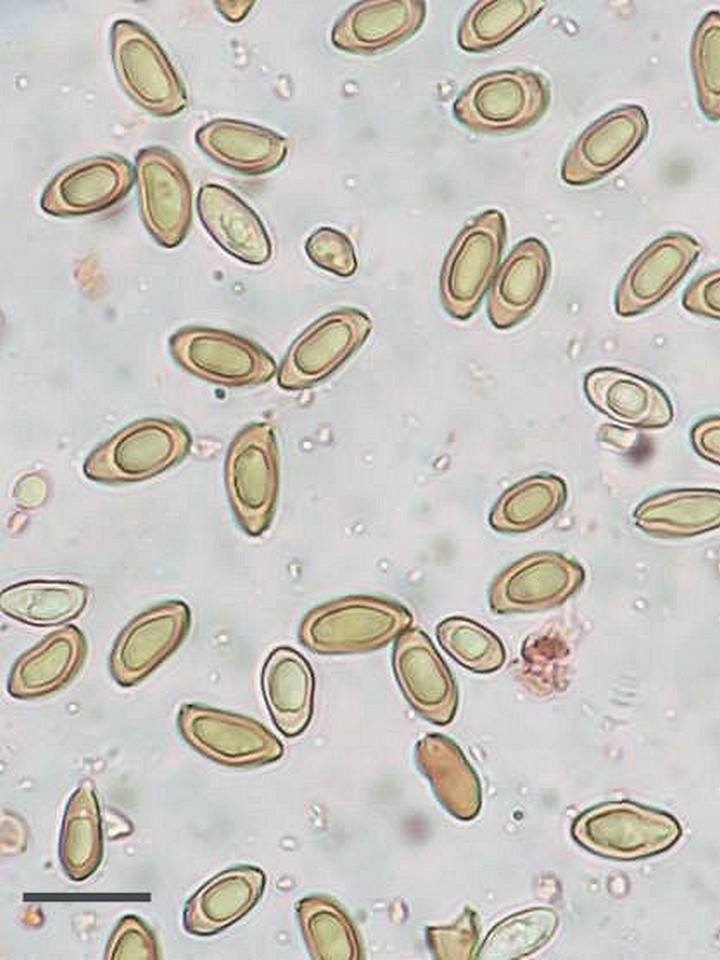 Under the microscope, the spores are shaped like an almond-seed or ellipsoid, have a smooth thick wall and possess a large, central oil body, measuring approximately 12 µm long and 7 µm wide.
Mifsud explained that both in Gozo and Portugal, this Fibrecap mushroom was found growing close to the shore, in somewhat loamy soil under and probably associated with pine trees.
He added that there are a few closely related species with these morphological characters, such as Inocybe tarda and Inocybe psammabrunnea but differ in very minute details that only an expert mycologist could tell apart, and sometimes they have to rely to genetic tests to be sure about their identification.
The species does not have an edible value as it is slightly sour and described to have a “spermatic scent” in the paper.
The EcoGozo Directorate is encouraging the public “to please treat our native wild mushrooms with more respect, since apart from being beneficial organisms involved in the natural recycling of organic matter, some might have a valuable scientific significance, such as a restricted distribution worldwide or, as in this case, can be a new organism to science.”
Photos: EcoGozo/Stephen Mifsud – Top; Inocybe mecoana, a new species of fibre cap discovered from Mgarr, Gozo and Portugal and below; Spores having an ellipsoid to almond-like shape (scale bar = 10 micrometres)