Be the first to comment!
Tal-Klus waste input increased by 7.0% during 2021
 Email item Email item
|  Print item Print item
|
|
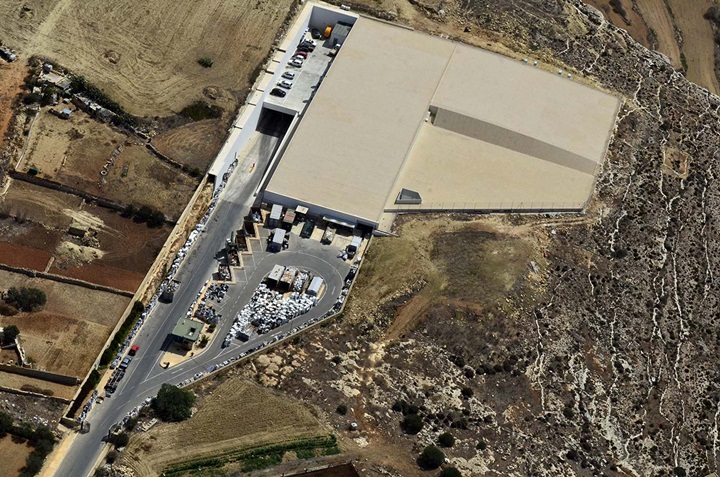 During 2021, the waste input into the Tal-Kus (Gozo) waste transfer station increased by 7.0%, or 1,167 tonnes, the National Statistics Office said today.
The total generation of solid waste in Malta during 2021 amounted to 2.5 million tonnes, which is 29.8% less in comparison to the previous year, the NSO said.
Hazardous waste increased by 1.5% or 634 tonnes, while non-hazardous waste decreased by 30.1%. The major contributor to this decrease was non-hazardous mineral waste that went down by 35.6% or 1.1 million tonnes.
On the other hand, non-hazardous secondary waste that is generated from the mechanical treatment and sorting of waste increased by 32.2%, or 22,374 tonnes.
The NSO noted that in 2021 waste treatment totalled 2.4 million tonnes, decreasing by 30.4% or 1.0 million tonnes over 2020.
All treatment categories showed decreases except for energy recovery that increased from 43 tonnes in 2020 to 13,822 tonnes in 2021.
The highest decline was for backfilling that went down by almost 1.0 million tonnes or 55.4%. Recycling also went down by 52,641 tonnes, or 4.0%. The decreases that were associated with disposal at sea, landfilling, and incineration amounted to 24,560 tonnes, 10,711 tonnes and 358 tonnes, respectively.
The NSO explained that most of the decreases in waste treatment can be attributed to mineral waste. In fact, the declines in backfilling and disposal at sea are totally attributable to mineral waste, while the decline in the recycling of mineral amounted to 55,985 tonnes.
There was an increase of 153.3% or 20,211 tonnes was registered for the waste input at the Sant’ Antnin Waste Treatment Plant, while the input that was recorded for the Malta North Mechanical- Biological Treatment Plant decreased by 2.3% or 1,732 tonnes.
Additionally, decreases of 2.9%, or 8,824 tonnes and 7.8%, or 467 tonnes were also noted for waste that was disposed at the Ghallis landfill and at the Marsa Thermal Treatment Facility, respectively.
In 2021, the separate collection of waste fractions experienced a decline in all modes except for civic amenity sites where amounts increased by 4.9% or 1,818 tonnes.
The NSO noted that with regard to door-to-door collections, decreases of 12.5, 8.1 and 3.5% were recorded in the organic waste, glass, and the grey/green bag waste collection respectively. Similarly, a drop of 5.5% was recorded for bring-in sites.