Be the first to comment!
Children from blended families urge parents to ”prioritise children’s wellbeing over greed”

 Email item Email item
|  Print item Print item
|
|
In the first study of its kind, children urged their biological parents to ”remain civil towards each other, to communicate more respectfully, and to prioritise children’s wellbeing over greed.”
The Malta Foundation for the Wellbeing of Society explained that this Blended Families Research Project will equip policymakers with the in-depth research necessary to address these families’ unique needs as the structure of the traditional nuclear family shifts.
Children’s deep empathy towards their parents, even when feeling uncomfortable about the changing dynamics of their family life, is among the first insights emerging from this study delving into the challenges blended families face.
The Foundation said that a blended family, also called a step family, is a reconstituted family unit where one or both parents have children from a previous relationship, but they have combined to form a new family. Parents may be in a same-sex or heterosexual relationship and may, or may not, have children with each other.
Spearheaded by Malta Foundation for the Wellbeing of Society, the qualitative research is being carried out by University of Malta academics Angela Abela, Suzanne Piscopo, Sue Vella and Allison Zammit Said.
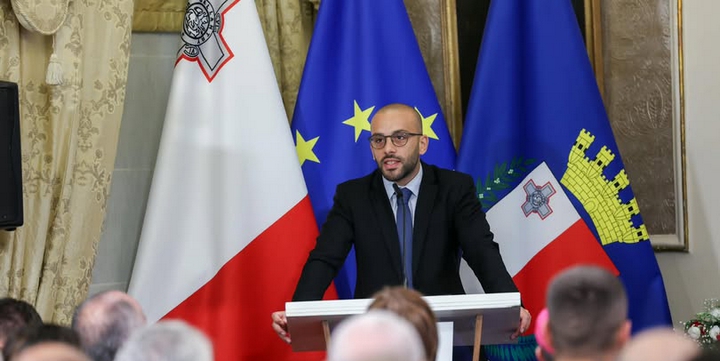
Announced in 2021, Prof. Abela, the study’s lead investigator from the University’s Department of Family Studies, today presented Speaker Anglu Farrugia with an update of the findings to date during a press conference held in Parliament.
“In this presentation of our initial findings, we are focusing on what the children told us. From what has emerged from the interviews so far, we have been very impressed by their level of empathy towards their parents, even in situations that were not always so comfortable for them,” Prof. Abela said.
This study – the final findings of which will be presented at the end of the year – covers interviews with various members of each family including the stepchildren, the mother, her partner, and the biological father.
This project follows on a 2016 study among 2,400 participants which had for the first time shown that 53 per cent of those who were divorced and 37% of those who had separated, were now in a new relationship.
This situation brought to the fore the complications blended family units faced when it came to juggling new family needs, and exposed a research gap in Malta as well as on an international level.
Marie-Louise Coleiro Preca, MFWS chair and Eurochild chair, said ”to date, there has been no research study of the sort. I am proud that the Malta Foundation for the Wellbeing of Society is again pioneering such an interesting evidence-based study, through the able hands of Prof. Angela Abela and her colleagues.”
Ms Coleiro Preca added that she was impressed by what the children have said in the interviews carried out so far, in particular in the way they were so protective of their parents and so accepting of the situation.
“To me this reflects the important role parents and step-parents have to nurture healthy relationships among themselves, and the need for clear and honest communication between parents and their children.”
This was one of findings highlighted by Prof. Abela who said children appreciated that their parents communicated any decisions that were going to have a direct impact on them.
The birth of half-brothers and half-sisters was also a momentous time for children, and parents had to be sensitive to help prepare them for these events.
Prof. Abela highlighted the important role mothers played as an intermediary when the stepfather intervened to correct the stepchild, and added that “the advice these youngsters gave to other children and parents living in a blended family is full of wisdom and hope.”
Among the advice they gave while sharing their experiences, children urged stepparents to allow biological parents to communicate freely without allowing jealousy or suspicions to take over.
The children also advised other children going through similar experiences to give stepparents a chance, to seek help when they struggle with feelings of anger or fear, and finally, to celebrate being in a blended family as this could also be a beautiful experience.
Prof. Abela said, “throughout the study, it transpires that children thrive when they feel loved, understood, and cared for by their parents and stepparents. They enjoy feeling connected with all the members of the family.”