Be the first to comment!
64% of those seeking help for addiction had parents with an addiction

 Email item Email item
|  Print item Print item
|
|
OASI Foundation Chief Executive Mr Noel Xerri, remarked that 64% of the people that seeked help in 2022 were in fact people that grew up with parents who had an addiction problem.
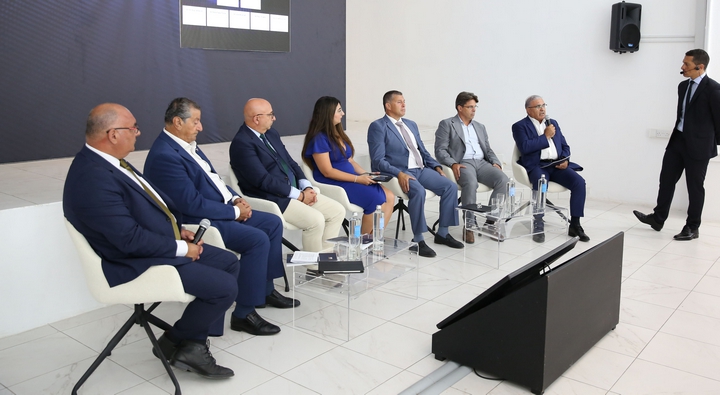
Mr Xerri was speaking during the OASI Foundation National Conference – It-Tfal u l-Addiction – held under the Distinct Patronage of President Dr George Vella.
Mr Xerri emphasised that OASI Foundation never wanted people to end up imprisoned because of substance abuse.
He stressed that OASI, together with other organisations, opposed strongly against the legalisation of cannabis the main reason being the protection of children as the law allows cultivation of cannabis plants at home.
Mr Xerri remarked that a lot more research is needed to shed further light on what is happening in our society, especially where children are involved keeping in mind that they are the future of tomorrow.
Dr Chantal Avellino, a senior forensic psychologist and lecturer, discussed the psycho-social impacts of parental substance use disorder.
Dr Avellino opened up her discussion by highlighting the importance to recognise and address the psychosocial effects to support the well-being of these children.
She emphasised that the effects of substance use disorder are felt by the whole family remarking on the negative impacts such as disruption of attachment and financial issues where such environments are characterised by things like emotional chaos, loss, and violence.
Dr Avellino also made reference to local scenarios referring to the legalisation of cannabis remarking that cannabis is the most addictive illicit drug from European studies therefore she questioned about the situation in Malta and suggested for more research to be carried in about this issue.
Alongside Dr Avellino, Ms Deborah Francalanza, a trainee forensic psychologist presented her study which was local research on the pathway from Childhood Victimisation to Crime.
In this research, Ms Francalanza recruited individuals aged 18 and over who had started engaging in crime at a young age and had eventually been convicted of crime.
Ms Francalanza represented the breakdown of the psychological and psychosocial effects which include mental health issues, education, and interpersonal relationships among others.
One of the key findings of this study was that parental substance abuse was in fact one of the adverse childhoods experienced by the participants who had long-term effects.
Ms Francalanza also highlighted that there is still stigma attached to seeking help both for parents and their children which can be a significant barrier to recovery. The importance of preventive measures was also highlighted such as raising awareness.
Dr Mary Muscat a lawyer and a lecturer delved into what the law states about safeguarding children. Dr Muscat mentioned the obligations of parents in respect to what the Maltese law states about this aspect.
She also remarked about what the law says when it comes to neglecting the children, offending the child’s dignity and self-esteem where in such cases there could be a case of imprisonment.
Since professionals working with children have to report to the police cases involving significant harm to children such as abuse, neglect and harassment, Dr Muscat also suggested points which could be crucial for a way forward such as closer ties of child advocates with schools.
Dr Matthew Berry a clinical psychologist and lecturer delved into the direct impacts that children whose parents suffer from an addiction problem are at higher risks. These risks include things such as normalising of drug use and harm through physical and emotional neglect.
Dr Berry also talked about adult children of alcoholics where he delved deep into some features of these people such as judging themselves harshly and having very low self-esteem.
He remarked that the greatest trauma is not the bad things that happen to the child but it is the good things that a child should experience and they don’t. Dr Berry also emphasised that the relationship between the parents is one of the things that has the most effect.
President Dr George Vella in his video message remarked on the importance to recognise that when a person has an addiction problem people around them are affected, especially children. The President stated that this impact effects the child both physically and mentally.
The President emphasised that the children are tomorrow’s future and just like when we want a good fruit one needs to cultivate the seed, the same goes to children and this will determine how they will grow to become adults in the future.
Dr Vella remarked that as a society we should show empathy towards every individual.
Gozo Minister Clint Camilleri remarked that childhood is one of the most important stages and therefore the chaotic environment at home and having parents who are suffering from an addiction problem makes children more at risk to engage in an addictive pattern.
Dr Alex Borg, Shadow Minister for Gozo stated that this is a reality which is complex and there is no one solution or cause for this issue.
Dr Borg also remarked that it is essential to have an open mind in order to discover what we are not expecting and to accept what we might not be ready to hear, even though it may be hard.
Gozo Bishop Anton Teuma mentioned that from the national study one of the most important things to the Maltese is still the family and therefore we should sustain this as it can be vital in tackling addiction.
The Bishop also remarked that technology such as tablets are being used instead of parents at some stages which is a problem which also needs to be addressed and tackled.
Minister for Social Policy, Dr Michael Falzon opened by thanking everyone who works in this field.
Dr Falzon stated that addiction is like slavery. Where you become the slave as it takes your freedom away. He also emphasised on the importance of not judging others not just at home but everywhere we go.
He went on so say that nobody has all the solutions but it is important for everyone to do their part to be helpful which might be essential in someone’s life.
David Agius, The Shadow for Social Policy opened his message remarking how easy access to drugs and the common nature of purchasing drugs makes it easier for youth who are looking for ways to cope with stress to resort to drug use.
He also agreed with previous statements regarding importance being given to the family of a person who has an addiction.
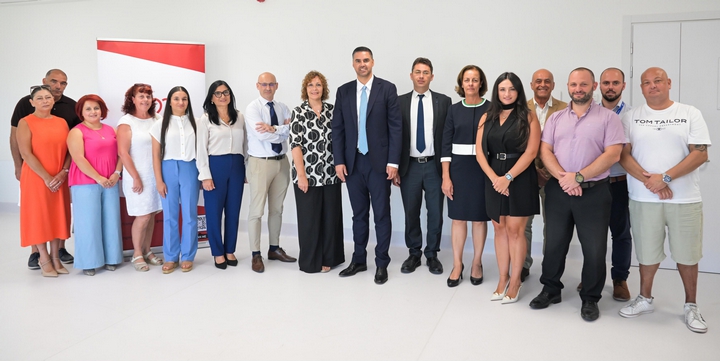
OASI Foundation expressed its appreciation to all those who were part of this event, both those involved and all professionals who attended the conference ‘It-Tfal u l-Addiction’ held on Friday at the Grand Hotel, Gozo.