Be the first to comment!
Illegal Hunting: “Business as usual in Malta” – Birdlife Malta
 Email item Email item
|  Print item Print item
|
|
 A detailed analysis of shot protected birds received since the start of the autumn migration on 15th August to date, and the illegal hunting incidents recorded by BirdLife Malta during the three week Raptor Camp period, has shown that there has been no improvement on illegal hunting in 2009 compared to the previous year.
During BirdLife’s Raptor Camp between 12th September and 4th October, the organisation recorded 467 illegal hunting and trapping incidents. This year was the first time Raptor Camp ran for three weeks as opposed to the two weeks of previous camps. Comparing just the two week period from this years camp with last year’s two week camp shows that in 2009 there was a 10% increase in the number of illegal hunting incidents (1).
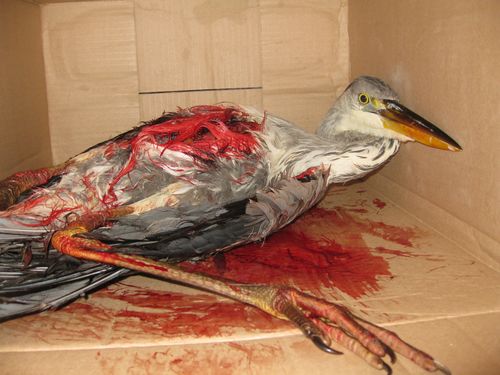
BirdLife Malta since the beginning of the autumn migration to date received 50 confirmed shot protected birds from 34 different locations over the last two months. This figure does not include the remains of over 200 protected birds that were discovered in Mizieb last month. Last year during the same period the conservation organisation received 56 confirmed shot protected birds from 37 locations.
Although these figures show a slight decrease in autumn 2009, the total number of confirmed shot protected birds BirdLife received since the beginning of the year is slightly higher than last year’s figures – from January to date 85 birds were received in 2009, as opposed to 76 birds received in 2008.
“Every migration we witness the same scenario where armed criminals roam the countryside chasing and shooting protected birds with almost complete impunity. The ALE with less than a handful of vehicles and less than 30 officers cannot cope with the ongoing wildlife crimes. Yet, the Office of the Prime Minister is busy trying to find a loophole to give hunters another spring hunting season despite the ECJ ruling finding Malta guilty for allowing this practice in the past,” said Tolga Temuge, BirdLife Malta Executive Director.
BirdLife underlined the fact that the protected birds received by the organisation represent only the tip of the iceberg, as birds first have to escape the poacher who shot them, then be found by someone who is willing to handle the bird and collect it, and then be passed on to BirdLife Malta. All birds are examined by an independent vet to verify their injuries and then passed on to the police.
The illegal activities observed during three weeks of Raptor camp this year included 82 incidents of poachers shooting at and injuring or killing protected birds of 14 species. The three most commonly targeted species were Honey-buzzard, Marsh Harrier and European Bee-eater. There were also 227 incidents (totalling 404 shots) of “Hunting after permitted hours,” 64 incidents of illegal electronic lures, 48 incidents of using modified shotguns and 16 trapping related offences. Furthermore 38 protected species were seen in flight with visible gunshot injuries including Marsh Harriers, Honey-buzzards, Common Kestrels, Lesser Kestrels, Black Kite and Blue Rock Thrush.
“Our volunteers could cover only a small percentage of the Maltese islands at a given time. Yet, the high amount of illegal hunting we observe year after year not only shows that Malta continues to be a black spot for bird conservation in Europe, but it also shows that there is almost no improvement. This is not surprising at all, since the politicians are more interested in appeasing the hunting lobby rather than stopping these crimes that damage Malta’s reputation.” concluded Temuge.
Photo: This Grey Heron was recovered shot on the 20th September from San Gwann. Photo by Andre Raine.