Be the first to comment!
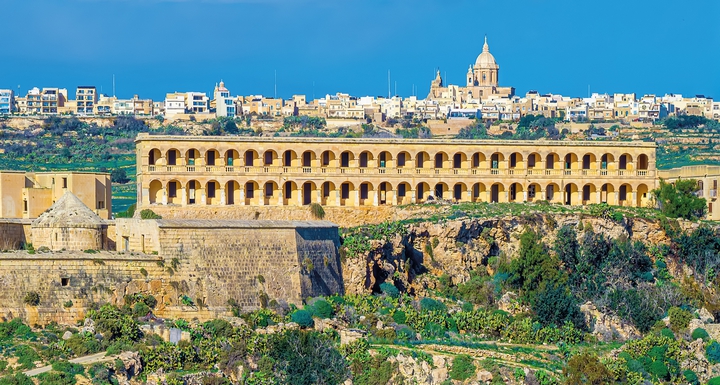
Fort Chambray: Future tourists will never see the welcoming approach to Gozo
 Email item Email item
|  Print item Print item
|
|
 Referring to the recent permit approval for Fort Chambray, ten organisations have warned that, “future tourists will never see the welcoming approach to Gozo, but a tower of concrete where there once sat the bulwark of the island against enemy landings.”
The recent approval by the Planning Authority sanctioning the ‘dismantling and relocation’ of British-era barracks at Fort Chambray and the general construction works to be conducted at this historic site have raised “grievous concerns” by many entities and individuals, organisations said.
That the fort is being returned to “the historical vision of the Hospitallers” as claimed by the Ministry of Culture, is a “baseless argument which, if applied to every historic site in Malta, would cause chaos. Fort St Angelo would need dismantling to return it to its medieval state,”
In a statement on Saturday by students, scholars, professionals and citizens, they highlighted that Fort Chambray carries “immense historic and cultural significance. It was commissioned in the 18th century as a proposed fortified town, offering greater protection against the threat of corsairs to Gozo and its people.”
They said that during the French period, it served as a temporary refuge for Gozitans during the French takeover, and then as a defensible position for the Revolutionary garrison on Gozo. Under British administration, Chambray served as a hospital, accommodating invalids from the Crimean War and the First World War. Its medical legacy continued in civilian hands, when Fort Chambray, renamed the Sacred Heart Hospital, accommodated patients with mental health needs.
Three cemeteries are found at the fort; one is located inside the walls and two in the dry ditch surrounding the site.
“The art adorning St John’s Co-Cathedral would need removing as the church was originally designed to be austere with modest decoration. Likewise, one can rest assured that the fort’s designers had no intention of installing a hotel, bars and other such commercial structures in a fortified town,” the organisations said.
Furthermore, the organisations argued that “this decision continues setting a perilous precedent of sidelining the elements which make Malta unique– and in many ways, viable- in favour of unchecked growth and development. Future history and architecture students will be unable to visit and study these sites for their structural and cultural value. Future Gozitans will lose part of their island’s heritage.”
They said that fundamental principle of heritage conservation is the protection- as far as possible- of the context in which a particular artefact exists. “The alterations planned for Fort Chambray will forever delete the site’s historic environment, further obscuring the design, military engineering, and aesthetic.”
They also pointed out that “while it is understood that structures such as the British barracks may be unsafe to use as is, there are many ways how they can be consolidated, restored and reused in a modern context.”
The organisations warned that once a historical artefact – be it a Punic jug or a British building – is tampered with, removed from its context or dismantled, no form of reconstruction can return it to its original state. “Rather than misinterpreting and misrepresenting history, we must collaborate to preserve all layers of our past– be it the prehistoric, Roman, Hospitaller British, and indeed post-1964.”
They stated that “our history is not simply a tourist trap, or a political tool to glorify or vilify when and as needed. Our History is our story, and its preservation (or destruction) affects our collective identity.”
The organisations said that this statement is “endorsed by a representation of Maltese students, scholars, professionals and citizens of good will to demonstrate to the relevant authorities that such instances of brazen bulldozing of this island’s heritage will not be allowed to run rampant.”
Endorsed by:
ALLT – Association of Linguistics and Language Technology
CASA – Classics & Archaeology Students’ Association
ESO – European Studies Organisation
FWA – Fondazzjoni Wirt Artna
GHST – Ghaqda studenti Studenti tat-Teologija
HoASA – History of Art and Fine Arts Student Association
JEF – Young European Federalists [JEF]
Mirsa – Malta International Relations Students Association
MUHS – Malta University Historical Society
SPS – Students Philosophical Society.
File photo: Daniel Cilia