Be the first to comment!
Nadur’s Ta’Kenuna Tower close to collapse – Ministry sitting idle – Luke Said

 Email item Email item
|  Print item Print item
|
|
Gozitan Nationalist Party candidate Luke Said has highlighted the growing concern among Nadur residents regarding the situation at Ta’ Kenuna Tower.
In a statement, Said explained that “since the tower and surrounding park were closed to the public in March last year due to safety concerns, one resident after another continues to ask what is being done to safeguard this historic landmark. The site was not only a heritage attraction, but also formed part of a well-used walking route for many.”
Said went on to say that recent photos show a major fracture in the cliff beneath the tower, increasing pressure on its foundations. “Erosion is natural, but inaction risks irreversible damage to this 170-year-old monument. Either immediate cliff stabilisation, such as rock anchoring, is carried out, or a serious plan to relocate the tower is considered as a last resort.”
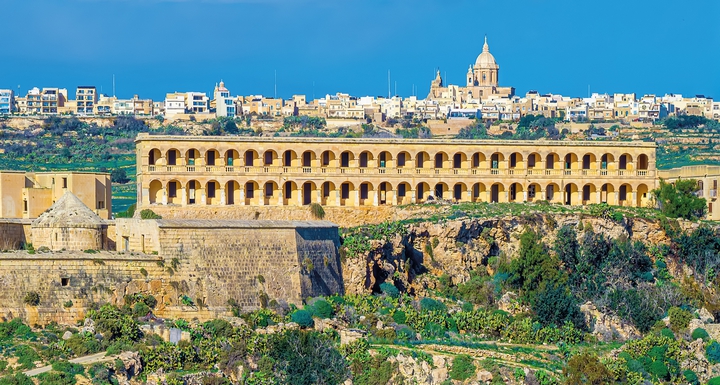
Said explained that Ta’ Kenuna Tower stands on the edge of Nadur, offering almost 360-degree views across Gozo. Built in 1848 by the British authorities, it is one of only three semaphore towers in Malta and the only one located in Gozo.
The tower once formed part of a strategic visual communication network linking Gozo with Malta and beyond. During the 19th century, it played a key role in maritime surveillance and military signalling, using semaphore arms long before the advent of modern telecommunications.
The PN candidate said that over the years, the tower’s role expanded beyond its original military function. Following restoration works completed in 2005, Ta’ Kenuna was adapted to host communication antennas, which remain in use today. The development of a surrounding botanical garden further transformed the site into a public space, combining panoramic views with educational and recreational value, and reinforcing the tower’s importance as a cultural and civic landmark.
He stressed that “the tower’s current threat is geological rather than historical. It is built on cliffs made mainly of Upper Coralline Limestone – a strong rock formation that is nonetheless vulnerable to long-term erosion and instability when fractured. Natural processes such as water infiltration, wind erosion and gravity gradually weaken exposed cliff faces. At Ta’ Kenuna, these forces have caused fissures, rock detachment and an increasing risk of collapse.” Said noted that “in March 2025, visible signs of deterioration and growing safety concerns led to the closure of Ta’ Kenuna Tower and its botanical garden. The decision, taken by the local council, was intended to protect public safety and responded to an immediate and clear risk. However, the closure also underlined the seriousness of the situation: the cliff supporting one of Gozo’s most recognisable landmarks is failing, and the time available for effective intervention is shrinking.”
He stated that “despite the urgency, progress towards a concrete solution has been limited. In August 2025, nearly a year after the closure, the Ministry for Gozo and Planning issued a general call for tenders for professional structural engineering services across Gozo. The call was not specific to Ta’ Kenuna Tower and did not directly address its immediate risks, raising concerns that further deterioration could occur while administrative processes continue.”
Said added that “stabilising historic structures built on cliffs is a well-known challenge in Malta. Similar interventions have already been successfully carried out in Mdina, Valletta and the Cittadella in Gozo. These projects typically involve securing unstable rock faces to stronger underlying layers using rock bolts, anchors and reinforced systems, while respecting the heritage value of the sites.”
He stressed that such techniques are standard practice in conservation engineering and are widely used across Europe, particularly in historic towns built on escarpments. “When properly planned and implemented, they can significantly reduce or halt deterioration and ensure long-term safety.”
“What Ta’ Kenuna Tower currently lacks is not technical expertise or precedent, but time. Ongoing erosion increases the risk of irreversible damage or partial collapse, posing a danger to public safety and potentially leading to much higher restoration costs or the permanent loss of an important heritage site,” stated Said.
Luke Said concluded by saying that, “Ta’ Kenuna Tower is a key part of Gozo’s strategic, cultural and architectural history. Its future depends on decisive, site-specific action that balances proper procedure with urgency. In this case, delay carries real risks, making timely commitment to stabilisation works essential if the monument is to be preserved for future generations.”
Photos: Luke Said