Be the first to comment!
SCH is ”getting Ggantija wrong,” says Coalition for Gozo
 Email item |  Print item |
|
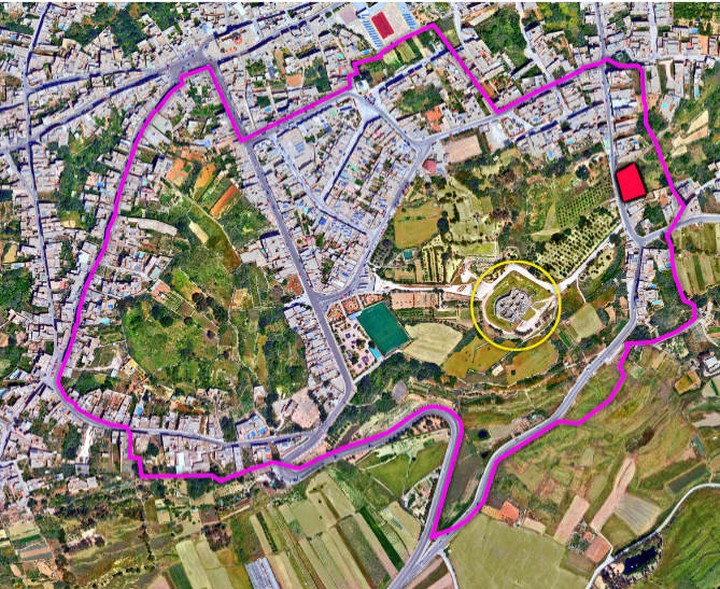 The Coalition for Gozo has highlighted that a major development is being proposed just 180 metres from the Ggantija Temples, within the protected UNESCO buffer zone of one of Malta’s most important World Heritage Sites. The project, known as Gigantija Heights, would replace a traditional vernacular building with a block of apartments.
In a statement, Din l-Art Helwa (Ghawdex); Ghawdix and Wirt Ghawdex said that the ”Superintendence of Cultural Heritage is getting Ggantija wrong.”
”The Superintendence of Cultural Heritage (SCH) has now backed the developer commissioned Heritage Impact Assessment (HIA) supporting this scheme, describing it as ‘rigorous’ and ‘robust,’ and effectively clearing the way for its approval,” stated the Coalition for Gozo.
The Coalition noted that the ”confidence is striking. It is also deeply questionable, because the moment one examines the documents themselves, the certainty begins to unravel.” ”Let us start with the claim that UNESCO methodology has been ‘rigorously’ applied.” The Coalition went on to explained that ”the HIA explicitly states that key stages – screening, scoping, and stakeholder consultation – fall outside its remit. These are not optional extras. They are the backbone of the UNESCO process. Remove them, and what remains is not a rigorous assessment but a partial one.”
Yet the Superintendence presents this as ”methodological strength,” said the Coalition
The Coalition for Gozo said that it then leans heavily on the supposed backing of ICOMOS and UNESCO. ”This is presented almost as a seal of approval. But UNESCO does not approve projects. It does not endorse HIAs. It reviews, comments, and advises. To present that as endorsement is, at best, imprecise. At worst, it is misleading. Also no ICOMOS report was presented to back the SCH claims.”
The Coalition noted that, ”more troubling still is the way the Superintendence handles the HIA’s own findings.”
The report concedes that the proposed development remains dominant in the streetscape, the Coalition said. It admits that the façade continues to read as a single, homogeneous mass. It acknowledges that further work is required. ”These are not minor observations. They are red flags.”
And yet, the Coalition said., despite all this – in what amounts to a breakdown in logic – the conclusion is that the impact is “not significant.”
Either dominance matters, or it does not. Either unresolved design problems matter, or they do not. One cannot list impacts in detail and then simply declare them insignificant without explaining why. The Superintendence does not resolve this contradiction. It simply accepts it.
Then comes the treatment of the buffer zone. The Superintendence argued that ”impacts are less important because they are experienced from within the buffer zone rather than from within the temple complex itself. This is not just questionable but fundamentally wrong,” said the Coalition.
It stressed that ”the buffer zone exists precisely to protect the setting of the site. To downgrade harm because it occurs within that zone is to render the concept meaningless. It is equivalent to saying that damage to a fortress wall does not matter because the inner courtyard remains intact. If this interpretation stands, buffer zones become little more than decorative lines on a map.”
The Coalition for Gozo insisted that ”but the most alarming aspect of the Superintendence’s position lies in its treatment of the vernacular farmhouse scheduled for demolition.” Its loss is described as ‘neutral.’
”A historic rural building, part of the lived landscape around Ggantija, is reduced to zero impact because it does not form part of the site’s Outstanding Universal Value. This is heritage reduced to a checklist.” argued the Coalition.
It pointed out that World Heritage Sites are ”not isolated artefacts. They are environments, understood through their setting, their approach, and their continuity. Strip away that context, piece by piece, and the monument may remain physically intact, but it is diminished all the same.”
”The Superintendence’s reasoning opens the door to precisely that process. It dismisses concerns about precedent, yet the HIA itself warns that repetition of such interventions can be harmful.,” stated the Coalition. ”This is how erosion happens – not through a single decision, but through a series of them, each one justified as minor, each one declared acceptable, until the character of the place is fundamentally altered.”
It insisted that if this is approved, ”the next application will follow. And the next. Each will rely on the same logic: no significant impact, no contribution to OUV, no cumulative effect.”
By the time the damage becomes undeniable, it will already be done. ”This is not a matter of technical disagreement but an abject failure of judgement,” stated the Coalition.
”At Ggantija, what we are lacking is resolve,” said the Coalition. ”And if this reasoning is allowed to stand, we may soon find ourselves explaining not how Ggantija was protected, but how it was gradually diminished – one non-significant decision at a time.”
The Coalition for Gozo concluded by saying that ”in the end, the question is simple: is the Superintendence there to protect our heritage, or to justify its loss?”
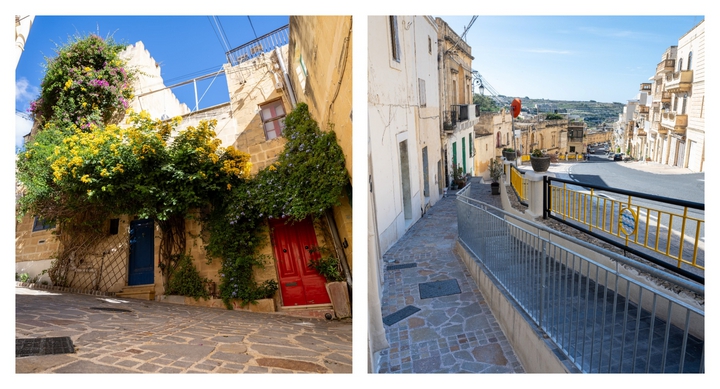
Photo: Ggantija buffer zone – Coalition for Gozo