Be the first to comment!
Landmark seabird research in Malta uncovers pre-laying expeditions of Scopoli’s Shearwaters
 Email item Email item
|  Print item Print item
|
|
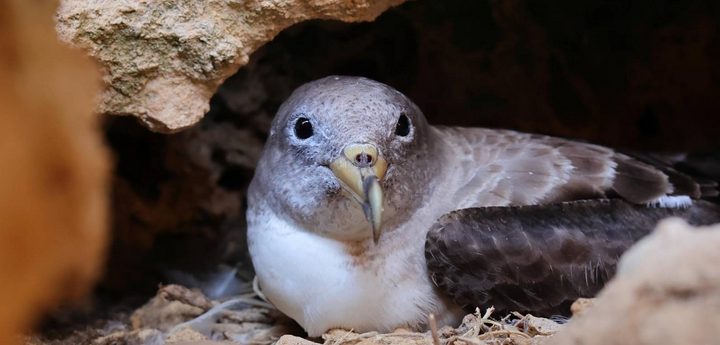
Researchers from Malta have uncovered the wide-ranging movements of Scopoli’s Shearwaters during the crucial period before egg-laying. Scopoli’s Shearwaters are a species of seabird endemic to the Mediterranean.
The researchers said that around 3,000 pairs nest on the Maltese Islands, ”but here and elsewhere this ocean-wandering bird has been declining in numbers. In shearwaters and related species, females only lay one egg per year. If this is lost, they cannot lay again before the following year.”
The pre-laying period is crucial to obtain the nutrients required to produce the egg and prepare for the lengthy breeding season. Despite its importance, the pre-laying movements of Scopoli’s Shearwaters had never been tracked before.
The same group of researchers had previously also published the first pre-laying movements of the vulnerable Yelkouan Shearwater.
With the use of lightweight bird-borne GPS-devices, ornithologists Marie Claire Gatt, Benjamin Metzger, Paulo Lago, and Martin Austad uncovered the movements of Scopoli’s Shearwaters in May, just before females lay their eggs. In their research article, published in the international ornithological journal Ardeola, the authors describe how the female Scopoli’s Shearwaters leave the nest to carry out a foraging trip lasting over 20 days at sea during which they develop their single, large egg.
The production of this egg seems to use up most of the nutrients the female obtains during this time. Their male partners also carry out long foraging trips, lasting around 15 days, but they return to the nest fattened up to take on the first week-long shift incubating their egg while fasting. This allows the females to return to sea to replenish their body reserves.
The long foraging trips of Scopoli’s Shearwaters during the pre-laying period extend hundreds of kilometres, far beyond our territorial waters; the sea off the coasts of Tunisia and Libya are popular foraging destinations, as are Italian waters.
This means that the protection of a population of this wide-ranging species relies on policies in several jurisdictions, complicating its conservation. Fisheries bycatch, overfishing, and marine pollution are some of the threats these birds face when out at sea. The researchers said that on land, their eggs can be consumed by invasive rats if left unattended. They found that when females returned to their nest to lay the male would often still be on his foraging trip. Being depleted of energy, the females must return to sea to forage soon after, leaving the egg unattended and vulnerable until the male returns. The researchers noted that rats were not part of the landscape that these seabirds evolved in and litter left by humans increases their numbers and, as an effect, their impact on native wildlife.
The researchers said that Malta has an international responsibility to monitor and protect its breeding populations of Scopoli’s Shearwaters. The data for this study was collected during the period of execution of two EU LIFE funded projects led by BirdLife Malta: the EU LIFE+ Malta Seabird Project (LIFE10 NAT/MT/000090), and the LIFE Arcipelagu Garnija Project (LIFE14 NAT/MT/000991) between 2010 and 2020, with the participation of BirdLife partners RSPB (UK) and SPEA (Portugal), Transport Malta, and co-financing from Malta’s Ministry for the Environment.
Photos: © Benjamin Metzger – Scopoli’s Shearwaters nest in caves and crevices along coastal cliffs and boulder screes; GPS tracks of ten female Scopoli’s Shearwaters, each lasting over 20 days, just before returning to their nest in Malta to lay; and © Benjamin Metzger – Scopoli’s Shearwaters at sea