Be the first to comment!
Divers express concern over withdrawal of Ranger monitoring at Cirkewwa Marine Park

 Email item Email item
|  Print item Print item
|
|
The Professional Diving Schools Association said it has learned with ”disappointment and surprise” of the announcement by the Malta Ranger Unit that it will cease all monitoring of the Cirkewwa Marine Park with immediate effect.
The Malta Ranger Unit said on Monday that, ”we are sad to announce that a decision was taken today by the CMP Management Council and Malta Tourism Authority, to not extend the collaboration with our NGO and therefore end all Ranger monitoring for illegalities at the Cirkewwa Marine Park. The new Management agreement for the CMP starts 1st of September and we are not included.” The new Cirkewwa Marine Park Management Plan was launched earlier this month.
The MRU stated that ”the reason given is not linked to the quality of the work our Rangers did. We will not get into the reason given in detail, that’s not for us to reflect on. We are not aware of the way forward for monitoring of crimes in the area. All questions about that would have to be answered by the MTA or Management.”
In a statement, the PDSA said that Cirkewwa is Malta’s prime dive site, ”yet the PDSA, which represents the majority of licensed diving schools across the Maltese Islands has not been included, consulted or advised of any decision taken by the authorities in relation to the site’s future management or monitoring.”
It said that ”the Malta Ranger Unit has done an outstanding job at Cirkewwa. Their consistent presence has curbed illegal activity, and the results are plain to see underwater: our members have witnessed a remarkable improvement in marine life across the site. This is exactly the outcome that sustained, on-the-water enforcement delivers, and it is precisely why monitoring of the area cannot be allowed to lapse.”
The Association stressed that ”a marine park of this importance requires continuous monitoring. Any change of guardianship must be handled responsibly, with a smooth and seamless handover that leaves no gap in protection.”
It warned that ”protection on paper alone is not sufficient; experience has shown us that it simply does not work. A protected area is only as protected as its day-to-day enforcement allows. The stakes are not only environmental but economic.”
The PDSA highlighted that diving is one of Malta’s ”flagship tourism products, with over 60 dive centres across the Maltese Islands generating substantial revenue and supporting hundreds of livelihoods, and Cirkewwa is the single most popular shore-diving site in the country. The recovery at Cirkewwa is therefore not only an environmental success but a direct investment in Malta’s diving economy, one that unmonitored waters would quickly put at risk.”
The PDSA stated that ”as of today, active monitoring of the site has ceased, and the PDSA has yet to be informed how, and by whom, the area will be safeguarded going forward. We now await clarity from the Government and the relevant authorities on the way forward for Malta’s most valuable dive site.”
Simone Brinch Iversen, spokesperson for the PDSA, said, ”the recovery we have seen at Cirkewwa is real, and it did not happen by accident – it is the direct result of the Rangers’ hard work. Our concern is simple: this site must not be left unprotected during a change of management. We stand ready to work constructively with the authorities to ensure Cirkewwa continues to be safeguarded, for the marine environment and for the diving industry that depends on it.”
The Professional Diving Schools Association was formed in 1982 to represent the interests of Malta’s diving community and is the main trade body for the majority of licensed diving schools across Malta, Gozo and Comino.
The Association said it ”liaises with the Government and the Malta Tourism Authority on all matters connected with scuba diving, sets Maltese diving regulations, and has a long-standing commitment to diver safety, diver education and the marine environment. Its members are responsible for much of the diving infrastructure at Malta’s dive sites and have scuttled more than ten wrecks to create new marine habitats and dive attractions.”
The PDSA said that the Maltese diving sector attracts nearly 150,000 to 200,000 dive tourists annually and accounts for roughly 5% to 6.5% of total inbound tourism. Recognised globally as a top diving destination, the niche market generates an estimated 1.5 million bed-nights, with high-value participants staying longer and spending more than the average tourist (Malta tourism Authority).
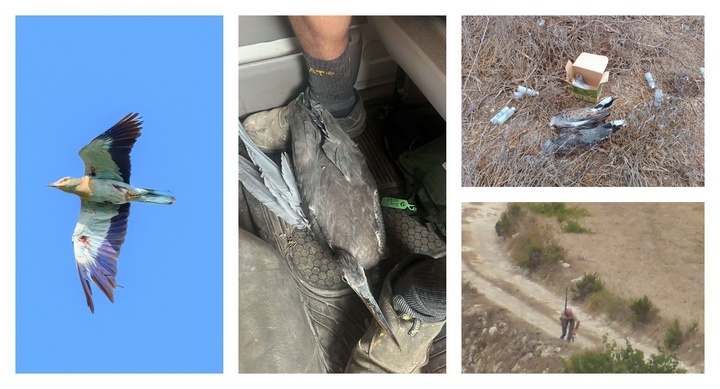
Photo: MRU