Be the first to comment!
Beyond the word “Inclusion” is Malta really living it? – MFOPD
 Email item Email item
|  Print item Print item
|
|
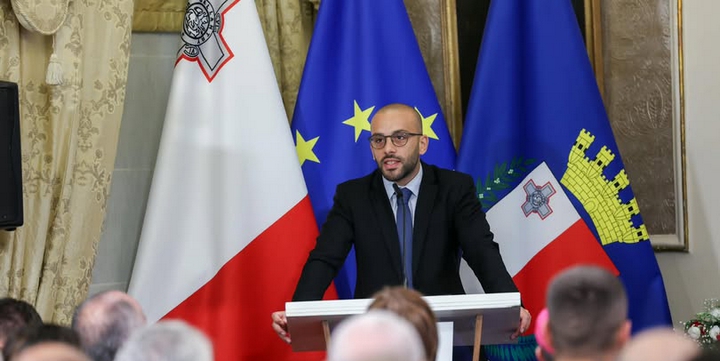
 President of the Malta Federation of Organisation Persons with Disability, Marthese Mugliette, has highlighted the fact that the word inclusion has become ”increasingly common” in Malta’s public discourse. ”It features in discussions about education, employment, disability, equality, culture and community life.”
She said that the MFOPD welcomes this. ”But we believe it is time to ask a more important question. ”Are we simply using the word inclusion, or are we making it a reality?”
Ms Mugliette said that a review of media reporting over the past two months presents a mixed picture.
She noted that on education, inclusion has been placed at the centre of efforts to ensure that every learner matters. Yet families continue to face uncertainty over Learning Support Educators and the support available to children with disabilities.
Ms Mugliette said that in employment, recent reporting on diversity and inclusion practices found that most of the organisations examined did not meet the legal employment quota for persons with disabilities.
At the same time, there are encouraging examples of inclusive initiatives in education, culture, science and community life, she said. These demonstrate that progress is possible and that many organisations are genuinely committed to making inclusion work.
Ms Mugliette pointed out that, inclusion cannot be measured simply by policies, strategies, projects or the repeated use of the word itself.
A child being physically present in a classroom is not necessarily inclusion if the support needed to participate is missing or not adequate.
A person with a disability having access to a workplace is not necessarily inclusion if barriers to employment, progression or reasonable accommodation remain.
And consulting people with disabilities only after decisions have been made is not meaningful participation.
Presence is not the same as participation. Participation is not the same as belonging.
She said that the MFOPD therefore believes that Malta should move beyond inclusion as an aspiration and begin measuring what it means in people’s everyday lives.
Ms Mugliette stated that, ”whenever a policy or service is described as inclusive, we should be able to ask: Who is included? Who remains excluded? Can people participate on an equal basis? What barriers have been removed? And, most importantly, what difference has this made to people’s lives?
MFOPD welcomed the recent commitments to strengthen consultation and forward planning in relation to inclusive education and the development of a new national inclusion strategy.
Ms Mugliette stressed that ”inclusion must also mean involving persons with disabilities from the beginning – in identifying problems, designing solutions, implementing policies and evaluating their results.”
She concluded by saying that ”Malta has clearly embraced the language of inclusion. The time has come to make sure that the reality matches the word.”