Be the first to comment!
Budget: Church Commission says human dignity has no passport
 Email item |  Print item |
|
 The Interdiocesan Commission for the Promotion of Integral Human Development said it is concerned over the measures announced in Budget 2027 targeting third-country nationals, ”which undermine the principles of solidarity, human dignity and social cohesion.”
The Commission said in a statement that it ”strongly deplores the decision to impose additional financial burdens on non-EU workers while restricting their access to benefits and services, including free public transport and childcare.”
The Commission added that it is ”particularly alarmed by the childcare restrictions, which risk placing additional pressure on families and undermining their ability to build a stable life in Malta.”
“We cannot welcome people as workers while making them feel unwelcome as members of our communities. People are not simply units of labour to be recruited when needed and discarded when politically convenient. They are human beings with families, aspirations and rights,” said Mark Cachia, Chairperson of the Commission.
The Commission argued that the measures will do little to address the structural challenges of Malta’s economic and population growth, such as traffic congestion, overcrowding and pressures on public infrastructure. ”Instead, the measures penalise people who already contribute to Malta’s economy through their work, taxes and social security payments, including many on relatively low incomes.”
It warned that the ”legitimate need to address population pressures must not become an excuse to place disproportionate and discriminatory burdens on those who have no vote.”
The Church, through its organisations such as the Migrants Commission, ”expects a considerable increase in the number of people asking for help with material assistance and housing.”
The approach is also difficult to reconcile with the Government’s stated objective of encouraging greater stability among foreign workers, and it risks legitimising prejudice and undermining efforts towards genuine integration, the Commission said.
However, the Commission welcomed several measures that support vulnerable people, including increases in pensions and additional cost-of-living assistance, measures supporting families and pensioners, social security contribution credits for individuals experiencing mental health difficulties or domestic violence, and additional support for adoption, fostering and children with disabilities.
Beyond these concerns, the Commission called for a stronger culture of evidence-based policymaking, transparency and accountability in the allocation of public resources.
First, the Commission called for impact assessment of budgetary measures on poverty and social inequality to become an integral part of the budgetary process, ensuring that proposed policies help reduce inequalities rather than reinforce them.
Second, it called for policies to be evaluated after their implementation. It is not enough to announce initiatives or to measure success by the money allocated or the number of beneficiaries. The Commission said that ”Government must assess whether measures achieve their intended objectives, who ultimately benefits from them and whether they produce unintended consequences.”
Third, it called for attention to long-term challenges. The Commission noted with concern that transport, education, renewable energy, environmental protection and housing ”received insufficient attention in the Budget speech. Malta can no longer afford to postpone difficult decisions simply because they may be politically unpopular, especially when the long-term costs of inaction are so high.”
To help overcome political inertia, the Commission said that it supports the establishment of a National Forum, bringing together political representatives, employers, workers, financial institutions, civil society and experts. ”Such a forum could help identify shared long-term national priorities and sustain commitments across electoral cycles, while respecting the responsibility of elected institutions to take decisions and remain accountable.”
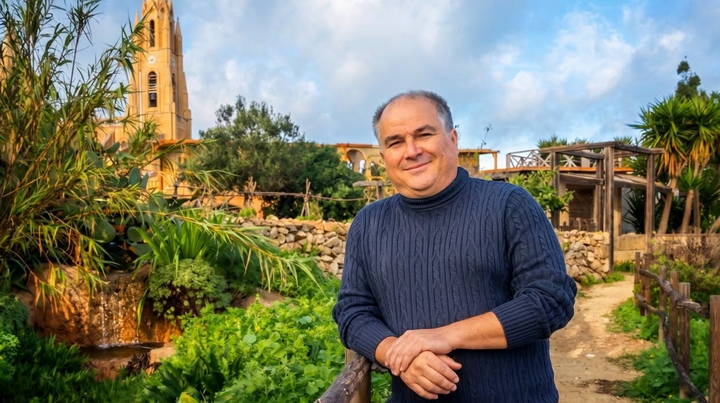
File photo: Archdiocese of Malta