Be the first to comment!
Comino to become protected area for cultivation of Maltese honeybee
 Email item |  Print item |
|
Comino is to become a protected area for the cultivation of the endemic honey bee. As a concrete step towards fulfilling this commitment, the Government said that it will publish the 2026 Regulations concerning the Malta Honey Bee Conservation Zone on Friday, which will establish Comino as a protected area for the cultivation of the endemic honey bee.
Within this zone, the keeping, breeding, propagation, and movement of bee colonies will be regulated, with the aim of safeguarding the genetic integrity of the Maltese honey bee – Apis mellifera ruttneri – and reducing the risks of hybridisation, genetic introgression, and the transmission of diseases.
The regulations will also establish a registration and authorisation system for colonies kept on Comino, alongside mechanisms for monitoring, inspection, and verification.
A colony of the Maltese honey bee may be kept as a permanent resident within the zone only following written authorisation from the Agricultural Director
This measure will be carried out through the ‘Maltese Honeybee Conservation and Expansion Programme,’ announced as part of the national response to the rise in the population of the Oriental Hornet – Vespa orientalis.
It was explained that the programme is a long-term initiative designed to increase the number of genetically verified colonies of the Maltese honeybee, strengthen local capacity for queen bee breeding, reduce reliance on imported queen bees, and support research into and the distribution of the Maltese honeybee.
As part of the implementation of this Programme, a building in Comino owned by the Ministry will be used to establish and manage a structured breeding programme for the Maltese honey bee, with the participation of a local non-governmental organisation active in this field.
The Ministry will also provide financial support for the programme, with the aim of building sustainable capacity for the breeding and production of high-quality queen bees for Maltese beekeepers.
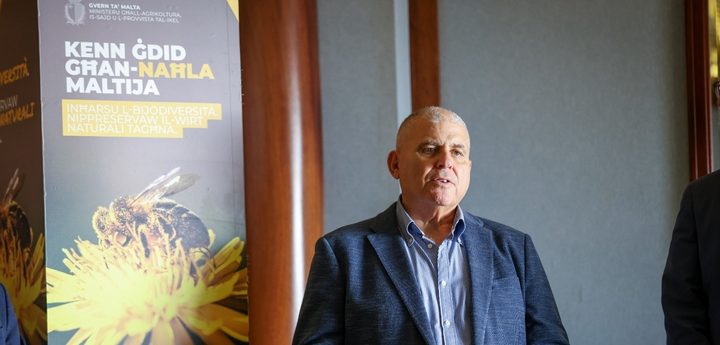
Minister for Agriculture, Fisheries and Food, Anton Refalo, stated that this regulatory framework will help create the necessary conditions for Comino to play an important role in strengthening the Maltese honey bee
He added that, ”trough these regulations, Comino will become a protected zone for the cultivation of the endemic honey bee, where activities related to the rearing and breeding of bees will be managed in an organised, scientific, and responsible manner. In doing so, we are establishing concrete conditions to safeguard the genetic integrity of the Maltese honey bee, while further strengthening the apiculture sector and creating new opportunities for its sustainable development.”
The regulations define a “Maltese honey bee colony” as a colony with a genetic purity of no less than 90% attributable to Apis mellifera ruttneri.
The scientific methodology, criteria, and administrative procedures for determining genetic purity will be established through technical guidelines. The framework also provides for transitional measures regarding non-indigenous colonies located on Comino, as well as limited authorisations for their temporary and seasonal introduction, subject to conditions concerning biosecurity, traceability, movement, and the genetic integrity of the resident population.
In this way, the protected area for the cultivation of the endemic honey bee on Comino and the Programme for the Conservation and Propagation of the Maltese Honey Bee will function in a complementary manner.
Refalo stated that ”the regulatory framework will safeguard the genetic integrity of the bee population in the area, while the breeding programme will facilitate the concrete implementation of the electoral commitment to increase the Maltese honey bee population and distribute high-quality queen bees to beekeepers”
Photo: DOI