Be the first to comment!
Insights through costumes into Rural Life & Society in Gozo
 Email item Email item
|  Print item Print item
|
|
There are just over three weeks remaining to be able to view a display of popular costumes, as interpreted in their right ethnographic and historical context.
The exhibition, organised by Heritage Malta, is being held at the Exhibition Hall at the Ministry for Gozo, in Victoria.
This is much more than folk dress on display, like all other forms of art, costumes reflect the society which produced them. The exhibition provides visitors with precious snippets of the ordinary, yet incorrupt hard working rural population whose simple life made drastic inwards in literature and the arts, particularly in the 19th Century.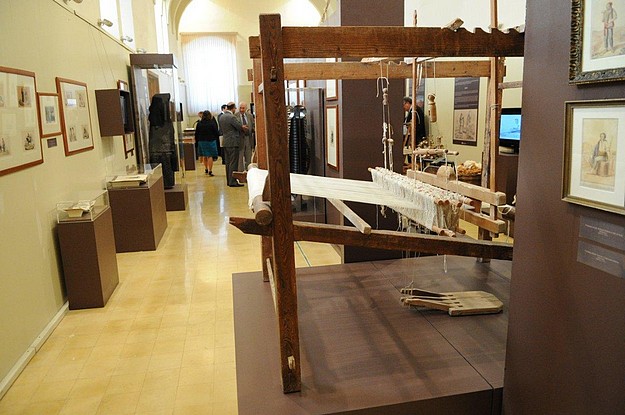 The seven costumes sets exhibited are in the great majority authentic pieces which have been complemented by historically accurate replicas of popular attire which, although not necessary exclusive, are very intimately tied to the rural world. These include the kabozza, the terha and horga, the typical waistcoat, the qorq, the gezwira, culqana and to a certain extent the ghonnella, among others. An added attraction can undoubtedly be offered by lace, which although generally not clad by the peasants, formed an integral part of their output and income, especially in Gozo.
Artistic representation is another important interpretative tool for a better understanding of peasant dress and daily life. Many times dress assumed a significant role very much in demand by 19th century visitors who wanted a lasting memento of their visit to the Islands.
It is in this light that one should value the various prints and watercolour albums, some of which still form part of our national collections, particularly those at the National Library and the National Museum of Fine Arts, a representative sample of which features prominently in this exhibition.
Artists like Jean Houel, Francesco Zimelli, Vincenzo Fenech, Pietro Paolo Caruana, Raffaele Caruana, Opizio Guidotti, Vincenzo Fenech, Michele Bellanti, Charles Frederick de Brocktorff, the Schranzes and Edward Caruana Dingli depicted a wide range of Maltese and Gozitan dress, some of which directly refer to the rural world. Paintings, prints and watercolour representations offer an illuminating background to the artefacts on display.
A re-evaluation and assessment project is being carried out within Heritage Malta’s Institute of Conservation and Management of Cultural Heritage.
Among the main deliverables of this project are condition assessments of all the items in the collection, qualifying and quantifying which are the pieces that can be displayed and which are those that need treatment. In the process, the present inventory is being upgraded with technical details and improved photographic documentation and the most urgent pieces are being short listed for restoration.
This exhibition is the first opportunity to showcase the work which is currently being done towards a better appreciation and preservation of Heritage Malta’s textile collection, the potential of which is increasingly being discovered. The Ethnography Section within Heritage Malta houses a very significant textile collection of over 1,000 artefacts.
The exhibiton closes on Sunday, the 29th of July. Opening times are from 08.30am till 12.30pm. Saturday from 09.00am till noon. Closed on Sundays.