Be the first to comment!
Tonio Borg’s hearing underway before MEPs in Brussels
 Email item Email item
|  Print item Print item
|
|
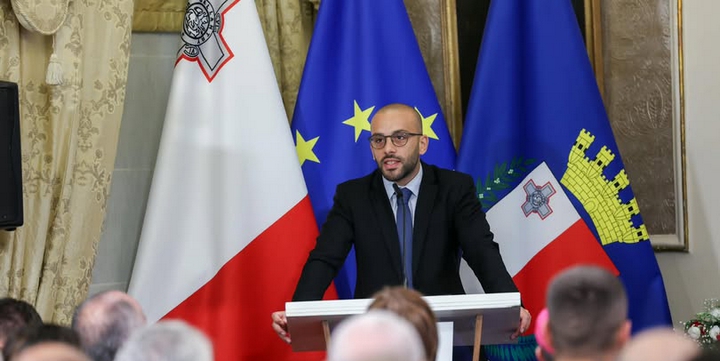
 The three-hour hearing of European Commissioner-designate Tonio Borg before MEPs in he European Parliament in Brussels has just started.
MEPs principally from the Environment, Public Health and Food Safety Committee – and also the committees on internal market and agriculture – will question the Commissioner-designate on his competences and suitability for the post.
Following the hearing, the relevant committee chairs and political group coordinators will consult with each other on their impressions and recommendations.
Parliament’s Conference of Committee Chairs will meet on Wednesday and the Conference of Presidents on Thursday, before MEPs vote on a resolution concerning the Commission-designate’s appointment in next week’s plenary session in Strasbourg.
The Maltese MEPs in the committees involved in the hearing are:
Simon Busuttil: Substitute, Committee on the Internal Market and Consumer Protection
Louis Grech: Vice-Chair, Committee on the Internal Market and Consumer Protection
Edward Sciculna: Substitute, Committee on the Environment, Public Health and Food Safety.
The Key MEPs for the hearing are:
Matthias Groote (S&D), Chairman of the Committee on the Environment, Public Health and Food Safety (ENVI) http://www.europarl.europa.eu/meps/en/34728/MATTHIAS_GROOTE.html
Malcolm Harbour (ECR), Chairman of the Committee on the Internal Market and Consumer Protection (IMCO) http://www.europarl.europa.eu/meps/en/4538/MALCOLM_HARBOUR.html
Paolo De Castro (S&D), Chair of the Committee on Agriculture and Rural Development (AGRI) http://www.europarl.europa.eu/meps/en/96891/PAOLO_DE CASTRO.html
ENVI coordinators: Peter Liese + Richard Seeber (EPP), Linda McAvan (S&D), Chris Davies (ALDE), Satu Hassi (Greens/EFA), Anna Rosbach (ECR), Oreste Rossi (EFD)
IMCO coordinators: Andreas Schwab (EPP), Evelyne Gebhardt (S&D) Toine Manders (ALDE), Heide Rühle (Greens), Adam Bielan (ECR) Dennis de Jong (GUE), Matteo Salvini (EFD)
AGRI coordinators: Albert Dess (EPP), Luis Manuel Capoulas Santos (S&D), George Lyon (ALDE), Martin Hausling (Greens/EFA), James Nicholson (ECR), Alfreds Rubiks (GUE/NGL), John Struart Agnew (EFD).
The Rules of Procedure of the European Parliament ANNEX XVII : Guidelines for the approval of the Commission are as folows:
1. The following principles, criteria and arrangements shall apply for making the entire College of the Commission subject to Parliament’s vote of consent:
(a) Basis for assessment
Parliament shall evaluate Commissioners-designate on the basis of their general competence, European commitment and personal independence. It shall assess knowledge of their prospective portfolio and their communication skills.
Parliament shall have particular regard to gender balance. It may express itself on the allocation of portfolio responsibilities by the President-elect. Parliament may seek any information relevant to its reaching a decision on the aptitude of the Commissioners-designate. It shall expect full disclosure of information relating to their financial interests. The declarations of interest of the Commissioners-designate shall be sent for scrutiny to the committee responsible for legal affairs.
(b) Hearings
Each Commissioner-designate shall be invited to appear before the appropriate committee or committees for a single hearing. The hearings shall be held in public.
The hearings shall be organised by the Conference of Presidents on a recommendation of the Conference of Committee Chairs. The Chair and coordinators of each committee shall be responsible for the detailed arrangements. Rapporteurs may be appointed. Appropriate arrangements shall be made to associate relevant committees where portfolios are mixed. There are three options:
(i) if the portfolio of the Commissioner-designate falls within the remit of a single committee, the Commissioner-designate shall be heard by that committee alone (the committee responsible);
(ii) if the portfolio of the Commissioner-designate falls more or less equally within the remit of more than one committee, the Commissioner-designate shall be heard jointly by those committees (joint committees); and
(iii) if the portfolio of the Commissioner-designate falls mainly within the remit of one committee and only to a small extent within the remit of at least one other committee, the Commissioner-designate shall be heard by the committee mainly responsible, with the association of the other committee or committees (associated committees).
The President-elect of the Commission shall be fully consulted on the arrangements.
The committees shall submit written questions to the Commissioners-designate in good time before the hearings. For each Commissioner-designate there shall be two common questions drafted by the Conference of Committee Chairs, the first relating to the issues of general competence, European commitment and personal independence, and the second relating to the management of the portfolio and cooperation with Parliament. The committee responsible shall draft three other questions. In the case of joint committees, they shall each be given the right to draft two questions.
Each hearing shall be scheduled to last three hours. Hearings shall take place in circumstances, and under conditions, in which Commissioners-designate enjoy an equal and fair opportunity to present themselves and their opinions.
Commissioners-designate shall be invited to make an opening oral statement of no longer than 15 minutes. Where possible, questions put during the course of the hearing shall be grouped together by theme. The bulk of the speaking time shall be allotted to political groups, mutatis mutandis in accordance with Rule 149. The conduct of the hearings shall aim to develop a pluralistic political dialogue between the Commissioners-designate and the Members. Before the end of the hearing, Commissioners-designate shall be given the opportunity to make a brief closing statement.
There shall be a live audio-visual transmission of the hearings. An indexed recording of the hearings shall be made available for the public record within 24 hours.
(c) Evaluation
The Chair and coordinators shall meet without delay after the hearing to evaluate the individual Commissioners-designate. Those meetings shall be held in camera. The coordinators shall be invited to state whether, in their opinion, the Commissioners-designate are qualified both to be members of the College and to carry out the particular duties they have been assigned. The Conference of Committee Chairs shall design a pro forma template to assist the evaluation.
In the case of joint committees the Chair and the coordinators of the committees concerned shall act jointly throughout the procedure.
There shall be a single evaluation statement for each Commissioner-designate. The opinions of all the committees associated with the hearing shall be included.
Where committees require further information in order to complete their evaluation, the President shall write on their behalf to the President-elect of the Commission. The coordinators shall take the latter’s reply into consideration.
If the coordinators are unable to reach a consensus on the evaluation, or at the request of one political group, the Chair shall convene a full committee meeting. As a last resort, the Chair shall put the two decisions to the vote by secret ballot.
The committees’ statements of evaluation shall be adopted and made public within 24 hours after the hearing. The statements shall be examined by the Conference of Committee Chairs and conveyed subsequently to the Conference of Presidents. Unless it decides to seek further information, the Conference of Presidents, following an exchange of views, shall declare the hearings closed.
The President-elect of the Commission shall present the whole College of Commissioners-designate and their programme at a sitting of Parliament which the President of the European Council and the President of the Council shall be invited to attend.
The presentation shall be followed by a debate. In order to wind up the debate, any political group or at least 40 Members may table a motion for resolution. Rule 110(3), (4) and (5) shall apply.
Following the vote on the motion for resolution, Parliament shall vote on whether or not to give its consent to the appointment, as a body, of the President-elect and Commissioners-designate. Parliament shall decide by a majority of the votes cast, by roll call. It may defer the vote until the following sitting.
2. The following arrangements shall apply in the event of a change in the composition of the College of Commissioners or a substantial portfolio change during its term of office:
(a) When a vacancy caused by resignation, compulsory retirement or death is to be filled, Parliament, acting with dispatch, shall invite the Commissioner-designate to participate in a hearing under the same conditions as those laid down in paragraph 1.
(b) In the event of the accession of a new Member State, Parliament shall invite the Commissioner-designate to participate in a hearing under the same conditions as those laid down in paragraph 1.
(c) In the event of a substantial portfolio change, the Commissioners affected shall be invited to appear before the committees concerned before taking up their new responsibilities.
By way of derogation from the procedure laid down in paragraph 1(c), eighth subparagraph, when the vote in plenary concerns the appointment of a single Commissioner, the vote shall be by secret ballot.
These are excerpts from the Consolidated Version of the Treaty of the European Union
7. Taking into account the elections to the European Parliament and after having held the appropriate consultations, the European Council, acting by a qualified majority, shall propose to the European Parliament a candidate for President of the Commission. This candidate shall be elected by the European Parliament by a majority of its component members. If he does not obtain the required majority, the European Council, acting by a qualified majority, shall within one month propose a new candidate who shall be elected by the European Parliament following the same procedure.
The Council, by common accord with the President-elect, shall adopt the list of the other persons whom it proposes for appointment as members of the Commission. They shall be selected, on the basis of the suggestions made by Member States, in accordance with the criteria set out in paragraph 3, second subparagraph, and paragraph 5, second subparagraph.
The President, the High Representative of the Union for Foreign Affairs and Security Policy and the other members of the Commission shall be subject as a body to a vote of consent by the European Parliament. On the basis of this consent the Commission shall be appointed by the European Council, acting by a qualified majority.
8. The Commission, as a body, shall be responsible to the European Parliament. In accordance with Article 234 of the Treaty on the Functioning of the European Union, the European Parliament may vote on a motion of censure of the Commission. If such a motion is carried, the members of the Commission shall resign as a body and the High Representative of the Union for Foreign Affairs and Security Policy shall resign from the duties that he carries out in the Commission.