Be the first to comment!
‘Agriculture in Gozo to benefit from additonal EU allocation’
 Email item |  Print item |
|
 The Government has said that notwithstanding the cut to the overall EU Budget and going above the Less Developed (Objective 1) threshold, Malta’s EU Funds will be higher than if it had remained an Objective 1 Region during 2014-2020.
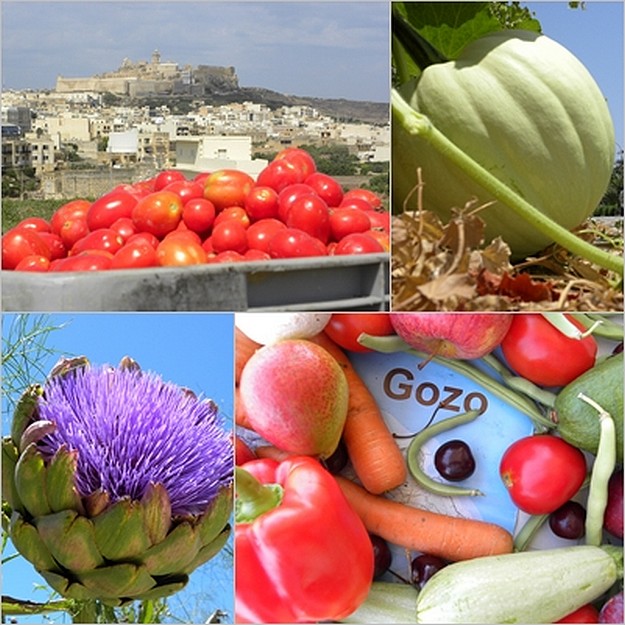
The Government also announced that it “has decided that a good part of the additional allocation under Heading 2 (Agriculture) will be earmarked for Gozo. This will ensure that Gozo receives more funds than it currently has ring-fenced under the 2007-2013 financing period.
“For the 2014-2020 period, apart from the 10% under Cohesion Policy (€78 million), a further €32 million (23% of Malta’s agricultural allocation) will be ring-fenced for Gozo to bring the minimum total allocation for Gozo (Cohesion and Agriculture) to €110 million.”
“Following hard-fought negotiations in Brussels,” the Government said, “the Prime Minister has obtained up to €1.128 billion for Malta in the next financial period (Multiannual Financial Framework) covering the EU’s budgets from 2014 to 2020. This includes €20 million more of directly-allocated funds made up of Cohesion Policy (Heading 1B) and Agriculture (Heading 2) funds than Malta would have obtained if it had remained a Less Developed (Objective 1) country in the 2014-2020 financing period.”
“The deal is significant as it is juxtaposed against Europe’s worst economic crisis in decades and a resulting substantial decrease of €33.6 billion in the overall commitment appropriations of the Multiannual Financial Framework (MFF) when compared to the current financial period (2007-2013). The result is all the more important as Malta’s economic growth over the past few years means that it no longer qualifies for the highest level of benefits from the EU’s Cohesion Policy funds and has been upgraded from being a Less Developed region (previously known as Objective 1) to what is now known as a Transition region,” the Government statement said.
“The agreement is a result of over a year and a half of negotiations following the European Commission’s original proposal in June 2011, on the basis of which Malta would have received a total of €715 million under Cohesion Policy (Heading 1B) and Agriculture (Heading 2). As negotiations proceeded and the Cyprus Presidency proposed a cut to the EU budget proposal which would have reduced Malta’s allocation in these policies to €656 million. Over the months, the Prime Minister held discussions with the President of the European Council, the President of the European Commission and fellow Heads of Government in Brussels, Malta and other capitals to explain the effects that such dramatic cuts would have on Malta.
“The President of the European Council’s proposal that emerged following the bilateral meeting held on 22 November 2012 included an additional top-up of €200 million for Malta’s Cohesion Policy allocation, bringing Malta’s allocation for Cohesion Policy (Heading 1B) and Agriculture (Heading 2) to €879 million. Nevertheless, the Summit concluded without agreement and the Prime Minister emphasised that Malta would continue to push for the best possible deal for the country. It should be recalled that the standard practice in such negotiations is that nothing is agreed until everything is agreed.
“The Prime Minister stressed Malta’s consistent position that it should not be penalised for its economic progress after just one full financing period (2007-2013), emphasising that he would defend the result obtained in November and continue working to improve Malta’s position even further. The Prime Minister also reiterated that any result which saw further cuts in Cohesion Policy would not be acceptable to Malta as Cohesion Policy funds are an important way to spur economic recovery in the EU is through a sustained level of EU programmes and funding,” the Government statement said.
“This deal in the European Council means that Malta has secured a total of €914 million in funds under Cohesion Policy (Heading 1B) and Agriculture (Heading 2). Had Malta retained its Convergence (Objective 1) status under the 2014-2020 financial period, it would have received €892 million under these two headings. The deal will therefore actually be a slight increase (€22 million) in these policy areas than would have been the case had it remained a Less Developed (Objective 1) region. Moreover, there is a recognition of the permanent handicaps of Island Member States in the Conclusions, in line with the Lisbon Treaty.
“The indicative overall funds which Malta will receive under the 2014-2020 Multiannual Financial Framework (the figures in the other Headings are indicative at this stage and are based on Commission estimates and past performance) is estimated to be €1.128 billion. This compares well with the €1.115 billion which Malta was allocated during the current 2007-2013 period. It also sees an increase of €109 million for Malta over the original Commission proposal of June 2011 before this Commission proposal was cut by €85 billion overall in commitment appropriations.
“Malta is not only expected to benefit more in terms of allocations, but is also expected to pay less to the EU over the next seven years when compared to the Commission Proposal. It is estimated that Malta’s net position (after its contribution to the EU budget) will be €627 million. This compares with an estimated €478 million net benefit under the original Commission proposal (which would have seen a net position of €149 million less).
“In addition to the funds, Malta will benefit from a number of horizontal measures which will facilitate absorption and reduce unnecessary pressures on the national budget. These include the extension of the period available for the implementation of committed projects from three to four years, allowing Malta more time to complete these projects, ensuring that funds will not be lost; there was also the agreement to make non-reimbursable VAT on these projects eligible for funding, the statement said.
The Prime Minister described the agreement as a “landmark result and a major success for Malta.” He stated that the outcome was excellent for Malta in view of the various challenges facing the EU’s economy, the overall budget decrease and the entrenched positions of other Member States.
He thanked all those involved in the months of complicated negotiations coordinated by Richard Cachia Caruana which led to Malta’s final package, emphasising that the outcome ensures sustained funding and investment in Malta’s economy and people. Finally, he praised Maltese enterprises and authorities for the impressive uptake of funds in the financial period which comes to an end in 2013 and stated that it will remain a priority for the Government to continue to facilitate and maximise the use of EU funds.