Be the first to comment!
Removal of illegal hunting & trapping hides should be priority – BLM
 Email item Email item
|  Print item Print item
|
|
BirdLife this morning said the removal of illegal hunting and trapping structures from public land and protected natural habitats around the Maltese Islands should be a top priority for the Government’s environment directorates, but does not excuse plans to reintroduce environmentally damaging practices like finch trapping.
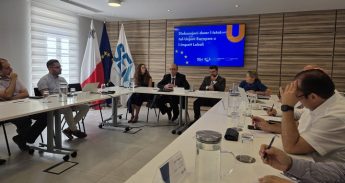
Staff and volunteers from the conservation organisation were among those enthusiastically helping to dismantle the illegal hunting and trapping hides inside Majjistral Nature and History Park yesterday afternoon.
“We’re delighted to finally be able to help Majjistral Park to remove these structures from the ecologically sensitive protected areas where they were illegally built,” said Steve Micklewright, BIrdLife Malta’s Executive Director.
“Hopefully this will be the first of many such activities to undo the damage done by hundreds of permanent hunting and trapping structures that have been illegally built in protected sites and on public land around the islands.”
BirdLife Malta has submitted reports to MEPA documenting hundreds of such structures built without planning permission or consideration of their impact on the environment in ecologically sensitive and protected Natura 2000 areas.
“Almost every coastal cliff-top area around the islands is dotted with these illegal structures built on rare Xaghri, Maquis and Garrigue habitats,” said Christian Debono, BirdLife’s Conservation and Policy Officer.
Mr Debono said it is important to recognise that the preparation of the trapping sites themselves is also highly destructive: involving the clearing of all vegetation, levelling of ground, often by importing hardcore/substrate, spraying with poisons/herbicides, burning.
“All of this leaves barren scars in the natural landscape that can take decades to properly recover.”
“Trapping sites that were abandoned after the ban came into force in 2009, five years ago, can still be distinguished from several kilometres away thanks to the absence of established plants that have still not been able to re-colonise,” Debono said.
“As well as removing illegal structures built for hunting and trapping, there is a great need for reparation/restorative work to help undo the damage done to natural sites throughout the island by preparing sites for trapping.”
He added that “the successful proposal for the removal of these structures from Majjistral Park offers hope that environmental reparations will at last be undertaken at other similarly afflicted sites, such as Ahrax tal-Mellieha and Ghar-Lapsi.”
The public woodland of Mizieb is one such site, say BirdLife. “For decades hunters have been allowed to build illegal structures on the public land of Mizieb without any response from the authorities. Perhaps now we might see MEPA take the legally prescribed steps to enforce planning regulations by demanding the removal of these structures.”
While BirdLife praised yesterday’s initiative and the collaboration of FKNK and the Wild Birds Regulations Unit, it accused the government of piggy-backing on the activity in an attempt to paint its plans to lift the ban on finch trapping green.
“It is highly disingenuous of the government to try to spin that fact that finally NGOs have been given permission to try to undo some of the damage done by decades of hunting and trapping and use it to claim that their plans to reintroduce environmentally damaging practices such as finch trapping are somehow supporting conservation efforts,” concluded Steve Micklewright.
BLM staff and volunteers helping to remove one of the illegal hides inside Majjistral Nature and History Park yesterday afternoon. Photo by Rupert Masefield