Be the first to comment!
Malta’s air quality a concern, exceeds EU limit values in certain areas – Report
 Email item Email item
|  Print item Print item
|
|
 The European Environment Agency’s five-yearly assessment ‘The European environment – state and outlook 2015’ (SOER 2015), has just been published.
SOER 2015 is an integrated assessment of Europe’s environment. It also includes assessments and data at global, regional and country levels, as well as cross-country comparisons.
The EEA said that today, Europeans enjoy cleaner air and water, less waste is sent to landfill and more resources are recycled. However, Europe remains a long way from achieving the objective of ‘living well within the limits of the planet’ by 2050, as set out in the 7th Environment Action Programme.
“Although we use natural resources more efficiently than previously, we are still degrading the resource base that we rely on in Europe and across the world. Problems such as biodiversity loss and climate change remain major threats.”
The main themes and sectors addressed in the national State of Environment report for Malta are as follows:
“Malta’s State of the Environment Report was last published in 2010. It comprised 11 chapters, and took a broader analytical approach than previous publications.
The aim of this broader approach was to provide a better understanding of the key policies and legislative instruments in each area of environmental policy.
The 2010 report also included a chapter on the relationship between the environment and economic activity, as well as a chapter on environmental health. In this way, the report expanded on the link between the environment and our daily lives. Other topics that featured in earlier publications were also included.
The 11 chapters of the report focused on the following issues:
Driving Forces
Air
Climate Change
Land
Fresh Water
Coastal and Marine Environment
Resources and Waste
Biodiversity
Health and the Environment
Economic Activity and the Environment
Policy Responses
The State of the Environment Report is also supplemented by yearly Indicator Reports, providing updates of key environmental indicators. Key findings of the State of Environment report
The Report showed that air quality remains a concern in Malta. Concentrations of PM10, nitrogen oxide and ground-level ozone exceed EU limit values in certain areas. Ozone concentrations are mainly caused by transboundary transport from outside Malta. However, concentrations of particulate matter and nitrogen oxides are chiefly the result of domestic emissions from traffic, and to a lesser extent, power generation.
Greenhouse gas emissions in Malta have risen in the past 25 years, contributing to climate change. Greenhouse gas emissions from the energy, transport, and waste sectors rose by 49% from 1990 to 2007. However, emissions per unit of GDP fell by 18% over the same period, as Malta decoupled its economic activity from emissions generation.
Demand for fuel from these sectors is expected to continue to increase. Associated impacts from air pollution may also continue to rise due to increasing numbers of private vehicles[6] and the high percentage of imports of older, more polluting vehicles.
On the positive side, Malta recorded a 38% fall in national annual average sulphur-dioxide concentrations between 2004-2007. This fall may be the result of greater use of low-sulphur fuels.
Considerable pressure on Malta’s coastal and marine environment arise from housing, waste generation, shipping, tourism, recreation, aquaculture, and fisheries.
On a positive note, Malta’s bathing waters were 99% compliant with EU bathing-water standards in 2008, an achievement driven by improved beach management and pride in the Blue Flag certification.
The total amount of waste generated in Malta fell by 34% between 2008 and 2012. The amount of municipal waste recycled increased by an average of 8 percentage points during the last three years.
However, with 82% of total municipal waste generated still being landfilled, Malta cannot be considered resource-efficient in this respect.
In 2011, 593 kg of municipal waste was generated per person, a decrease of 1% from the previous year, but still high in comparison to the EU average, which was 503 kg/person in the same year. Waste prevention and waste minimisation are priority policy areas for the Maltese government.
The report also identified agriculture as having a significant effect on the Maltese environment, in spite of its relatively small contribution to national GDP.
Agriculture is also the main user of groundwater, considered to be one of Malta’s most limited and most over-exploited resources. Related unauthorised water abstraction and resulting salt-water intrusion are not the only threat.
Nitrates in groundwater bodies are also a major concern, with two thirds of pumping stations exceeding the EU limit value of 50mg/l in 2007, even though nitrate concentrations declined marginally between 2000 and 2007.
Another sector that places stress on the environment is tourism, one of the most important economic sectors in Malta. Between 2004 and 2008, the number of daily tourists in August increased by 4.9%.
Catering for a competitive tourism industry has meant an increase in consumption of resources, pressures on ecologically sensitive areas, increases in waste generation, and increases in land take for infrastructure.
By the end of 2008, just over one fifth of Malta’s land area was legally protected and 13% formed part of the Natura 2000 network. These sites are considered 93% sufficient in affording protection to terrestrial habitats and species of community interest. Management of protected areas is helped by EU Structural Funds.
Main policy responses to key environmental challenges and concerns
Malta has made significant progress in upgrading its environmental policy capacity. However, the public and private sectors still need to devote greater financial and human resources to improve the country’s institutional capacity and infrastructure.
Government environmental expenditure amounted to €81.8 million in 2007, up 31% from the 2004 level, and equivalent to 1.5% of GDP. Waste management, including wastewater treatment, absorbed almost 90% of this expenditure. Green jobs account for approximately 2% of GDP and between 2.5% and 3% of Malta’s employment, and are principally to be found in the waste management and water sectors.
Environmental policy continues to rise in importance on the national agenda, with 54 pieces of legislation concerning the environment adopted between 2005 and 2008.
Public opinion polls continue to indicate high levels of concern about environmental issues, yet this level of concern is often not translated into individual action. Malta has identified the need for a national environmental education policy to make environmental education mandatory in the national curriculum.
With some 50 economic instruments related to the environment, Malta is currently making notable use of environmental-economic instruments, but with varying degrees of success.
A more coherent approach within the country’s overall environmental management strategy is recommended. There is still significant potential for the use of voluntary schemes by business and public organisations.
These schemes could be improved if organisations were incentivised to apply for them, and if they received active technical support.
On similar lines, the current level of Green Public Procurement (GPP) is negligible, pointing to the need for a National Action Plan for GPP.
Country specific issues
Malta is now focusing on a number of environmental priorities.
Malta is working to changing its highly seasonal tourism industry in order to spread tourist flow throughout the year. This will result in less pressure on natural resources in peak seasons and more efficient use of resources in the shoulder months.
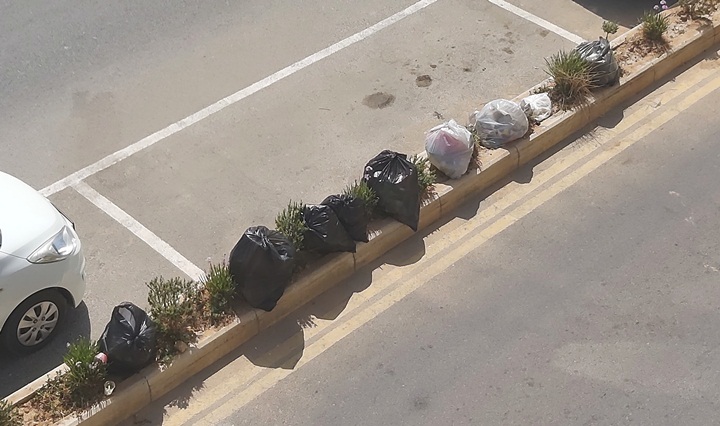
There is an urgent need to improve waste management. The State of the Environment report advocates the use of educational campaigns to help achieve the 50% recycling target for household paper/board, glass, metal and plastic waste. In addition to public campaigns, there is also a need to improve waste-treatment infrastructure.
Water demand management is another priority, and will help to reduce wastage and raise efficiency levels. In particular, private water supplies need to be billed to achieve the wider goal of sustainability.
Obstacles preventing the re-use of treated effluent must be addressed and supported by more environmentally sustainable, improved and innovative management of urban and rural run-off water.
Malta aims to reduce impacts from air pollution and climate change by reducing energy consumption and by decoupling energy demand from economic growth.
Reducing the environmental impact of agriculture is also critical. Malta is working to promote sustainable farming practices that take into account the broader goals of rural development policy.
Integrating agriculture and rural development policy in this way will help to address threats such as land abandonment, contamination of soil, illegal dumping, and inappropriate sitting and design of rural buildings.
Malta aims to improve the management of Marine Protected Areas to ensure that coastal habitats and species of ecological importance are protected.
This work is part of a national vision for the country’s marine areas, which integrates environmental protection with the sustainable use of coastal and marine environments.”
Photograph: Alain Salvary