Be the first to comment!
Tourism Minister speaks about sustainable tourism in historic centres
 Email item |  Print item |
|
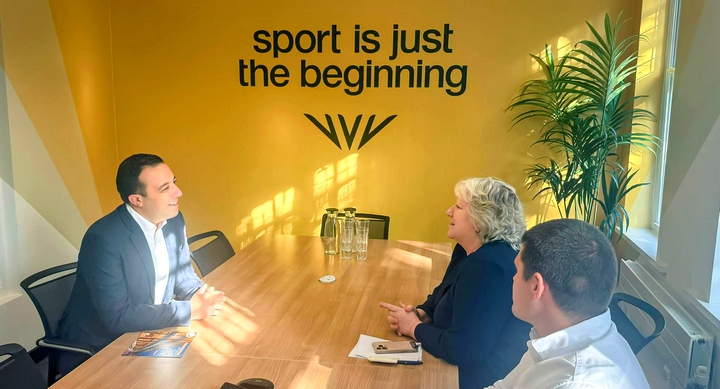
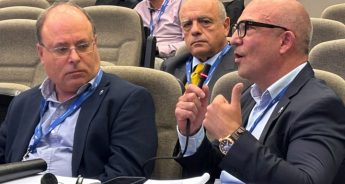
The Minister for Tourism Edward Zammit Lewis in a speech during the International Conference taking place on Sustainable Tourism in Historic Centres said, “creating the right synergies between the regeneration of historic centres and tourism development is the way forward towards sustainable tourism.”
The Minister said that he considered the Mediterranean as the most important touristic region in the world where some of the world’s oldest cultures have developed. “For decades, the sun and sea have attracted tourists to Mediterranean destinations, but we are now clearly seeing a shift from the traditional beach holiday which the Mediterranean is so strongly associated with.”
“Its history and treasures of antiquity are now taking centre stage, adding to the strong appeal this region enjoys. In this context, Mediterranean countries need to constantly evaluate their tourism policies as this is fundamental for sustainable growth. I am glad to note that this conference supports and addresses this very process,” said Dr Edward Zammit Lewis
“Over the years, Malta has established itself as an important touristic destination in the Mediterranean. Last year, a record 1.7 million tourists visited the Maltese islands. Total spent nights in Malta rose to 13.5 million and tourist expenditure reached a record €1.5 billion.”
He added that the statistics for the first quarter of this year have revealed further growth registered compared to that in 2014 and the indications for the rest of the year are again very encouraging.
Part of this success is attributed to Malta’s strategic decision to position itself as a cultural destination offering a diversity of experiences. The growth potential for cultural tourism is becoming increasingly significant to our islands and recent visitors’ surveys show that 42% chose Malta because they were positively influenced by its history and culture.
The Minister pointed out that “Malta is indeed small in size but incredibly rich in culture and history. The Maltese islands are a living testimony to over 7,000 years of civilisation with an astonishing concentration of unique cultural and historical attractions.”
“In terms of historic centres, Malta offers a very strong touristic product. We have four main historic centres, namely Valletta-Floriana, the three cities referred to as the Cottonera, the Mdina-Rabat area, and the Citadel-Victoria centre in Gozo.”
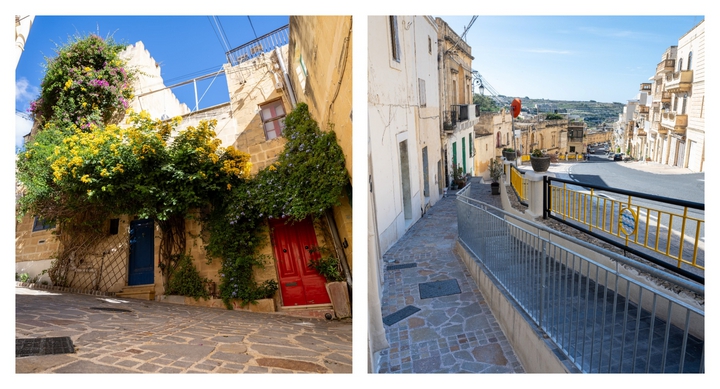
These historic centres provide visitors with an extensive choice of attractions, that range from quaint streets and urban spaces to archaeological sites such as those in Rabat, to palatial buildings and richly adorned churches located in the other historic localities,the Minister said.
The Minister stated that “notwithstanding the strengths of our historic cities as tourism products and the various initiatives we have undertaken, there are a number of issues that we need to continue addressing:-
“There are far too many instances in historic areas where public and privately owned buildings are not properly maintained or, even worse, totally abandoned. This has a significant negative impact on the entire product. Their upkeep and maintenance in every aspect calls for direct capital investment. A number of these properties have the potential to be converted into tourism related facilities, such as tourism accommodation, art galleries and museums. The level of investment needed to bring historic cities up to scratch will never happen with public funds alone. Leverage of private funds by means of public sector incentives and public-private partnership are clearly the way forward. The development in Valletta is probably one of the best examples in this regard.”
“Tourism accommodation within historic centres is key to successful regeneration. Living within a historic context gives added value to the holiday for those tourists who are more culturally oriented,” the Minister said. “An added benefit of hotels in historic cities is that they generate more activity. Therefore, we are working on a number of schemes and initiatives to incentivize small scale accommodation development in historic centres, such as schemes for the development of palazzos and boutique-hotel accommodation.”
The Minister added that in addition the Government is also revising current legislation to facilitate such development and to introduce new accommodation components such as the “diffused hotel” label, which allows small hotels within historic centres to share certain facilities and give us more flexibility.
He said that it is also important to establish planning policies that take “a proactive approach towards regeneration planning policies, as at times they are purely restricted on defining how the historic value of an individual building can be protected.”
The point of departure for any discussion and policy-making on historic centres and their regeneration should be on how to ensure sufficient investment in historic centres to remain livable, vibrant and sustainable in the long term, the Minister said.
“The focus should be on regeneration, as this will derive significant economic, social and environmental benefits and will also result in a significantly improved touristic product. We also need to effectively align our marketing efforts with product development initiatives as, this form of synergy can offer the best possible experience to our visitors,” Minister Edward Zammit Lewis concluded..
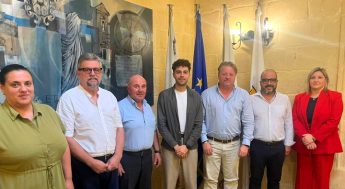
Photograph_DOI/Omar Camilleri