Be the first to comment!
Waste prevention: 22% of food purchased in Malta is wasted – Report
 Email item Email item
|  Print item Print item
|
|
Every year Europeans generate more than two billions of tonnes of waste, which does not only cause environmental problems but also represents an economic loss.
Waste prevention lies at the centre of the European Union's policies on waste and Member States have a legal obligation to adopt and implement waste prevention programmes.
A new report by the European Environment Agency (EEA) – 'Waste prevention in Europe – the status in 2014' – reviews 27 national and regional waste prevention programmes adopted by the end of 2014.
In the case of Malta it involved stakeholders in an initial month-long consultation process in which they had the opportunity to submit proposals for the programmes • The Report states that, Malta is now considering setting up a Waste Management Stakeholders Group for the regular engagement of interested stakeholders.
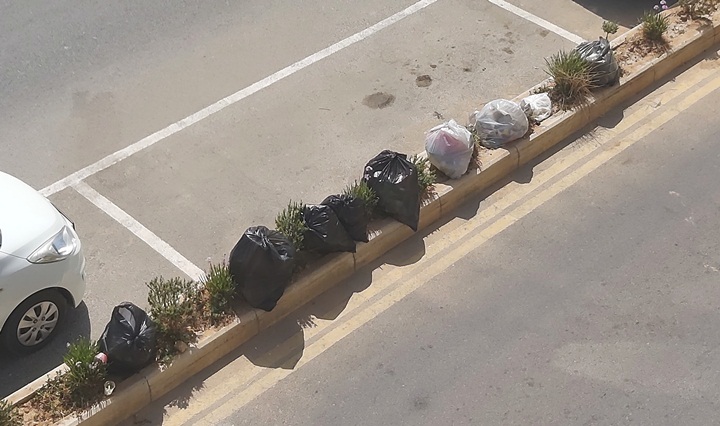
On the monitoring of food waste prevention in Malta, according to the National Statistical Office, 22% of food purchased is wasted. It was estimated that the share of food in domestic waste is on average almost 56% or around 2.5 kilogrammes per person per week. Residents consume on average more than 12 kilogrammes of food per person per week for which they pay €26.
"Food waste, according to the Malta Waste Management Plan, is primarily a result of incorrect purchasing patterns, lack of understanding of 'best-before' and 'use-by' labelling and inadequate storage. The plan sets a combination of quantitative and qualitative targets, such as raising awareness through public campaigns and reducing food waste to 15% of purchases in the next five years."
The programme in Mata plans to monitor compliance by conducting/publishing:
• biennial awareness surveys of the importance of reducing food waste;
• a biennial survey to establish the number of committed food waste savers;
• a five-year survey by the National Statistical Office to determine the amount of domestic food waste.
Referring to the specific waste prevention programmes; in some cases, additional information is given based on publicly available information.
According to the Report, Malta has said that measures that can affect the design, production and distribution phase, are the use of awareness campaigns or the provision of financial, decision – making or other support to businesses. "Such measures are likely to be particularly effective where they are aimed at, and adapted to, SMEs and work through established business networks."
The Report also says that to limit unnecessary construction waste in Malta, waste prevention focuses in part on the prevention of construction and demolition waste, the largest waste stream in terms of volumes.
"Guidance on the excavation of limestone with a view to reduce construction and demolition waste is planned, as are discussions between all relevant stakeholders during the revision of local plans to limit unnecessary waste."
The Report on Malta also said that "there is an emphasis on promoting the value of the limestone resource at the excavation stage and on harnessing the potential of technology to make the process more resource efficient."
The complete Waste Management Plan for the Maltese Islands – A Resource Management
Approach, 2014-2020, is available for download here.
Although the overall amounts of waste generated in Europe declined between 2004 and 2012 by more than 1 % in absolute terms and more than 3% per person, 2.5 billion tonnes of waste – close to 5 tonnes per person – were discarded in the European Union in 2012.
Reducing this waste can result in a wide range of environmental, economic and social benefits, such as reducing pollution in water and soil, greenhouse gas emissions and loss of valuable materials.
The overarching principle behind EU and national waste policies is the 'waste hierarchy'. Waste prevention has the highest priority in the hierarchy followed by (preparing for) reuse, recycling, other recovery and disposal as the least desirable option.
To this end, The EU Waste Framework Directive set the obligation for Member States to adopt waste prevention programmes by the end of 2013. The EEA reviews annually the progress towards the 'completion and implementation of the programmes'.
The 7th Environment Action Programme also calls for a reduction of waste generated in absolute terms and per person.
The EEA report 'Waste prevention in Europe – the status in 2014' is the second in this series of annual reviews of waste prevention programmes in Europe.
The review process covers 36 programmes in the 28 EU Member States, Iceland, Liechtenstein and Norway.
The EEA report shows that waste prevention programmes show great variety in details, coverage, objectives, time horizons, targets, indicators, monitoring systems, measures and policy instruments. The report also includes examples of good practice from each country and region.
The programmes cover a range of sectors and waste types. All of them cover sectors such as households and all except one the public services, whereas only a few programmes include the agriculture, and mining and raw materials sectors.
The majority of the programmes address food/organic waste, municipal/household waste, waste electrical and electronic equipment, packaging waste and hazardous waste.
Most programmes mention the overall objective of breaking the link between economic growth and the environmental impact associated with the generation of waste. Improving material efficiency, resource efficiency, decoupling of resource use from economic growth and preventing the use of primary materials are listed in several programmes.
The reduction of harmful substances is included in more than half of the programmes. Seventeen include quantitative targets ranging from total waste generated to more specific targets for particular sectors or waste types with different baseline and target years.
Twenty-four programmes specify indicators for tracking progress on objectives and targets and, ultimately, on the effectiveness of waste prevention policies. Only ten programmes include explicitly monitoring systems. In some cases, monitoring is covered in other documents.
The analysis highlights a broad range of planned measures: 39% focus on the design, production and distribution phase; 40% are related to the consumption and use phase; and 21% focus on the general framework conditions of waste generation.
Of the policy instruments included in the programmes, 63% concern information and awareness raising; economic and regulatory instruments account for 16% and 14%, respectively; and 7% voluntary agreements.
The actual effectiveness of the waste prevention programmes cannot yet be assessed. Future waste prevention reviews will include information on implementation and will also attempt to link actual waste generation with key socio-economic drivers, waste prevention objectives and targets. Future reviews may also focus on specific areas, providing more detailed analyses of selected waste types
To consolidate the overarching framework for waste policy and resource efficiency policies, the European Commission has adopted the Circular economy package on 2 December 2015.
The package sets out a number of measures across product design, production and consumption that can be expected to contribute to the prevention of waste. In addition, it puts specific obligations on EU Member States to reduce food waste and to introduce monitoring of waste prevention programmes.