Be the first to comment!
WWF Medtred: Mapping the EU Mediterranean Waters Malta Report
 Email item Email item
|  Print item Print item
|
|
The launch of the Pan-European MedTrends Project on January 18th celebrated the completion of a Mediterranean-wide effort aimed at an overall analysis of economic growth trends and potential cumulative impacts of human activities at sea.
This Project combines the collection and analysis of geo-localised socio-economic and environmental information with a wider spatial analysis that helps to identify interactions and conflicts between sector development and the protection of marine ecosystems.
This trans-national analysis considered in detail three targets, namely the attainment of (1) an additional 10% of MPAs in the Mediterranean in line with Target 11 of the Convention on Biological Diversity; (2) Good Environmental Status GES, as envisaged by the MSFD, and (3) active management of current MPAs in relation to economic sectors competing for same marine resources.
A number of economic sectors that make use of marine resources have been chosen for this ambitious exercise, which was led by Nature Trust (Malta) as the local partner of the MedTrends.
For Malta's reporting purposes, sectors impacting the current and future state of the marine environment included maritime transport, extraction of living and non-living resources, coastal infrastructure, land-based activities and waste disposal.
The national report formed part of a collection of other national reports compiled by the MedTrends partners, which formed the basis of a transnational report that outlines the scenarios for the future development of the marine sector in the Mediterranean basin.
The national report explains how marine protected areas are currently under the increasing influence of negative pressures that originate from diverse sectors. These include maritime transport, coastal tourism, fisheries, coastal development and land-based activities.
NTM said that local monitoring campaigns have shown an element of degradation in terms of habitat conversion, abrasion of the seabed, scuttling, dredging works, introduction of non-indigenous invasive species, localised increase in water temperature and salinity, pollution, increased turbidity and nutrient enrichment.
"The impacts resulting from the extraction of living marine resources (by professional and recreational fisheries and mariculture) has been recently studied as to improve marine conservation (including fish stocks as well as benthic ecosystems) and the marine aquaculture industry (on the basis of innovation coupled with sustainability).
"Adverse impacts from the aquaculture sector have already been documented elsewhere and include eutrophication of the surrounding waters, deterioration of seagrass meadows, reduction in aquatic oxygen, and lowering of species richness beneath fish cages."
The Report said that the planned growth in this sector up until 2025 envisages a production of 5000 tons of cultured fish per year, maintenance of current levels of captured species (such as tuna), and improved management of aquaculture practices.
"At the regional level, Mediterranean EU member states envisage a 112% increase in aquaculture productivity between 2010 and 2030. Production could jump from 280,000 tons to nearly 600,000 tons."
"The future growth of the local recreational fishing sector is dependent on the availability of more berthing facilities. The new Sa Maison marina, for example, is expected to increase pressures on the marine environment in the form of increased water contamination and harm to the benthic ecosystems (caused by increased dredging, changes in hydrodynamics and increased anchorage)."
In view of this expected growth in recreational fishing, Nature Trust (Malta) said that it recommends seasonal closures of recreational fishing to limit the depletion of vulnerable fish species.
"At the Mediterranean regional level, the international tourist arrivals in the Mediterranean is expected to increase by 60% between 2015 and 2030 to reach 500 million arrivals in 2030. The implementation of recent national policies and strategies related to local tourism aim at increasing the number of cruise liners visiting our shores," NTM said.
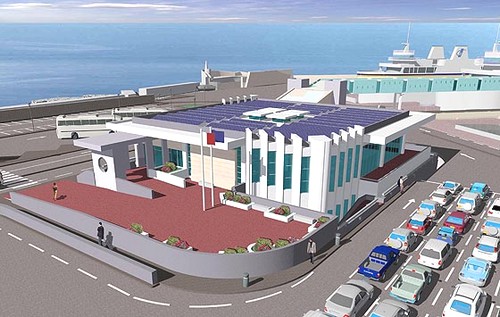
Moreover, the National Diving Master Plan calls for an increased number of scuttling sites, beach nourishment as well as new cruise line terminals and related amenities. Nature Trust (Malta) said that it hopes that such plans will lead to better regulation of these economic activities aimed at safeguarding the marine environment.
Photo 1 above: Potential regional hotspot area due to extensive spatial interaction across economic sectors.
It shows that a significant share of maritime traffic overlaps with priority areas for conservation within the central Mediterranean region, in particular those concerning marine mammals. "The interactions between this sector and conservation issues should be more thoroughly assessed by the international maritime community."
The Malta report looks closely at the impacts caused by the local shipping sector, such as accidental spillages of oil and chemicals, illegal oil discharges, introduction of non-indigenous invasive species, underwater noise, chronic contamination and decrease in biodiversity as a result of anchorage and ship strikes with cetaceans and marine turtles.
NTM said that, "unfortunately, local scientific data on this sector is mostly lacking. The report also mentions the need to relocate the waste reception facility presently cited in Ricasoli. The local shipping sector is projected to increase by 18% up until 2018, and the Government's strategy is to make Malta a maritime hub able to support the oil and gas industry and related logistics, ship repair, offshore energy as well as the yachting industry."
Other economic sectors making use of marine resources that were analysed are those related to land-based activities, extraction of non-living resources (such as dredging and desalination), safety and security (such as military and coastal defense) as well as waste disposal.
"These sectors are able to affect the marine environment in a number of ways, such as by increasing turbidity and nutrients as well as changes to local hydrography." Nature Trust (Malta) said that it recommends among other things the constant and improved monitoring of the offshore spoil with the scope of obtaining GES.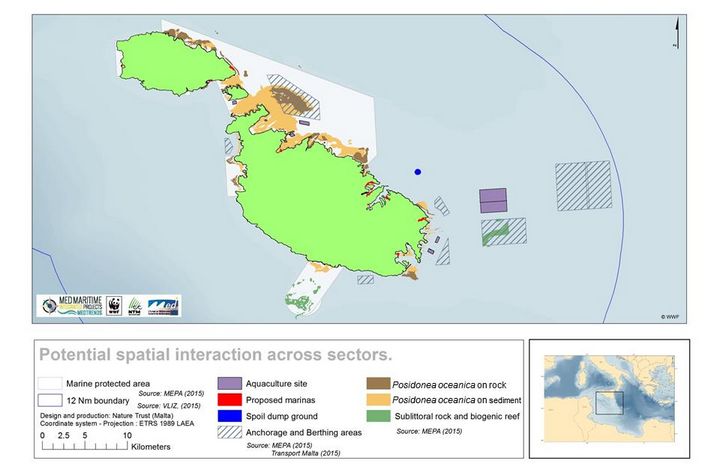 Photo 2 shows Potential hotspot areas at the local level on the basis of extensive spatial interaction of some important economic sectors, including extraction of living resources, tourism, maritime transport, and marine conservation.
NTM said that the attainment of GES of Maltese waters is therefore considered to be highly challenging, requiring substantial collection of baseline information, updating of current information on the marine environment, revision of current policies, implementation of management practices, and conflict resolution between the different economic sectors with a scope of sustaining marine biodiversity and related ecosystem services.
By means of this project, Nature Trust (Malta) said that it presented a good number of recommendations to assist national authorities towards achieving GES of the local marine environment by 2020. "One important recommendation is for local authorities to engage in more intense data gathering on the state of the local marine environment."
"Another important need is to formulate environmentally-friendly strategies that address the future growth of local maritime sectors so that the analysis of future impacts by these growing sectors can be more feasible and objective," it said.
According to Catherine Piante of WWF France, MedTrends project leader, "… there has been little information on the future trends of maritime sectors, and how these trends might affect, positively or negatively, marine ecosystems."
A number of solutions and actions emanate from the overall MedTrends analysis which are aimed at filling existing gaps and contribute a better integrated and more efficient management of the Mediterranean space and resources.
Link to MedTrends website with WebGIS, regional report and reports by country: http://www.medtrends.org/