Be the first to comment!
18 member states agree simpler property rules for international couples
 Email item Email item
|  Print item Print item
|
|
 Last week, 18 member states, including Malta, reached a general approach on two regulations aimed at determining the rules applicable to property regimes for married couples or registered partners in cross-border situations (i.e. couples of different EU nationalities and/or who own properties in a another EU member state).
The regulations aim to determine which court will have jurisdiction and which law will be applicable in matters of matrimonial property regimes and the property consequences of registered partnerships.
They will also facilitate the recognition and enforcement of decisions in cross-border situations on these matters. They will establish clear rules on applicable law in case of divorce or death, bringing greater legal certainty and putting an end to parallel and possibly conflicting proceedings in various member states.
The eighteen member states participating in the enhanced cooperation are Belgium, Bulgaria, Cyprus, the Czech Republic, Germany, Greece, Spain, France, Croatia, Italy, Luxembourg, Malta, Netherlands, Austria, Portugal, Slovenia, Finland and Sweden.
Other member states are free to join at any time after its adoption. In this respect, Estonia announced its intention to take part in the cooperation after its adoption.
Dutch minister Van der Steur, on behalf of the Netherlands presidency, said, "the Netherlands Presidency is very pleased that the Council has made a lot of progress, very swiftly, to overcome the deadlock in this file, by means of enhanced cooperation. Already 18 member states are on board. The Commission, European Parliament and Council have been working hard on this file during this semester and we hope that, after the adoption of the proposals, other member states will join the enhanced cooperation as well."
The regulations leave untouched the underlying institutions of marriages and partnerships, which remain matters that are defined by the national laws of the member states. They also include a series of safeguards in order to respect national legal systems.
For example, nothing obliges participating member states whose law does not recognise the institution of registered partnership to provide for it, nor to assume jurisdiction for such partnerships.
The Council also adopted, without discussion, the decision authorising the enhanced cooperation itself. In accordance with the rules on enhanced cooperation, all Member States took part in that vote.
The enhanced cooperation was proposed after the Council concluded, at its meeting of 3 December 2015, that it would not be possible, within a reasonable period of time, to reach an EU-wide unanimous agreement on the original Commission proposals on these matters presented in 2011. Next steps
Following the adoption of this general approach, the European Parliament will give its opinion on the texts in the course of the month. Consequently, the regulations will be formally adopted by the 18 participating member states. This formal adoption is expected at the end of June 2016.
In 2011, the European Commission estimated that there are about 16 million couples in the European Union who live in a cross border situation.
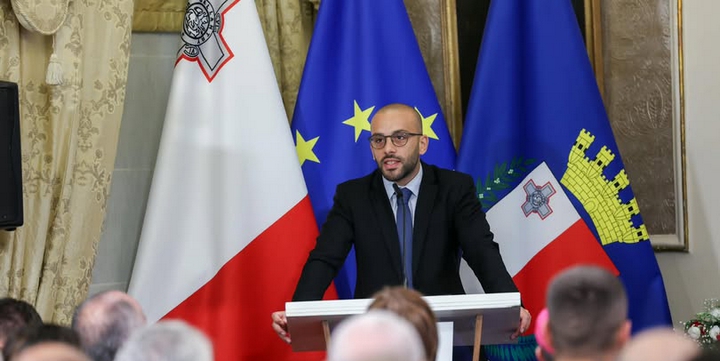
Photograph: Alain Salvary