Be the first to comment!
New policy to regulate outdoor catering on public open spaces
 Email item |  Print item |
|
Over the past months four government agencies, namely the Planning Authority, the Malta Tourism Authority, the Government Property Department and Transport Malta have worked together and drawn up a new, more straight forward set of planning and operational procedures that will incorporate all aspects of the regulatory framework for outdoor catering areas on public open spaces.
They said that, for the first time, the private sector, through the involvement of members from the Malta Hotels and Restaurants Association directly and actively participated in the formulation of this new policy, instead of simply holding a consultative role.
This new policy framework, together with a "one-stop-shop" procedure, seeks to address the complexity, inefficiencies and conflicting decisions that were attributed with the permitting and licensing of public open spaces for catering purposes.
The "one-stop-shop" will be administered by the Planning Authority and applicants will not be asked to obtain clearance from the respective entities themselves, as the application will be circulated with the relevant stakeholders by the Authority.
Applicants will therefore now have one point of contact, and the application will be processed within the same timelines required for a full development permit.
The agencies said that, "while outdoor catering areas on public open space, are widely recognised as an essential element of the entertainment and tourism product, as well as an important value-adding asset for catering establishments, the new policy gives careful attention to the location, layout, design and management of these outdoor public areas so as to ensure that these function effectively and do not interfere with the safety of pedestrian public footpaths or close-by streets."
The policy limits the permitting and licensing of these outdoor catering areas to primary, secondary and tertiary Town centres, Entertainment Priority Areas, Tourism Areas, Resort Zones, Commercial Areas and Industrial Areas, which are identified in the approved local plans. Areas that are purely of a residential nature due to the increased potential of bad neighbourliness, will not be favourably considered.
The policy framework not only tackles the broader planning aspects of these outdoor catering areas but also the finer design details such as the placing of planter boxes, heaters and temporary weather protection screens.
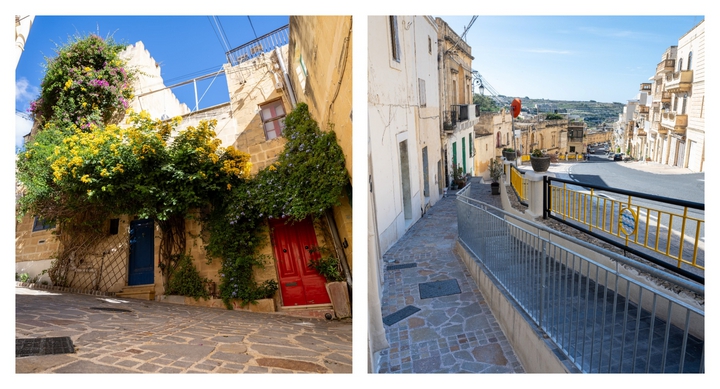
To ensure better enforcement all permitted outdoor catering areas will be marked by steel plates, flush with the surface they are being applied to. The fixing of the steel markers will be carried out by the permitting Authorities.
The policy document has retained the rationale adopted for DC 15, with three types of provisions, Policy/Regulation (P), Good-practice Guidance (G) and Technical Standards (S). The policy provision carries the most weight in the assessment of proposals.
On the other hand, the good-practice guidance provision generally provides the intent and establishes the principle but that may then have diverse solutions to achieve such a principle, while the Technical Standards supplement the other two provisions in terms of specific quantitative targets, and which are non-controversial, objective, universally-agreed numerical considerations.
The new policy for outdoor catering areas on public open spaces may be downloaded from here.
Photograph by Alain Salvary