Be the first to comment!
74th anniversary commemoration of Operation Pedestal
 Email item Email item
|  Print item Print item
|
|
An ecumenical Commemorative Service will mark the 74th Anniversary of Operation Pedestal – also known as the Santa Marija Convoy – and its significance for wartime Malta, as well as mark the official opening and Inauguration of the new Centre for Sea Farers at Ta Liesse under the patronage of President Marie-Louise Coleiro Preca.
Organised by: Apostleship of the Sea – (maritime affairs entity within the Arch Diocese of Malta), the Service Will take place at the Sea Farers Memorial ( outside Ta' Liesse Church, Grand Harbour, Valletta) this coming Thursday, the 11th of August, starting at 7.30pm.
The military seaborne mission of August 1942, codenamed Operation Pedestal, was the most crucial of Malta's 17 wartime convoys and is credited with being the one single event that prevented Malta's otherwise most certain capitulation to the Axis.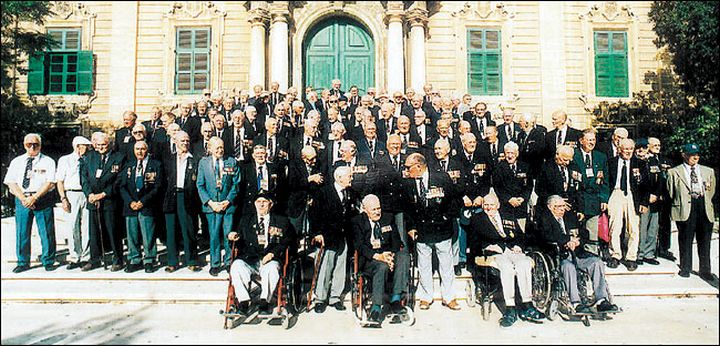 The Service will include a symbolic wreath lay at sea for those lost in the wartime mission, as well as all seafarers lost at sea whilst on duty. Other wreaths will be laid at the Ta Liesse Seafarers Memorial.
President Marie-Louise Coleiro Preca, various Government dignitaries, members of Malta's Judiciary, the Opposition and representatives of other entities, members of the Diplomatic Corps, War Veteran Associations and members of the public will be present.
The British Legion will present Veteran Association Standards and the Malta Command WW2 Living History Group will sound a WW2 siren and carry out a gun salute during the more solemn moments of the Service. The 'Last Post,' tolling of the Siege Bell, 'Bagpiper's Lament' and 'Reveille' will mark the 'one-minute silence.'
A new audio-visual feature including original WWII Malta and Convoy footage will be screened. The general public is encouraged to attend.
'Running the gauntlet'
"Known as the most fateful of all the Malta Convoys, Operation Pedestal sought to end the desperate plight of the besieged Island during the summer of 1942, only days away from an otherwise inevitable surrender.
Pedestal was to have far reaching consequences however, on the outcome of the war in North Africa and the battle for Suez the Middle East, making this epic Mission one that paved the way for the Allies' final onslaught at the Battle of El Alamein where Rommel's supplies and replenishments were successfully depleted in the nick of time.
History has not yet properly acknowledged Pedestal's epic contribution beyond Malta's shores.
This formidable armada consisting of 4 Aircraft Carriers, 2 Battleships, 12 Cruisers , 34 Destroyers , submarines and RFA vessels deployed to escort 14 Merchant Ships was poised against an onslaught of 21 enemy submarines, 23 E-Boats and 540 aircraft.
The United States of America manned two of the Merchant ships; the Almeria Lykes and the Santa Elisa and provided the fastest freighter afloat, the SS Ohio to the Merchant Navy that in retrospect, was to prove legendary for the mission and vital for Malta's survival. More than 23,000 brave Royal and Merchant Navy sailors sailed in Pedestal running the gauntlet for Malta, marked by the fateful days between 11th and 15th August 1942 where 360 of these gallant men would meet a fiery and cruel end.
In Churchill's words after the mission, "The loss was grievous. The reward justified the price exacted. Revictualled and replenished with ammunition and vital stores, the strength of Malta revived."
The story of the American tanker "SS Ohio" formerly owned by Texaco, achieved legendary status and earned itself pride of place in Maltese wartime folklore. For the ship, broken backed and sinking but mirroring the same dogged determination of the men that sailed in her and those on board the ships which brought her in, did not allow the enemy to succeed in relinquishing her oil cargo more precious to Malta than its weight in gold.
With Rommel's forces halted at El Alamein by Montgomery's 8th Army since July 5th, both sides prepared for the crucial North African offencive that would deny Rommel's chance of reaching Suez and thwarting the Axis's plans for the Middle East campaign that signified in Churchill's words: "the end of the Beginning" or the beginning of the End – a major turning point in WWII.
With the June convoy's cargoes consumed, Pedestal brought 35,000 tons of fresh supplies including 11,500 tonnes of fuel that quickly replenished the various RAF Squadrons and the Royal Navy vessels that persisted in their attacks against Rommel's Convoys.
'Ultra' intelligence from Bletchley Park intercepted Rommel's frantic plights for fresh supplies.
During the two months that followed Pedestal, the Royal Naval Air Squadrons and the RAF would sink almost 80,000 tons of Axis convoys destined for North Africa, guided in their search by more desperate 'Ultra' transmissions intercepted at Bletchley Park including the sinking of a German 5000 ton tank and motor transport freighter on the 2nd September '42.
On the 13th September, favourable conditions prevailing in Malta permitted that the George Cross, originally awarded by King George VI on the 15th April early that year, be presented in a public ceremony on Palace Square in Valletta. It had a huge effect on the Islanders' morale.
On 11th October, in a last attempt to save Rommel's plight, Field-Marshall Kesselring ordered a new Luftwaffe 8-day onslaught on Malta averaging 250 sorties per day that saw 600 enemy bombers in use over Malta.
On the 23rd October, the 8th Army attacked at El Alamein when Rommel, hastily recalled from his rest in Austria discovers in Rome, that his African fighting forces were down to only 3 petrol rations per vehicle. Kesselring radios Rommel informing him about the arrival of a 5 supply ship convoy at his African supply ports within 72 hours. The signal was picked up and relayed to Hut 3 in Bletchley Park. A copy of it was on the desk of the Chief of the Air Department of the British Secret Intelligence Service in London about the same time that Rommel was reading the 'original' in Africa.
Churchill, under risk of the 'Ultra' secret being blown, orders the attack. All five ships are sunk between the 27th and 28th October including tankers Tripolino, Ostia and Brioni, the latter sunk by USAC Liberators in Tobruk port before she could unload her petrol.
Rommel's replenishments reduced to a trickle with his supply ports falling one by one, retreated through Cyrenaica.
On 10th November, the 8th Army entered Benghazi and 4 supply ships arrive in Grand Harbour, Valletta unscathed.
The Siege of Malta relented as Rommel's forces are driven further back to Tripoli, then Tunisia. The battle for the Axis' Tunisian convoys went on from February till May '43. Allied aircraft and destroyers decimated, but at a high cost, Axis destroyers and supply ships which fought back bravely. Tunis and Bizerta eventually fell to the Allies on 7th May and all organised German and Italian Resistance in North Africa ceased two days later on 9th May '43.
Operation Pedestal is dubbed by all Maltese as the Santa Marija Convoy due to the gallant 'Ohio's arrival on the 15th August coinciding with the Feast of the Assumption of Our Lady, Patron Saint of Malta invoked during wartime prayers by all Islanders."
Written by Simon Cusens – 2002.
Photographs Top set: SS Ohio flanked by HMS Bramham on Port and HMS Penn on Starboard side – SS Ohio' enroute to Malta by Robert Taylor and SS Ohio.Below – Pedestal 60th Anniversary Group Photo. September 27th 2002.