Be the first to comment!
Wader migration at its best at BirdLife Malta’s nature reserves
 Email item |  Print item |
|
BirdLife Malta has said that autumn comes early for the so-called 'waders' as these birds are the first to start migrating from the Scandinavian wetlands or further North where the short summer season leads to these birds looking for hotter surroundings and flying South.
This means that during this period the first migrants are observed who, on their way to Africa, stop to rest and feed in the Maltese Islands.
"Malta does not have too many wetlands to welcome these birds but BirdLife Malta's Nature Reserves do the job well. Ghadira and Simar are once again living up to their name as the best safe havens for these early migrants, and this summer we have already registered a considerable number of different wader species," BLM said.
The latest were the Spoonbills who graced Simar Nature Reserve with their presence over the last few days. These are almost unmistakable birds. A scarce migrant, the Eurasian Spoonbill (Paletta) as its name suggests, has a large, flat, spatulate bill and feeds by wading through shallow water, sweeping the partly-opened bill from side to side.
Two of these beautiful birds spent a couple of days at BirdLife Malta's Simar Nature Reserve feeding on insects, crustaceans and tiny fish which are plentiful at the reserve. Apart from its distinctive bill, the Spoonbill is all white except for its dark legs, black bill with a yellow tip, and a yellow breast patch. It has a crest in the breeding season.
The Eurasian Spoonbill occurs in marshy wetlands with some open shallow water, nesting in colonies in trees or reedbeds. At Simar the two Spoonbills could be observed mingling with the similarly all-white Little Egrets (Agrett Abjad) who have now been at Simar for a good number of weeks already, and some of them can be considered as a resident species.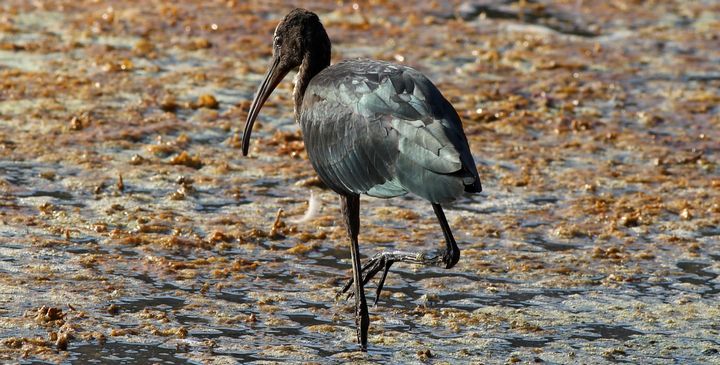 Other waders which were noticed at BirdLife Malta's nature reserves during July and August include a number of juvenile Glossy Ibises which spent a couple of hours at BirdLife Malta's Ghadira Nature Reserve at the beginning of August.
The most distinctive feature of the Glossy Ibis (Velleran) is its plumage, showing luminous colours that seem to change when seen from different angles together with the distinctive shape of the bill which it uses to forage in shallow water, in search of food. Belonging to the ibis family, it is a bird of marshes and reeds. 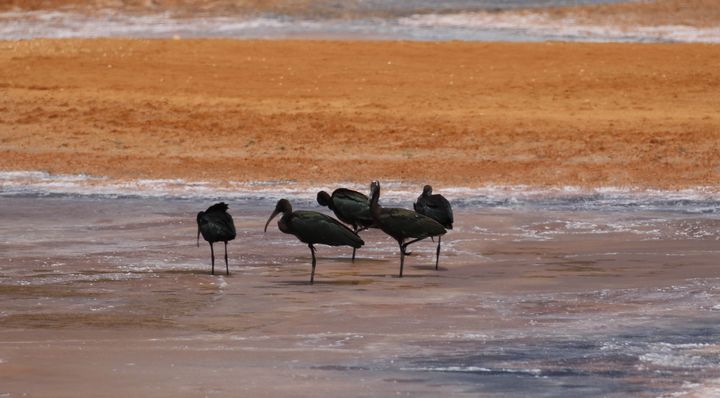 Since this habitat is not found in Malta on a large scale this bird rarely actually stops over and is considered as a very scarce and irregular migrant, even though one stayed at Simar Nature Reserve for a few months in 2014. It is seen solitary or sometimes in disordered flocks, and has never been recorded to breed in Malta.
At this time of year when wader species who have completed their breeding season start their long migration South from Northern Europe and migrate through the Maltese Islands, we also observed the sandpipers. Two Wood Sandpipers (Swedja Cara) and a Common Sandpiper (Pispisella) were released back into the wild at Ghadira Nature Reserve after being ringed.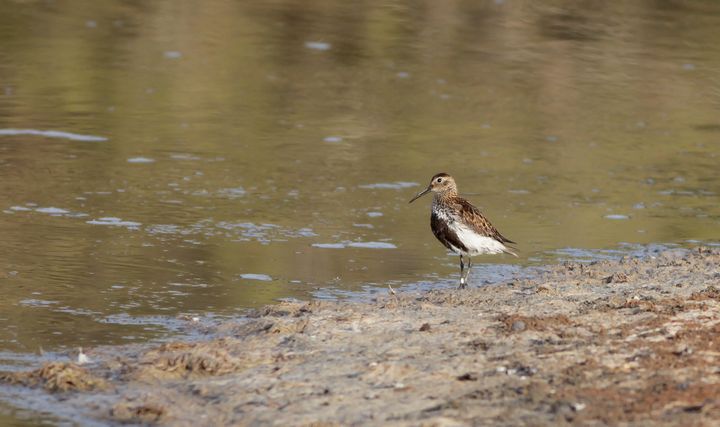 Interestingly enough, one of them was noticed at Simar Nature Reserve a few hours after. Another wader species noticed at Ghadira Nature Reserve this summer was the Dunlin (Pispisella tad-Dabra). A Dunlin with a Swedish ring was observed during the first week of August. A similar case was reported last year when a Dunlin ringed in Ukraine also visited Ghadira.
BLM said that these are early days also for the migration of herons through the Maltese Islands, with Purple Herons (Russett Ahmar), Grey Herons (Russett Griz), Night Herons (Kwakk) and Little Egrets (Agrett Abjad) all reported to have visited BirdLife Malta's reserves at some time or other during the past weeks.
Finally, at Ghadira, some of the chicks of the Black-winged Stilts (Fras-servjent) can still be seen, though are now on the verge of bidding farewell. Ghadira Nature Reserve has been the exclusive breeding ground for this flagship species for Malta year after year, but 2016 was a record-breaking year with three pairs of Black-winged Stilts breeding successfully, each producing four chicks.
This is the highest number of successfully breeding pairs of this distinctive black-and-white wader at the reserve. Moreover, two of these were young Black-winged Stilts which hatched in 2013 and returned to the reserve to breed and raise their own chicks.
"BirdLife Malta reserves remain crucial for waders who seek refuge in Malta while flying South. Now we look forward to this phenomenon gaining pace as we near the Autumn Migration – with birdwatchers looking out for birds of prey migrating over Malta," said BLM.
It added that from September, "all attention will be on places such as Buskett where BirdLife Malta organises its annual 'Raptor Camp' to observe these larger species while keeping an eye on illegal hunting during the open season."
Photographs: Spoonbills (Photo by Ray Galea) – The Glossy Ibis (Velleran) – The Glossy Ibises at BirdLife Malta's reserve (Photo by Raymond Vella) and The Dunlin at Ghadira Nature Reserve (Photo by Aron Tanti)The Dunlin at Ghadira Nature Reserve (Photo by Aron Tanti)