Be the first to comment!
Police, WBRU & Birdlife Malta in joint training on handling injured birds
 Email item Email item
|  Print item Print item
|
|
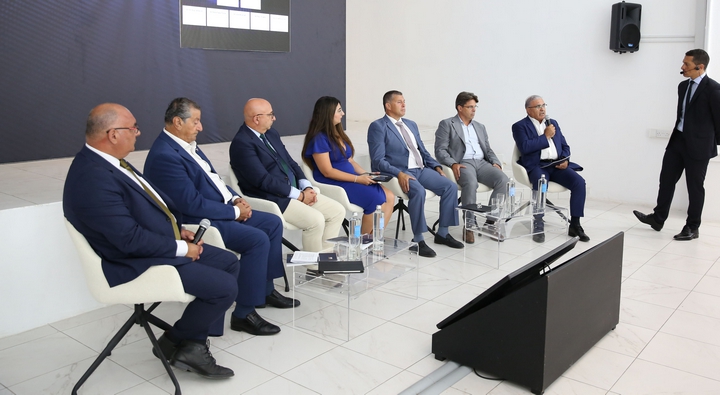
The Wild Birds Regulation Unit organised a training exercise aimed at police officers involved in hunting patrols, and at enforcement officials of the Unit's Specialist Enforcement Branch.
The training focused on practical bird handling techniques and procedures in place to ensure that any injured or stranded wild birds reported by members of the public receive necessary veterinary care.
It was held in collaboration with Birdlife Malta, whose staff members delivered presentations on various aspects of bird handling, as well as in collaboration with Dr Eurydike Kovacs, who has been contracted by the Wild Birds Regulation Unit to provide professional veterinary care to rescued birds.
The WBRU said that the following procedure should be followed whenever a stranded/injured wild bird is discovered by the public:
Step 1. Confirm that the bird is indeed injured – newly fledged birds will continue to be fed by their parents and should be left where they are found, unless they are in an imminent threat and thus may require relocation to a safer location within the same site. If in doubt, see Step 2 below.
Step 2. Call the Wild Birds Regulation Unit on 79770203 or the Police on free phone 119 and provide details of the specimen (if known), type of injury and location. An injured bird can only be helped if it can be caught. Since a bird with a leg injury or other types of minor injury will often be able to fly away, it is rarely possible to catch such a bird whether it would benefit from treatment or not.
Once the information is passed on to WBRU, the authorised Government-contracted veterinarian and the Administrative Law Enforcement (ALE) / Rapid Intervention Unit (RIU) of the Malta Police Force will be alerted.
Step 3. Stay with the bird until the Police or WBRU officers arrive to retrieve it. In some cases, the Wild Birds Regulation Unit will coordinate with BirdLife Malta (see here), which provides assistance with rescue operations for injured birds.
If catching the bird is unavoidable due to imminent danger to either itself or others, it should only be caught if it can be immediately placed in a well-ventilated covered box to wait for treatment – darkness reduces stress, and is likely to be the best first aid you can give the bird. It is also the best treatment for shock.
Catching the injured bird can be difficult, and careless handling may cause further injury. Handling must be firm but gentle. Small birds up to Starling size can be held in one hand. Medium-sized birds are best held with two hands, one over each wing.
Handling large birds requires great care because of risk of injury to the handler. Unless you are used to handling large birds, it is best to wait until help arrives. Do not handle the bird if there is no imminent danger to the bird itself, to humans or property!
Step 4. Upon being notified of the bird's location, the authorities (ALE/RIU or WBRU) will retrieve the bird and arrange for necessary treatment by Government-appointed and authorised Veterinarian.
Depending on the condition of the bird, the necessary treatment or rehabilitation will be prescribed and followed accordingly at the facilities authorised for this purpose by the Director of Veterinary Services. In some cases, owing to the nature of the injury, the bird may need to be put down on veterinary grounds.
Decisions concerning the necessary course of action including treatment and rehabilitation will be made solely by the Government-authorised Veterinarian.
The members of the public will be able to enquire regarding the outcome of the referral of the bird by contacting the Wild Birds Regulation Unit via email on wildbirds@gov.mt.