Be the first to comment!
New leaflet on climate change launched
 Email item Email item
|  Print item Print item
|
|
The theme put forward by the World Health Organisation on the occasion of World Health Day of 2008 focused on the need to protect health from the adverse effects of climate change. “Protecting health from climate change” puts health at the centre of the global dialogue about climate change. The World Health Organisation had selected this theme in recognition that climate change is posing ever growing threats to global public health.
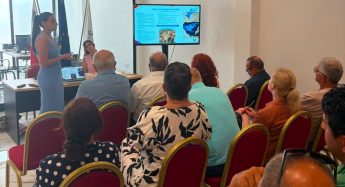
Joe Cassar, Parliamentary Secretary for Health, in an activity to raise awareness about the health effects of climate change, during which a leaflet by the Department of Health Promotion and Disease Prevention was launched, emphasised the fact that through increased collaboration, the global community will be better prepared to cope with climate-related health challenges worldwide. Examples of such collaborative actions include strengthening surveillance and control of infectious diseases, ensuring safer use of diminishing water supplies, and coordinating health action in emergencies.
Humans have played a major role in bringing about the present situation. Over the last 50 years, human activities – particularly the burning of fossil fuels – have released sufficient quantities of CO2 and other greenhouse gases to affect the global climate. The atmospheric concentration of carbon dioxide has increased by more than 30% since pre-industrial times, trapping more heat in the lower atmosphere.
There will be consequences to this. According to the Fourth Assessment Report issued in 2007 of the Intergovernmental Panel on Climate Change, the effects are varied. The global average surface temperature has increased by approximately 0.65°C over the last 50 years, and will only increase further if nothing is done. Already eleven of the last twelve years (1995-2006) rank among the 12 warmest years since records began in the 1850s, and the rates of warming, and of sea level rise, have accelerated in recent decades.
Global emissions of carbon dioxide are still increasing. Estimates of future population growth and energy use are used as inputs to global climate models, in order to project future climate change. The earth is warming, the warming is accelerating, and human actions are responsible. If current warming trends remain uncontrolled, humanity will face more injury, disease and death related to natural disasters and heat waves; higher rates of food-borne, water-borne, and vector-borne illness; and more premature deaths and disease related to air pollution.
Many countries are working to reduce greenhouse gas emissions under the United Nations Framework Convention on Climate Change. Unfortunately, even with these efforts, past and expected future trends in development and energy use mean that the world will still face significant changes in climate and a rise in sea levels in the coming decades.
All this will affect health dramatically. There are, for example, ever increasing frequencies of heat waves. In fact, recent analyses show that human-induced climate change significantly increased the likelihood of the European summer heat wave of 2003.
In the short term, climate change can have serious effects on health. Extremes of heat and cold can cause potentially fatal illness, including heat stress or hypothermia, as well as causing death rates from heart and respiratory diseases. This in fact did happen in Europe in the summer of 2003, were over 35,000 more deaths were reported than in the same period in other years.
Changes in climate are likely to lengthen the transmission seasons of important vector-borne diseases, and to alter their geographic range, potentially bringing them to regions that lack population immunity and/or a strong public health infrastructure.
More variable precipitation patterns are likely to compromise the supply of freshwater, increasing risks of water-borne disease. Rising sea levels increase the risk of coastal flooding, and may necessitate population displacement. This may happen in Malta too!
What can be done locally, both at the national level and individually? Everyone can try to support actions to reduce human influence on the global climate. There is a need to plan and put in place a transport system that serves the whole population effectively and on time! There needs to be a transport system that actually appears to be, and is more, user-friendly and attractive than actually using one’s own car. Such measures would reduce greenhouse emissions, while reducing major health impacts of urban air pollution and physical inactivity.
Another way advocated is increasing physical activity and deciding to walk more to places where one usually would take the car. Here, people can look at their own problems, namely that of obesity in every age group. If people could increase slightly their physical activity, they could be helping themselves to a healthier lifestyle and reducing emissions as well. And they shouldn’t be fooled into thinking that their little bit will not make a difference. It is their small individual contributions that have brought about the situation people are currently in at the moment.
The Health Division has taken the initiative to raise awareness about the effects of climate change by launching the Department of Health Promotion and Disease Prevention leaflet for the general public, whilst Mater Dei Hospital has also taken the initiative, sponsored by GO and Nature Trust, to plant indigenous trees and shrubs on Mater Dei Grounds.
Last year GO embarked on a project together with Nature Trust to plant 3,000 trees in a number of areas at Mater Dei Hospital. 250 indigenous trees have already been planted in February of this year, and yesterday another 250 similar trees including Holm Oak (Ballut), Myrtle (Rihan) and Carob Trees were planted by the newly established MDH Green Focal Point Volunteer Group and the MDH Green Committee. “Having such a number of indigenous trees planted at Mater Dei, is a source of satisfaction and I thank the hospital’s management and staff for their support and initiative. It gives us great pleasure as a company to support such initiatives. The environment is everyone’s responsibility, including corporate organisations like ours,” said GO’s Chief Executive Officer David Kay.
Scientific uncertainty persists about the possibility and timing of abrupt and catastrophic climate change if temperatures continue to rise. This makes it urgent for action to begin now to stabilize the climate through strong and effective mitigation undertaken simultaneously with adaptation activities to prevent increases in foreseeable climate-related illnesses. Full participation of the health sector in national and international processes for mitigation and adaptation to climate change is essential.