Be the first to comment!
Waste into Gozo’s Tal-Kus transfer station increased by 3.4% in 2019
 Email item |  Print item |
|
The total amount of generated waste in Malta and Gozo during 2019 increased by 2.6% over 2018, the National Statistics Office said today.
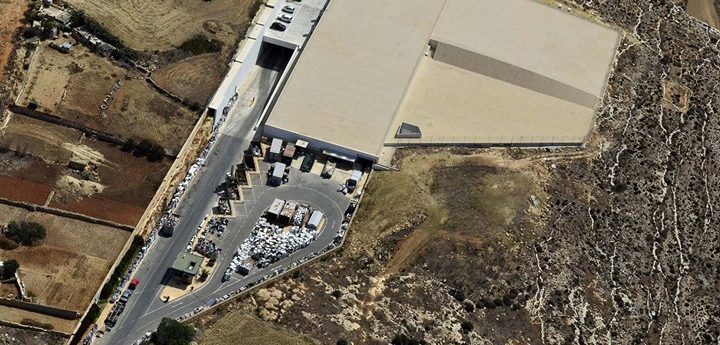
It noted that in Gozo, the waste input into the Tal-Kus waste transfer station increased by 3.4%, or 584 tonnes.
Latest data from the European Parliament earlier this week for 2017, show that in Malta 93% of waste is through landfill disposal – the highest in the EU, while only 6% was recycled.
It noted that, in absolute terms municipal waste per person was the highest in Denmark, Malta, Cyprus and Germany, while it was the lowest in Hungary, the Czech Republic, Poland and Romania.
The NSO said that the total amount of solid waste generated in Malta during 2019 amounted to 2.7 million tonnes; advancing by 2.6% over that recorded during the previous year,
Hazardous waste increased by 34.1% per cent or 10,932 tonnes, mainly as a result of higher amounts of chemical wastes.
Likewise, non-hazardous waste went up by 2.2% or 56,995 tonnes, with mineral waste from construction and demolition and the organic waste collection from households (classified under animal and mixed food waste) being the main contributors towards this increase.
Waste treatment registered an increase of 30.0% or 704,251 tonnes when compared to 2018. The NSO explained that this happened mainly due to an increase, amounting to almost 1.0 million tonnes, in the recycling of mineral waste from construction and demolition.
On the other hand, backfilling in quarries decreased by 14.6% per cent or 205,776 tonnes.
The NSO also noted that landfilling and incineration both increased by 54,531 tonnes and 1,102 tonnes respectively, whilst no amounts were recorded for disposal at sea and energy recovery.
From the waste that was sent overseas for treatment in 2019, 63.0 per cent underwent recycling processes and 35.6% was landfilled.
Increases of 168 tonnes, 203 tonnes and 17,191 tonnes were recorded at the Marsa Thermal Treatment Facility, the Sant’ Antnin Waste Treatment Plant and the Ghallis landfill respectively.
Conversely, the NSO said that the input of waste at the Malta North Mechanical-Biological Treatment plant declined by 12.6% or 11,352 tonnes.
In 2019, the separate collection of waste fractions experienced increases across all collection modes except for bring-in sites.
The highest increase, at 19,975 tonnes, was recorded in the organic waste collection from households, since 2019 was the first full calendar year during which the nationwide collection of this waste took place.
This was followed by the collection of dry recyclables from the grey/ green bag and glass collection which increased by 9,031 tonnes or 36.3%, the NSO said.
Waste collected from civic amenity sites rose by 4,470 tonnes or 14.7% while waste collected from bring in sites dipped by 125 tonnes or 3.0%.
Photo: Wastserv Malta