Be the first to comment!
Successful conservation of a presumed extinct Iris in Gozo

 Email item Email item
|  Print item Print item
|
|
In the past, the Maltese folk depended largely on products and goods derived from the Maltese soil, such as crops, medicinal herbs, reeds, animal fodder, cotton, and several other daily-used products, that today we simply purchase from shops and which are mostly imported.
Decorative plants are no exception, and although nowadays, the attractive flowers produced by some wild plants often go unnoticed, our forefathers adorned them and used them in many ceremonies and traditional events, especially those related to the church.
However, uncontrolled use, foraging, and disturbance have led certain natural sources, habitats or wild species to the brink of complete depletion or extinction. For example, logging of trees for wood had shrunk local ancient forests to fragments of remnant wooded areas, such as the old holm oaks at Wardija and the old olive trees at Bidnija and Nadur; bearing trees over or about 1000 years of age.
This unfortunate faith of over-collecting without replenishing natural sources also led to the loss of some charismatic wild flowering species, such as the Yellow Iris (Fjurdulis tal-ilma). This tall and elegant Iris was recorded in old floristic literature (e.g. by Stefano Zerapha in 1827) but has not been further observed in wild habitats for more than 80 years. The last occurrence seems to be at Saqqajja, in Rabat, Malta. Pollution, land reclamation, anthropogenic disturbances and climate change may have also contributed to its loss.
Fortunately, pioneer botanists had deposited some specimens of the Yellow Iris at the Argotti Gardens in Floriana at the beginning of the 20th century which have survived there throughout these decades.
In a joint collaboration between the Argotti Gardens and EcoGozo Directorate (Ministry for Gozo), attempts to reintroduce this attractive, but extirpated Iris into the wild were carried out in the winter of 2021.
Argotti Gardens handed to the EcoGozo Directorate some forty young plants propagated by seeds or cuttings. A portion of these specimens was given to the Dawwara nursery (Victoria), who are further propagating the species, and to the Kenuna garden, Nadur.
EcoGozo transplanted the yellow Iris into two sites in Gozo. The Directorate explained that the location for transplantation has to be carefully selected, because it should match the species’ preferred habitat – in this case, a wetland habitat; and then keep in mind unfavourable conditions, such as strong wind, aridity in summer, human disturbances, and other such precautions.
During the last monitoring survey carried out in mid-May 2022, the Directorate said that it was a pleasure to observe that the plants not only survived the arid summer of 2021 but had also fruited, produced seeds and gave rise to a few new plantlets on site. Such results indicate that Yellow Iris had successfully become naturalised.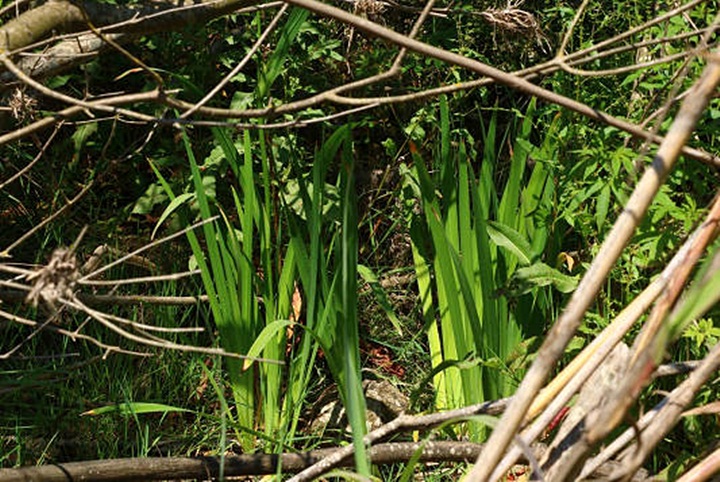 This is another success story where EcoGozo works hard to protect and conserve biodiversity in Gozo. The Directorate has appealed the public not to cut flowers of this Iris if found in the wild, until the population grows in size within a few years.
More photos of this attractive Iris can be seen on The Malta Wild Plants website. EcoGozo had also attempted propagation of other rare plants in their natural habitats in Gozo, such as the Mediterranean Galingale (also extinct in the wild); the Woody Catchfly (a few plants present in two locations only) and the southern cattail (an infrequent wetland species).
Photos: EcoGozo – Stephen Mifsud; The Yellow Iris (Fjurdulis tal-ilma; Iris pseudacorus) and species that was extinct in the wild and has been transplanted and conserved back in nature in a wetland area in Gozo; Young plantlets of the Yellow Iris transplanted in a wetland habitat by EcoGozo Directorate in February 2021; and New offspring of the Yellow Iris (May 2022) regenerated by seeds from the transplanted adult plants.