Be the first to comment!
Innovative solutions to the needs of persons with disability
 Email item Email item
|  Print item Print item
|
|
Technology could provide innovative solutions to the needs of persons with disability in order to assist with independent living, said CRPD Commissioner Samantha Pace Gasan at a recent seminar.
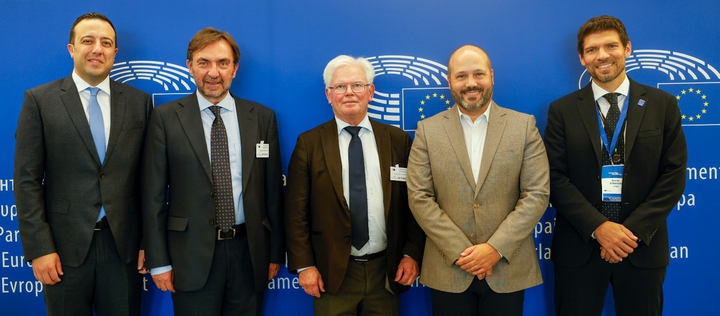
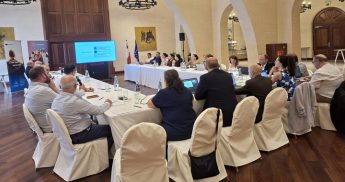
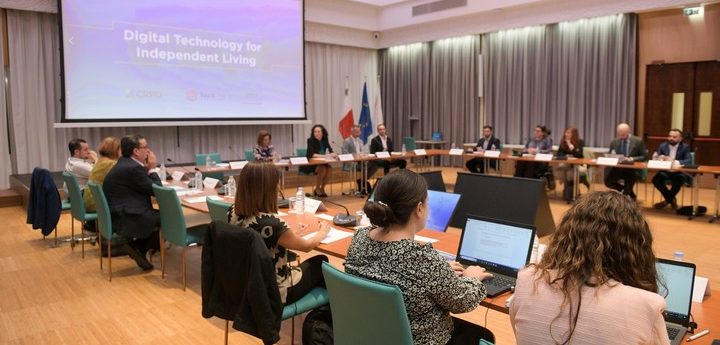
Organised by the Commission for the Rights of Persons with Disability (CRPD), the Malta Communications Authority (MCA) and Tech.mt, the seminar, entitled ‘Digital Technology for Independent Living,’ brought together stakeholders from the disability and technology sectors in order to create a dialogue between them.
MFOPD President Marthese Mugliette, said that, “unless the needs of users, including persons with disability, are factored in from the get-go by the persons creating technology, then some users risk being left behind.”
Christine Mifsud, a person with visual impairment, mentioned how technology has given her back her independence and courage. She reiterated the need for persons with disability to be consulted from the start as, “if a person with disability cannot use a particular device because it is inaccessible, this becomes discriminatory.”
Dr Vickie Gauci, head of department of Disability Studies at the Faculty for Social Wellbeing, University of Malta and also a person with disability, mentioned how at home she is a very independent person but she becomes a disabled person when she walks out the door, even though her impairment remains the same. The difference is not in the impairment itself, but in the context.
She mentioned how technology that was previously specialised and expensive has now become mainstream and affordable and users should be included in the design process, to move towards a concept of universal design.
Other stakeholders present mentioned the challenges between the two sectors. Mr Oliver Scicluna, CEO of Agenzija Sapport, the national service provider for persons with disability, mentioned the need for specialised human resources when it comes to the use of technology and persons with disability.
Dr May Agius from ACTU (Access to Communication and Technology Unit) said that at the moment there is no text to speech or speech to text in Maltese, creating issues for users who cannot speak to their devices in Maltese but have to resort to English.
Marcel Mizzi from the Chamber of SMEs mentioned that smart homes and artificial intelligence are already with us and that these are powerful tools for persons with disability. Referring to accessible websites, he said that these are not difficult to construct, particularly when accessibility is considered from the outset.
The seminar formed part of a national drive towards independent living within the community and away from the institutionalisation of persons with disability, in line with CRPD’s strategy, the national disability strategy and the United Nations Convention for the Rights of Persons with Disability, which was transposed into Maltese legislation last year.
CRPD, MCA, and Tech.mt all concurred that, while recognising the social disparities within the tech industry, innovation presents a window of opportunity for persons with disabilities, thereby enhancing their quality of life and encouraging their independence within society.
All organisations said that the look forward to further discussing this topic and taking action to what is needed by the community in the coming future.