Be the first to comment!
eNGOs urge ERA to be more “courageous” on environment strategy
 Email item Email item
|  Print item Print item
|
|
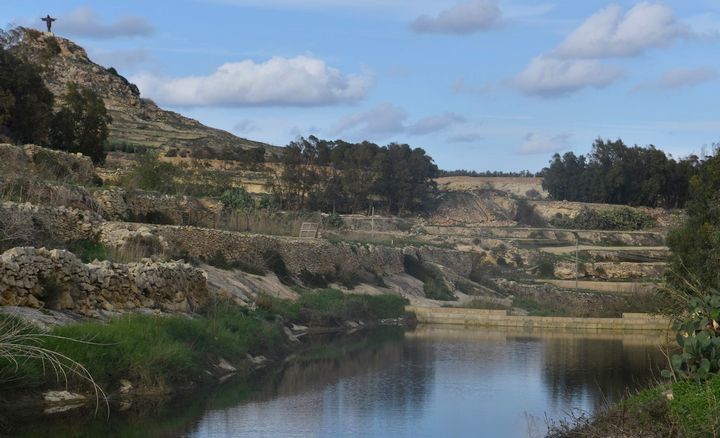 eNGOs have urged the ERA to be more “courageous” on its National Environment Strategy.
Nine eNGOs have now joined forces to submit their responses to the draft National Strategy for the Environment.
Whilst acknowledging the work that was done to prepare this draft, the eNGOs are calling on the ERA to be “bolder and more ambitious” in their vision for the environment, to 2050.
These eNGOs are Din l-Art Helwa, The Archaeological Society Malta, BirdLife Malta, Flimkien ghal Ambjent Ahjar, Friends of the Earth Malta, Ghawdix, Moviment Graffitti, Nature Trust-FEE Malta, and the Ramblers’ Association of Malta.
The eNGOs in a joint statement on Tuesday, called for “greater courage” to address the difficult controversial issues that are currently hovering around the national agendas, such as land reclamation, over-abstraction of ground water, demography and carrying capacity of the islands; and to avoid terminology which gives the impression of progressive environmental action but which does not properly commit fully to it.
The eNGOs noted that the document almost completely omits reference to Climate Change, which surely is the most important environmental issue to affect our islands over the coming years. “Mitigating and especially adapting to Climate Change should really have been the guiding principles for such a document, given the context of urgency and emergency which faces us.”
“It was also felt that there should have been a specific reference to different environmental strategies for different regions, such as Gozo, Comino, or specific areas in Malta, such as Marsa,” the eNGOs said.
The eNGOs praised the fact that the document called for changes in consumer patterns, and raised the question of how sustainable economic growth ought to be measured, beyond GDP, even if it fell short of proposing any of the methods that are being adopted around the world.
They pointed out that the document also fell short of proposing tangible metrics, by which progress on the achievement of the strategic objectives could be monitored.
The eNGOs criticised the fact that over a third of the proposed “strategic objectives” were not really specific targets to be reached, but ancillary activities, which are relevant and important, but which cannot be called “strategic objectives.”
“The document contains 64 strategic objectives, but of these eight were related to research and study, four were related to ongoing monitoring, four were related to ongoing future scanning, four related to a greater commitment to enforcement of legislation and compliance, and cleansing and maintenance, and another three related to continuing maintenance (of the marine environment and of water resources) or international cooperation,” the eNGOs said.
They also noted that there are a couple of fiscal proposals, which could better be placed within the Action Plans, since they are about how to achieve specific targets, rather than targets in themselves.
At the same time, the eNGOs criticised that fact that the document did not give any indication of how the proposed strategic objectives were going to be achieved. Although the document promises that the publication of the Strategy would be followed by 10-year Action Plans, it was felt that given the urgency of the situation, the first Action Plan for at least the coming five to 10 years would be published as an Annex to the Strategy document.
The eNGOs called on the Government to ensure that when the National Strategy was finalised, the document would be given a legal status which guaranteed enforceability, to avoid another strategy document “gathering dust on a shelf.”
They also called on the Government to give ERA a stronger voice on all issues that impacted the environment, and, in particular, building development.
The eNGOs urged the authorities to engage in a real process of consultation with eNGOs and civil society, in the formulation of such important national strategies – eNGOs were willing to give their full contribution, even if their resources were limited.
The eNGOs concluded by saying that they looked forward to a serious discussion on the detailed issues that they have raised in their submissions.
File photo: Gozo News/Alain Salvary