Be the first to comment!
Gozo Coalition calls for transparency from SCH on Santa Verna Temple area
 Email item Email item
|  Print item Print item
|
|
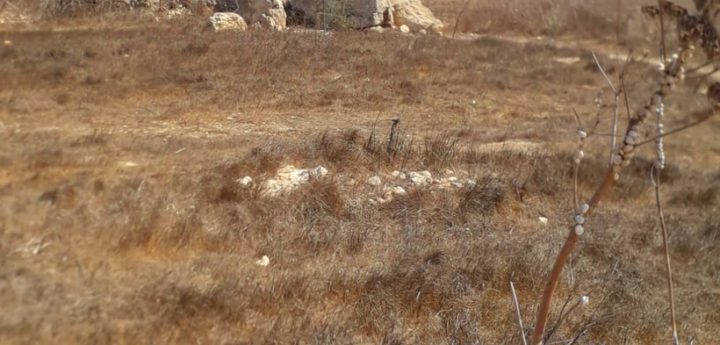
The Gozo Coalition of eNGOs (Wirt Ghawdex, Din L-Art Helwa – Ghawdex and Ghawdix) have issued a joint statement on the development close to the Santa Verna Temple area in Xaghra, calling for “transparency from the Superintendence of Cultural Heritage.”
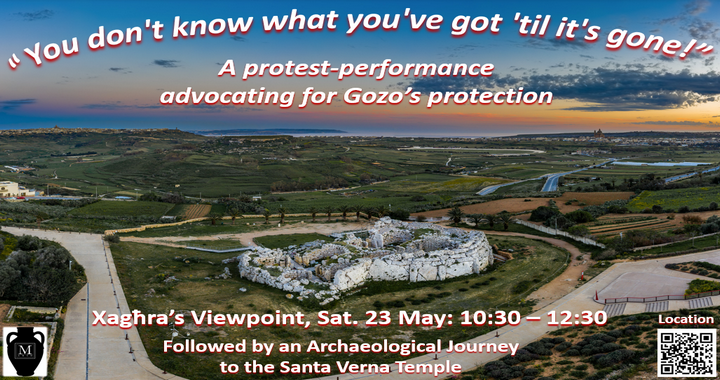
The Gozo Coalition stressed that the Santa Verna Temple area holds significant historical and archaeological importance, “being closely associated with the prehistoric temples that are an essential part of our national heritage.”
“This site is not only of immense cultural value but also a testament to our ancestors’ rich history, making it imperative that any developments in this area are approached with the utmost care and transparency,” the Coalition said.
It explained that during the 2006 rationalisation exercise, a portion of this historically significant area was included within the building zone. In 2012, under PC 40/2013, the SCH conducted an archaeological investigation, which concluded that “while monitoring conditions should be imposed on several plots, there were no findings of such importance as to necessitate their exclusion from the building zone.”
However, in subsequent years, the Coalition said that during the monitoring of one of these plots, a local resident reported the discovery of bones on-site. It added that upon further investigation by SCH, “these bones were confirmed to be prehistoric remains, likely within a secondary burial context. This discovery underscores the importance of continuous and effective monitoring in this archaeologically sensitive area.”
The Coalition said that the significance of this discovery was highlighted in the SCH Annual Report for 2023, under Major Archaeological Investigations conducted by their team. The report describes the feature as “a roughly oval-shaped pit, irregular along its sides and base, measuring 1.65m by 1.13m with a shallow depth of 0.35m. The human remains, consisting mainly of fragmented and disarticulated bones, were found to be placed in an organised manner, suggesting intentional placement within the pit as part of a secondary funerary burial practice. The pottery found with the remains has been typologically associated with the Temple Period.”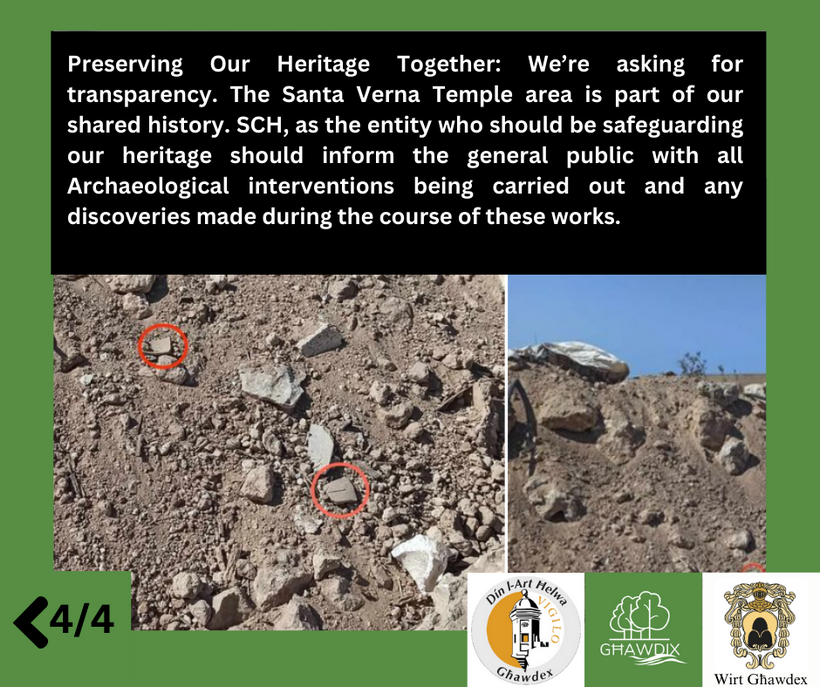 Given the recent continuation of works in the vicinity, particularly along the new road Triq George McAdam and within one of the plots, the Gozo Coalition said that it is seeking “greater transparency from the Superintendence of Cultural Heritage.”
“Specifically, we request that SCH provide clear information on the interventions currently being undertaken, any discoveries that have been made, and the future plans for developments in this area,” the Coalition said.
“We are calling for transparency and accountability in how archaeological investigations and monitoring are conducted,” the Coalition added. “The rich cultural heritage of our country belongs to all Maltese and Gozitans, and it is our right to be informed about any developments that may impact this shared legacy.”
The Gozo Coalition concluded by saying that “we trust that SCH will respond to these concerns with the seriousness they deserve, ensuring that our heritage is preserved for future generations.”
Photos: Gozo Coalition